What we did this summer? Here are some things some of us learned.
Potato farming is big in southern Alberta and surprise, surprise, now more potatoes grown there than on Prince Edward Island.
70% of irrigated farmland in Canada is in southern Alberta.
The largest solar farm in Canada is in the region.
Hutterite colonies are seen as strong agricultural players which provide produce well beyond their communities.
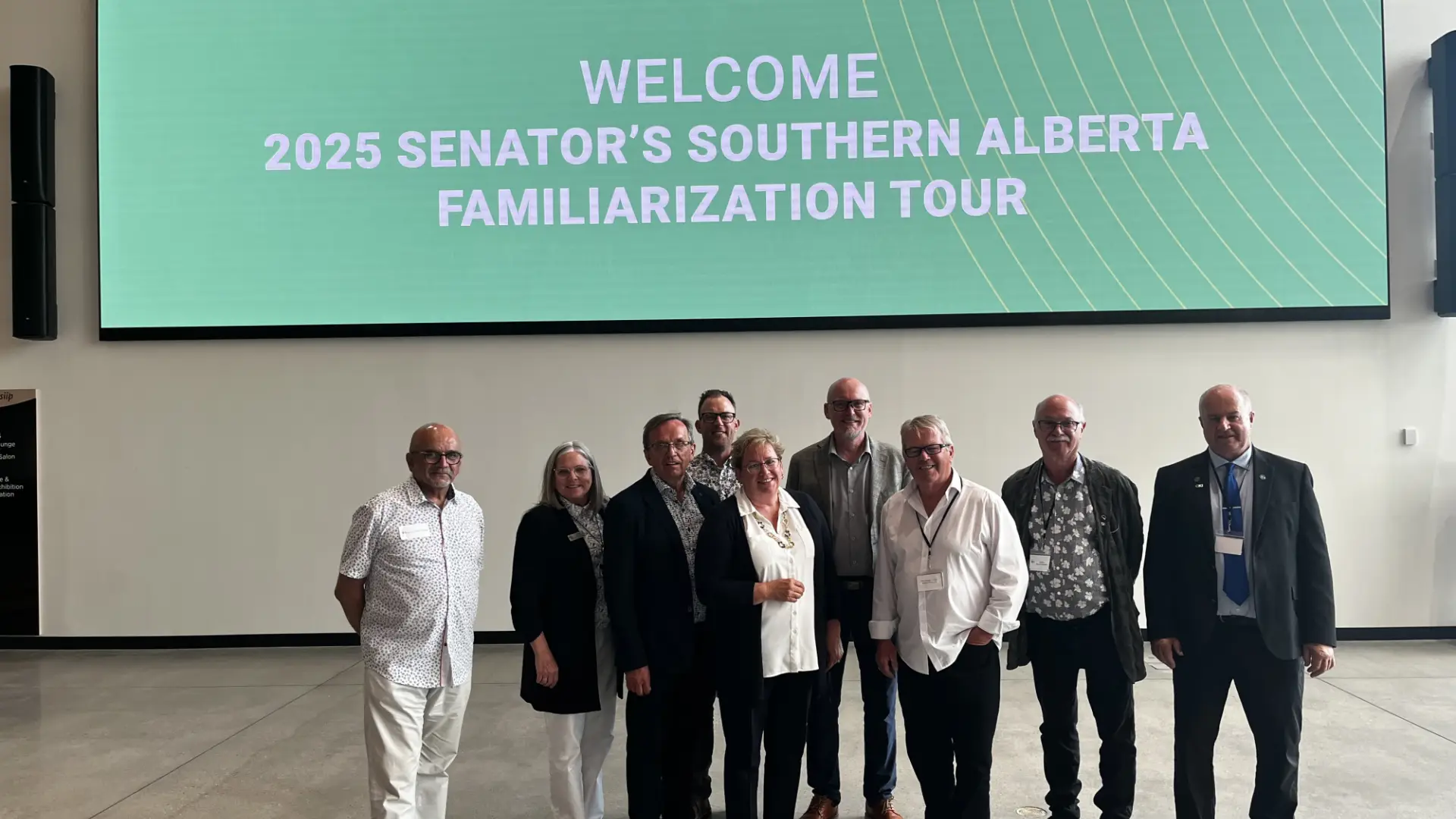
Thanks to Calgary Senator Daryl Fridhandler, six senators travelled across Calgary, Lethbridge, Medicine Hat and points in between on a study tour in early July…and were enlightened!
At a time when some regions of the country feel increasingly isolated from their federal government and parliament, these kinds of tours can only help….actually in my opinion, are badly needed!
Fridhandler’s objective was to give senators an overview of various aspects of the region, various parts of the economy and society. He says, “these trips are important for all parliamentarians to understand the country beyond their own riding, region or province. It’s great that we all gather in Ottawa to address matters of importance to the whole country, but unless we understand better the whole country, we can be myopic in our decision-making, beating our own drum for our own region- which is good and important”.
But he adds, “we get a much better balance if we are exposed to the other regions of the country, and understand broader implications of our decisions and actions”.
Fridhandler’s southern Alberta tour was to some extent inspired by a similar tour of northern Alberta, organized by another Alberta Senator, Scott Tannas last year.
So, what did we do in the four hectic days? We met the mayors of Calgary, Lethbridge and Medicine Hat as well as mayors, reeves and town councillors from many places in between. There were business leaders, farmers, educators, arts administrators and other leaders….fortunately all interested to meet a group of senators from across the country. And Fridhandler’s office provided us with a ton of good briefing material on everything and everybody we were to meet ahead of time, more than one could read on a plane ride.
And there were a series of tours as we traipsed across the region in a rented bus, which also gave us a look at prairie country, from stunning yellow canola fields, to gently rolling hills and reservoirs, to amazing irrigation systems, and mostly to small town Alberta.
We naturally started with the white-hat ceremony at Calgary City Hall with a fun proclamation read by Mayor Jyoti Gondeck, an enthusiastic promoter of her city, and a short chat with her.
Then on to Tsuut’ina Nation on the edge of Calgary, an economically successful reserve, helped by the close proximity to the big city and the partnership with a development company to build a hugely successful big-box shopping centre and residential sub-divisions open to all Calgarians. There were formalities here – we were greeted with an honour song and a smudging ceremony and received a formal briefing on the business model of the reserve and the issues they faced.
Then we raced off to another briefing on developing energy technology at the legendary downtown Petroleum Club, before visiting the railway nerve centre of CPKC – that’s the cross-Canada railway company, Canadian Pacific, that has recently purchased the American Kansas City railway, giving them access well into the United States. Regardless of what happens with tariffs and the U.S, there is much need and room for rail growth in the years ahead.
On a hot sunny morning, we visited Travers Solar Project, likely the largest solar farm in Canada, yes, in oil and gas-rich Alberta. The forward-looking “photovoltaic power station” started with significant investment from a Danish company. They are well on the way and when fully built out will have 1.3 million panels providing energy to 150,000 homes. While large swaths of Alberta and Saskatchewan have the longest number of sunlight hours in the country, there is much to learn from this company that would work elsewhere in the country. And if you are wondering about other farming on this farmland – they also raise sheep, which provide the mowing service for the land and then some them get farmed themselves! So, in reality this is a solar and sheep farm.
Fridhandler also wanted us to see the UN world heritage site Head-Smashed-In Buffalo Jump in the region which captures a key part of the Blackfoot Nation history and survival – the annual organized jump over the cliff provided them with their annual supply of meat for the winter. A museum documents local residents’ history that goes back thousands of years.
We stopped in at the Nikka Yuko Japanese Gardens built by the Japanese-Canadian community who were sent to the area during World War II when the Canadian government shamefully didn’t trust them to live on the west coast. Instead, they integrated, contributed to the area and built a wonderful garden of peace in keeping with Japanese garden tradition.
On the matter of potato farming we visited the Cavendish Farms production in Lethbridge where they process French fries and other frozen goods for the restaurant industry on both sides of the border (actually 735 million pounds annually). And yes, the name Cavendish comes from the idyllic Prince Edward Island location. We got to taste a few French fries at the taste testing lab, and fair to say, Alberta potatoes are pretty good. I could have sampled more, but we had a schedule to keep!
A lot of what we saw was highly automated, be it the potato facility or others, which means state-of-the-art production with high investment, but once built, they don’t employ that many people. There were no production lines with lots of people peeling potatoes. That’s automation, with shades of artificial intelligence. Humans were probably more relevant in the overall admin, and in quality control. That’s the reality of automation across the economy.
A quick stop at the Hillridge Hutterite Farm was a trip into another era, except they used current farming technology. Having fled Europe in the last century they reminded us that Canada had allowed them to live their lives according to their traditions, while they contribute to the larger farming economy.
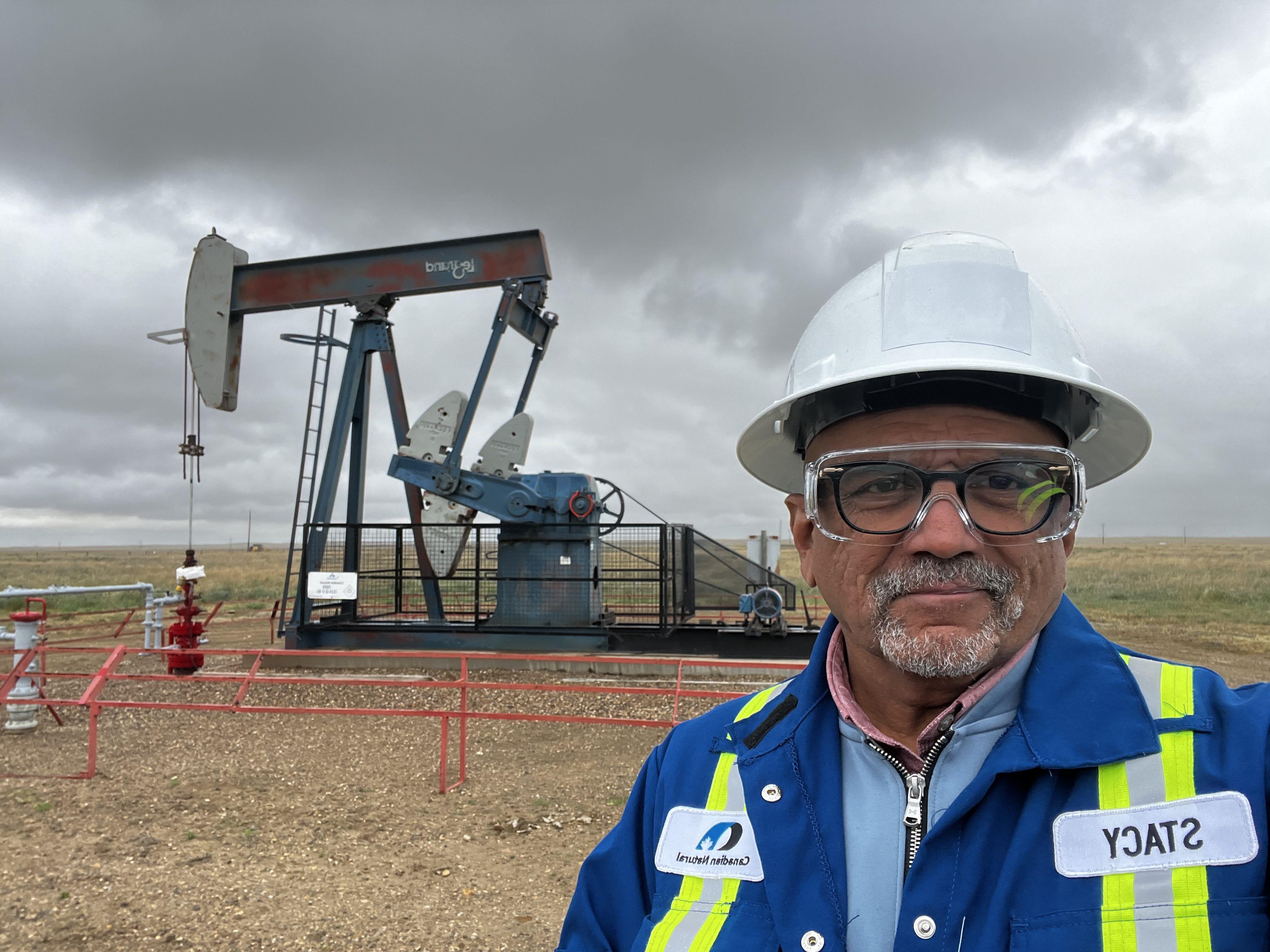
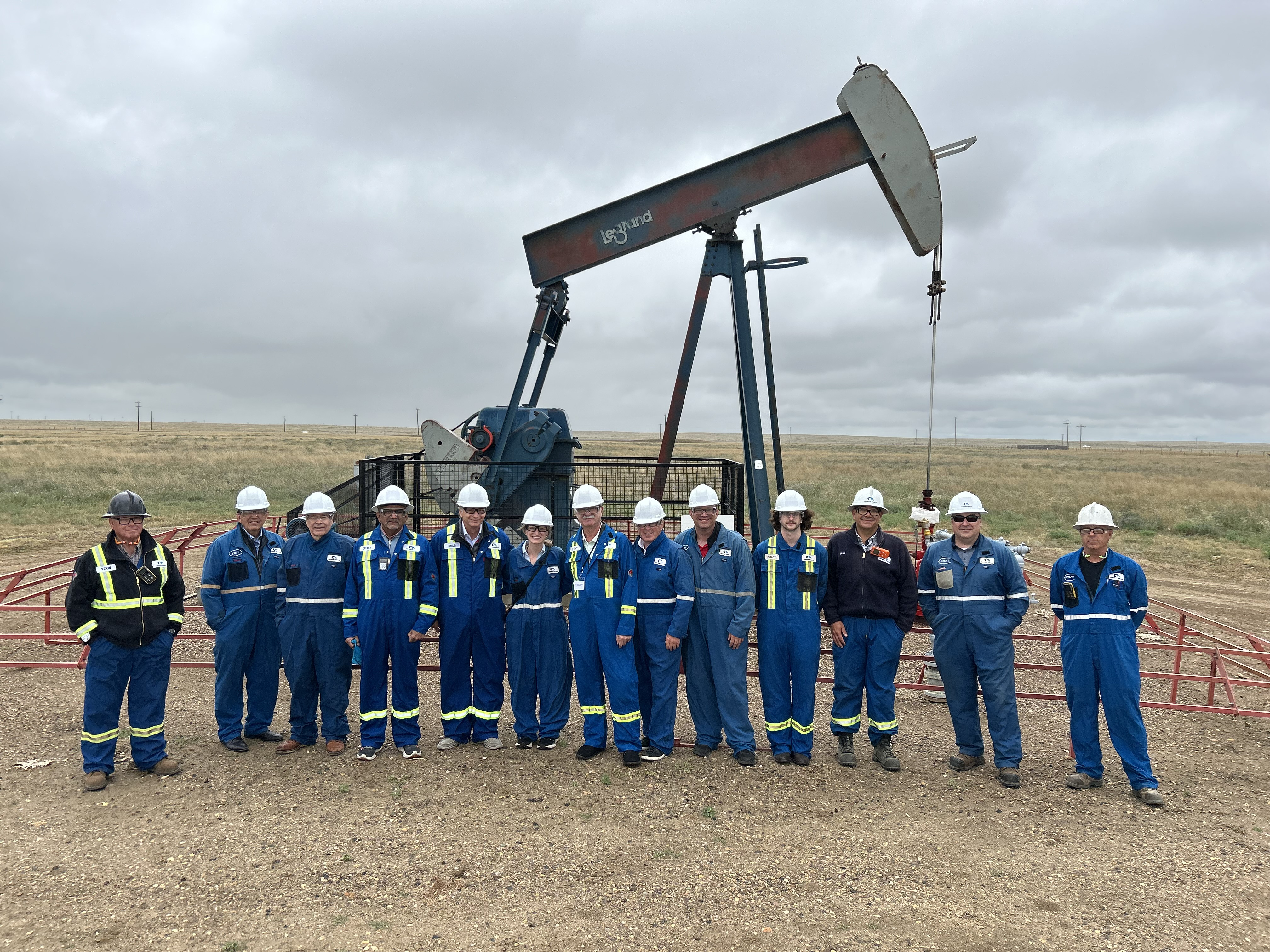
We were introduced to an oil field battery. The essential Alberta pump jack with a processing unit. Oil reserves in the south are not what they are in northern Alberta, but they are present, but they do go after every drop of oil that is under the land – and they don’t frack. Fresh oil is thick to the touch.
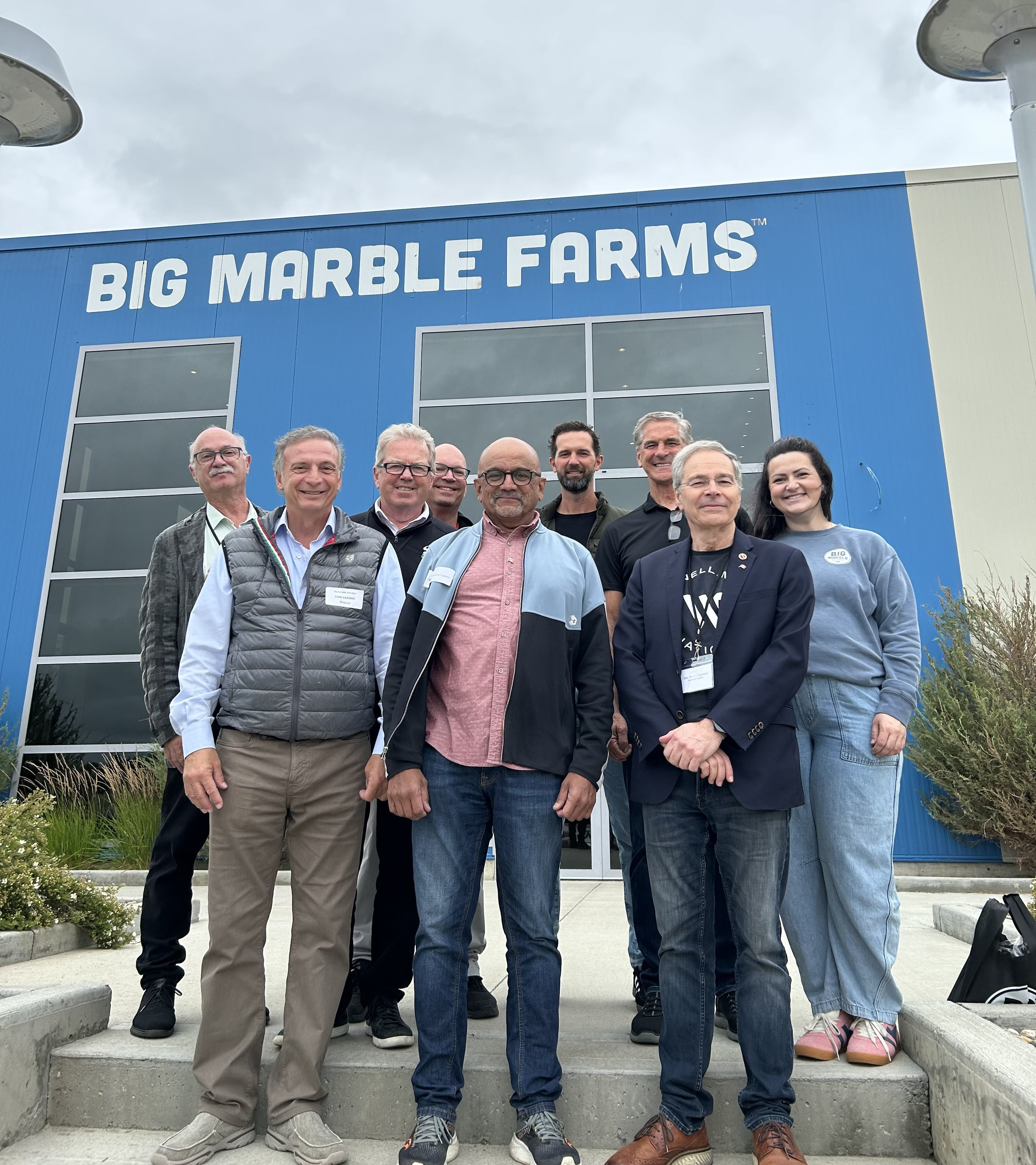
Big Marble Farms is situated on the outskirts of Medicine Hat, fortuitously one of the sunniest spots in Canada. It is one of the biggest green houses in the country, perhaps only second to those in Leamington, Ontario. If you think of the biggest warehouse you have ever seen anywhere it is bigger than that – and with glass walls and roofs. We got our steps in that afternoon at a good pace too. Their produce which includes tomatoes, cucumbers and peppers, go far and wide in western Canada and the US. Fresh and delicious!
In between, with the help of local civic and business leaders, Fridhander arranged for us to meet an array of key actors in Calgary, Lethbridge and Medicine Hat, and in each case folks from the surrounding areas came to join in. And they all read our bios ahead of time and were wonderful hosts.
We also got a taste of the Calgary Stampede, the bucking broncos as well as the extensive networking that business and government folks do, plus a focused tour of the agriculture pavilions. And to our pleasant surprise were asked to receive the salute at the RCMP musical ride, where we got a huge applause from the crowd when introduced.
Did we meet Fridhandler’s objective? I think so. We are all better informed about a province that often feels it is misunderstood on the federal scene. Each of us also developed or in some cases re-established contacts that we will continue to liaise with.
When asked what people at the local level wanted from the federal government, one former mayor said “to get out of the way”, but even he then allowed there were some key policies that had helped. Beside him, all were looking for greater understanding by their national government and Parliament and appreciated our presence no end.
The senators on the trip included Rodger Cuzner (Nova Scotia), Pierre Dalphond (Quebec), Toni Varone and myself from Ontario, Kris Wells from Edmonton and Daryl Fridhandler from Calgary.
How did the Albertans we met feel about the trip? Here’s one comment from Gary Mar, CEO of the legendary Canada West Foundation and former Alberta cabinet minister which was quite representative of the diverse folks we met: “Members of the Senate need to understand our country as a whole, and not just the provinces that they are appointed from. I would want to know that one of the four senators from P.E.I. actually knows something about the energy sector. I would want to know that a senator from Saskatchewan knows what cod stocks off the coast of Newfoundland.
“I would want to know that somebody in the province of Quebec understands the forestry business in British Columbia. So, my advice is that a picture's worth a thousand words, but a visit is worth a thousand pictures. Which is why I'm so grateful that you and a group of other senators are here to visit Alberta and see what's going on here, because as you, engage in various public policy issues, you need to be able to actually see what's going on outside of the bubble that is Ottawa.” (Full interview with Mar is on my website here.)
Travel always affords us the opportunity to meet many people doing interesting things. Before the formal tour began, I had a visit with the Catholic Immigration Society Calgary which works at integrating newcomers in Calgary and surrounding towns, hosted a roundtable with various traditional and online media on the future of news media in Canada, and recorded an interview with, Gary Mar, on Canada-US relations from a western Canada perspective (link above).
Five days in southern Alberta was fast-paced, enlightening in a big way, but yet too short.
Just to note another group of senators visited Northern Manitoba, including Churchill to see the port, in early September.
Andrew Cardozo is an independent senator from Ontario and a member of the Progressive Senate Group