

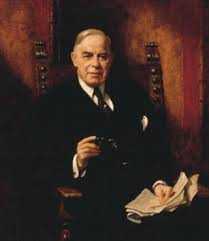
As readers of Art’s History are aware, the preceding 12 months have seen us mark very significant anniversaries in the life and career of Canada’s longest-serving Prime Minister, William Lyon Mackenzie King. Last December, of course, was the 150th anniversary of the 10th PM’s birth. And last month, the 75th anniversary of his death was observed.
With these anniversaries as backdrop, I have in recent weeks invited three dear friends and mentors to me, to share with my readers their thoughts on Mackenzie King’s legacy.
Tom Axworthy, of course, is one of the most important Canadian political historians of his generation. He has been a life-long student of Liberal Party history. And in the early 1980s, he served with distinction as Principal Secretary to Prime Minister Pierre Trudeau.
Ryerson University’s Patrice Dutil, one of the most prolific historians of his generation, has published numerous books on Canadian Prime Ministers and our politics. In the coming months his edited collection of essays, The Enduring Riddle of Mackenize King, will be published via UBC Press. He is a long-time friend and supporter of my work in the field of political history and I owe him a great debt.
My dear friend Scott Reid served as the skilled and effective Director of Communications to Prime Minister Paul Martin. A serious student of Canadian political history dating back to his undergraduate days at Queen’s, Scott is an accomplished political historian in his own right.
You will find some of this trio’s views on the King legacy below.
Dr. Tom Axworthy: Mackenzie King ranks high in political sagacity and longevity and he did have a talent for recruiting and building strong cabinets, especially forming key partnerships with Ernest Lapointe and CD Howe. But, while competent tactically at retaining power for himself and his party, King was personally repellent and far from visionary: Norman Robertson, a great public servant who served the Prime Minister as Undersecretary at External Affairs, remarked on King's death in 1950 "I never saw a touch of greatness in him".
Policy assessment corroborates Robertson's judgement. King's foreign and defence policies were disastrous: visiting Hitler in 1937, King wrote about the Fuhrer "(Hitler) is really one who truly loves his fellow man and his country." As is clear from his diary, King was both antisemitic, with Canada accepting only 5000 Jewish refugees from 1933 -1945 the worst record of any refugee accepting nation in the world, and anti-Oriental with King's government interning 22000 Japanese Canadians in 1942 without a shred of evidence that they were a security risk.
Domestically, King’s various governments advanced social measures like old age pensions and unemployment insurance to ease political pressure and Canada was competently administered during his 22 years in office. But in my view the poet Frank Scott sums up Mackenzie King best: “Truly he will be remembered where ever men honour ingenuity, ambiguity, inactivity and political longevity.
Let us raise up a temple to the cult of mediocrity. Do nothing by halves which can be done by quarters."
Professor Patrice Dutil: Seventy-five years after his death, it's important to remember how influential William Lyon Mackenzie King was in Canadian affairs. For 30 years, from roughly 1920 to 1950, King was the most-talked-about man in Canada. In his life, he commanded respect—he was on speaking terms with political, business and cultural leaders in the Anglosphere for the entire first half of the twentieth century; in death, during the second half of the twentieth century to today, his reputation has been both ridiculed and praised.
King was Canada’s longest-serving Prime Minister; indeed, no other person has held the office longer in the Commonwealth of Nations. He and the Liberals he led from 1919 to 1948 won six elections, although four of those were minorities that kept King in a ready stance to bargain with parties to his left (Macdonald, in comparison, was far more successful, having won six majorities, including four in a row). King’s fragile political reality coloured his views on a multitude of issues. It singularly shaped his outlook, yet is often overlooked. Today, he has to be remembered as a remarkable political survivor: a man who dared to use his wits to overcome all sorts of policy and personal difficulties in order to inscribe his name in Canada's history book.
Scott Reid: William Lyon Mackenzie King was Canada’s first truly modern leader.
Not modern in his manner. He was a contradictory mix of Victorian habits and reformist agenda. But modern in the sense that he brought an uncompromising, win-at-all-costs approach that casual observers might associate only with our times.
His nearly 22-year stint as prime minister – the longest in Commonwealth history – is littered with evidence of cutthroat conduct. Many recall the King-Byng Affair. Fewer remember that it was quite likely engineered by King himself to distract from an unseemly corruption scandal. Ask the mannerly Arthur Meighen whether King played cricket at politics. His ghost will be joined by that of RB Bennett, George Drew and Robert Manion to assure you that King was a ruthless, even unscrupulous opponent. Allies who crossed him got no better treatment, as Defence Minister James Ralston discovered when he was savagely fired over the delicate issue of conscription.
In our flash-bulb memories of times past when politics was ‘fought with honour’, we forget the cunning example of King and how he subordinated all else to political control and victory. His diaries and seances draw all the attention these days. But King’s true legacy is something uniquely modern: to regard politics as a cool - sometimes cruel - profession to be practiced without pause or mercy.
Arthur Milnes is an accomplished public historian and award-winning journalist. He was research assistant on The Rt. Hon. Brian Mulroney’s best-selling Memoirs and also served as a speechwriter to then-Prime Minister Stephen Harper and as a Fellow of the Queen’s Centre for the Study of Democracy under the leadership of Tom Axworthy. A resident of Kingston, Ontario, Milnes serves as the in-house historian at the 175 year-old Frontenac Club Hotel.