WASHINGTON -- A mandatory review of the Canada-U.S.-Mexico-Agreement on trade kicks into high gear next year as U.S. President Donald Trump continues his campaign to realign global trade and poach key industries from America's closest neighbours.
Negotiations on the trade pact, better known as CUSMA, were a stress test for Ottawa during the first Trump administration. The trade talks were tense at times but, ultimately, the pact that replaced the North American Free Trade Agreement was hailed a success in all three countries.
Since the president's return to the White House, however, confidence in CUSMA's future has waned.
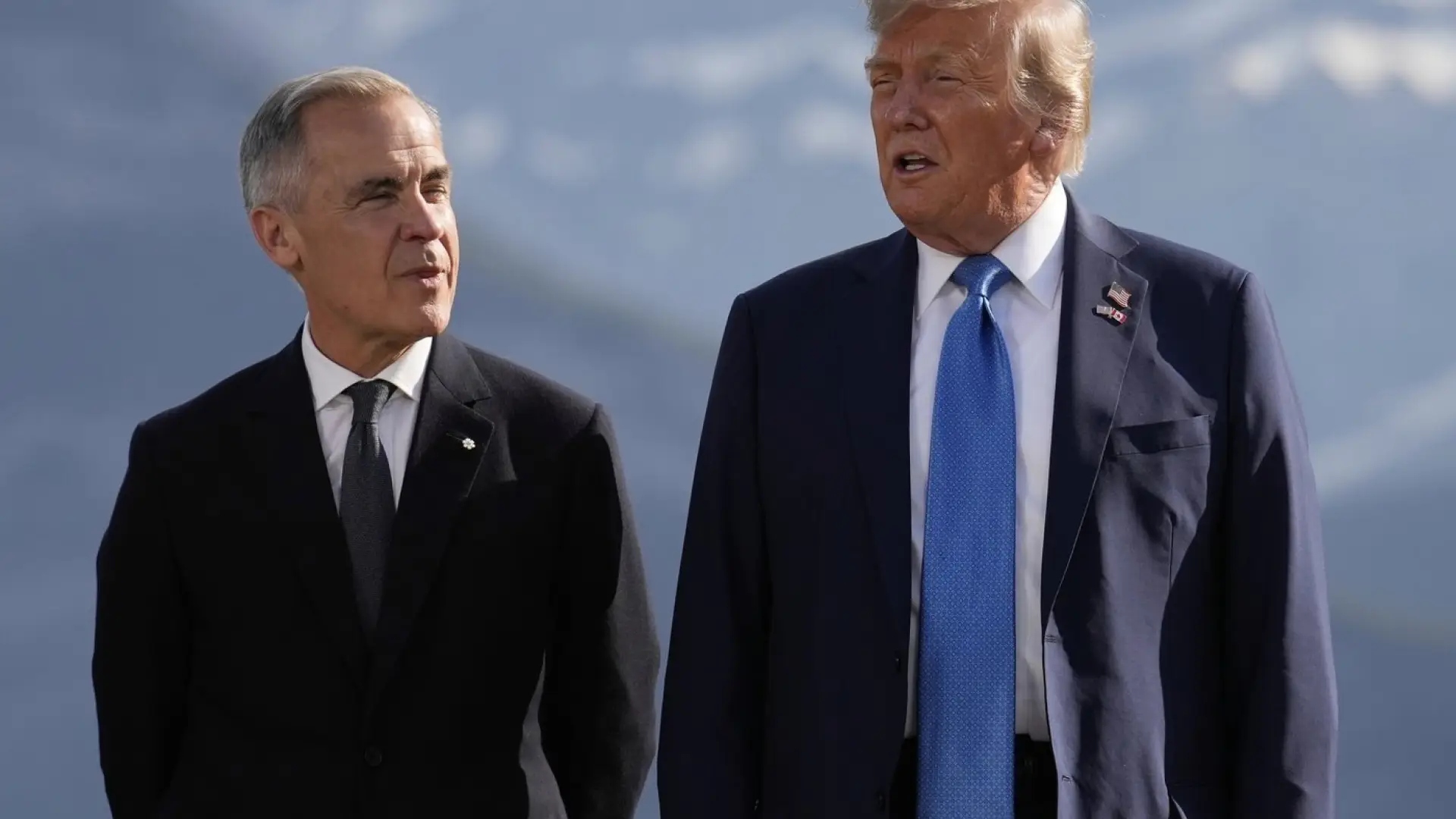
During a meeting with Prime Minister Mark Carney at the White House, Trump called the deal "transitional" and said it may have served its purpose.
Trade with Canada may not be front of mind for Trump, said Fen Osler Hampson, a professor of international affairs at Carleton University in Ottawa and co-chair of the Expert Group on Canada-U.S. Relations. It's more like the "proverbial iceberg," he said.
"It's what you don't see that matters. And that's the kind of hidden economic wiring of a very deep and highly interdependent relationship."
The review began in the United States with public consultations in September. The Trump administration is expected to send a report to Congress early in the new year outlining the changes it wants.
The formal review begins in July, though Carney said last week that Canada-U.S. Trade Minister Dominic LeBlanc will head to Washington in January to kick off talks with his American counterparts.
It boils down to a three-way choice for the three countries under CUSMA: renew the deal for another 16 years, withdraw from it, or signal both non-renewal and non-withdrawal -- which triggers an annual review that keeps negotiations going.
Trump's public comments indicate that his administration is looking at longer-term negotiations -- but he also has said the United States could let CUSMA "expire."
Ryan Majerus, a Washington-based partner in the international trade team at the law firm King & Spalding, said he expects the process won't be that different from the original CUSMA talks.
"The U.S. has concerns about how it's operated in the past five years, as do our trading partners, and they'll just hash it out in negotiating rooms," said Majerus, a former assistant general counsel at the Office of the U.S. Trade Representative during the first Trump administration.
Trump has complained repeatedly about long-standing irritants in the United States' trade relationship with Canada -- the supply management system for dairy products, the alleged subsidization of the softwood lumber sector, other non-tariff barriers. It's almost certain those will be brought up at the negotiating table.
U.S. Trade Representative Jamieson Greer told a congressional committee last week that the American side also has issues with the impact of the Online Streaming Act and Online News Act on American digital services firms.
Successive U.S. administrations have attacked Canada's digital services tax -- which was paused by Carney earlier this year in an attempt to find a tariff off-ramp.
Greer also said the U.S. is annoyed by provincial bans on sales of American alcohol that were imposed in response to the barrage of tariffs on Canada following Trump's re-election.
A key issue will be automobiles. CUSMA introduced stricter regional content provisions and labour requirements but the deeply integrated North American auto industry has been upended by Trump's Section 232 tariffs.
"It's pretty obvious the U.S. will push for greater regional content in the U.S.," said Majerus.
For Canada, critical minerals and energy will be key bargaining chips. The Trump administration's push to build AI data centres is ramping up demand for energy that Canada could help supply.
The U.S. is also looking to break China's control over the global critical minerals supply chain. Majerus said he could see the U.S. offer trade concessions in exchange for Canada providing a steadier supply of critical minerals.
By the time the CUSMA talks begin in earnest, the Supreme Court will have ruled on Trump's use of a national security statute -- the International Emergency Economic Powers Act -- to hit nearly every nation with tariffs. If the court takes that policy tool away from the president, it will change the calculus for stakeholders and the administration even as Trump looks for new ways to deploy tariffs.
The negotiations will also be happening in the shadow of a bitter midterm battle as Democrats try to take back control of Congress. But even if Democrats flip the Senate or the House in November, it's not clear what role Congress would play in changes to the trade agreement, said Greta Peisch, former general counsel for the Office of the U.S. Trade Representative.
"That may be an interesting point of contention. How extensive are the changes? Do or do they not require review by Congress? And those answers aren't always crystal clear," said Peisch, a partner at Wiley Rein in Washington, D.C.
But if Trump decides to withdraw from the agreement altogether, she said, he might be able to do so without congressional approval.
Trump likes to claim he has all the cards and his devastating tariffs on America's neighbours and allies have certainly rattled long-standing assumptions about the shape of international trade. Under Carney, Canada has sought to eliminate internal trade barriers and build new trade relationships abroad to reduce its reliance on the U.S. market -- but those efforts are still in their early stages.
Peisch said it's hard to say at this point if either country has more leverage heading into the negotiations.
"I think it depends on ... what your objectives are both in the near, medium and long term," she said. "And how you're positioning yourself for sort of future eventualities."
This report by The Canadian Press was first published Dec. 23, 2025.
-- with files from Craig Lord in Ottawa