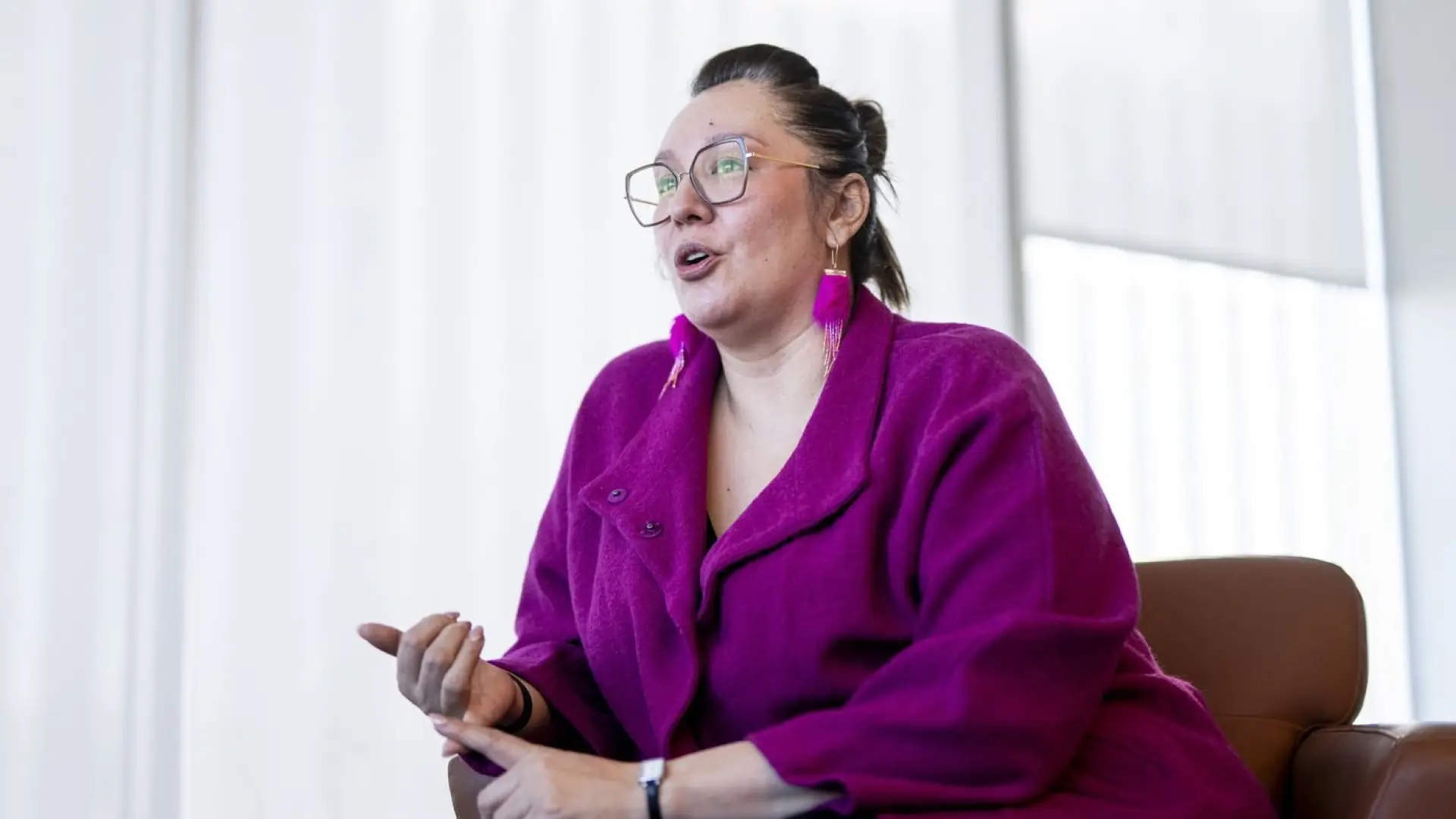
OTTAWA -- When Mandy Gull-Masty took up the role of Indigenous services minister last spring, one question loomed over her appointment: why would a Cree woman want to administer the Indian Act, when another First Nations woman before her turned down the role?
Gull-Masty was named to the cabinet job in May after being elected as a member of Parliament for the first time in April. She told The Canadian Press she was willing "to take the risk" even as some said the government was "setting (her) up for failure."
Others, she said, pointed to a pathway she can help create for the people she once worked alongside, and make progress on the files she knows intimately: clean drinking water, housing and child welfare.
"I've had the opportunity to learn more -- way more -- than I ever expected. I've also had to push back in my own way," said Gull-Masty from her downtown Ottawa office.
"I can say between the day that I started and today, the expression of support and people wanting me to succeed, and wanting to work with me, has exponentially multiplied, and I'm so grateful for that."
Gull-Masty was at least the second First Nations woman to be offered the job by a Liberal prime minister, but the first to accept it.
Former minister Jody Wilson-Raybould turned down the job when offered it by former prime minister Justin Trudeau because she would have had to administer programs under the Indian Act -- legislation she has opposed throughout her career.
Indigenous leaders at the time said Trudeau's proposal to move her to Indigenous Services was inappropriate, given the outsized control the federal government has over Indigenous Peoples and communities.
Gull-Masty, offered the same role by Prime Minister Mark Carney, has thought about it differently in the roughly 200 days she's held the job.
Being on the inside, she said, has given her a new outlook -- and responsibility -- to communities she works with daily. It has also shaped her relationships with her colleagues around the cabinet table who may not have the same working knowledge of Indigenous communities in this country.
Sometimes that means editing their speeches and providing feedback to ensure their words are reflecting a community's reality. Other times it's "challenging people" to think of Indigenous communities in the work they're doing, even if their file isn't directly Indigenous-facing.
That's true for her relations with Natural Resources Minister Tim Hodgson, who she said met with the government's Indigenous caucus that includes Gull-Masty, Liberal MP Jaime Battiste and Northern and Arctic Affairs Minister Rebecca Chartrand.
Hodgson, another rookie MP and former chair of the board of directors of Hydro One, has found himself in the position of asking Indigenous communities to build with the federal government and support its major projects agenda. Things have not gone entirely smoothly for the new minister.
In November, Hodgson said he could meet with Coastal First Nations, upset about the proposition of a pipeline to B.C.'s coast, via Zoom.
The comments, widely seen as dismissive of First Nations engagement and the value of in-person relationships and meetings, were met with a quick apology from Hodgson who vowed to meet with them in person as soon as he could.
"He owned it," Gull-Masty said.
"Giving grace to people because they're trying to come into that space and do engagement is always something that I'm going to offer."
She has had to give herself grace, too, and remind herself that while Indigenous issues may not be at the forefront for the average Canadian, everything she does makes the top headlines for the communities she serves.
"I've had my moments," she said.
"I don't judge ... who's important and who's not important -- I know the role that we do and the reason why we were chosen to fill that role is extremely important."
While a rookie to federal politics, Gull-Masty has lived a life in the public eye, most recently as the grand chief of the Grand Council of the Crees, where she built peer-to-peer relationships with First Nations leaders from across the country.
In her new role, those dynamics have changed, something that was most visible during the December Assembly of First Nations gathering in Ottawa. It was there Gull-Masty found herself delivering government messaging to a group of chiefs she once sat alongside.
Logging 14-hour days during the three-day gathering, Gull-Masty felt performing her new role in a familiar space brought about a new "intensity."
"It was very different (to be) on the receiving end of acknowledging the reality of what people face in this country as First Nations people," she said.
"And seeing my colleagues being in that space and trying to help and guide them through that as well, that was not something that I've ever experienced."
Gull-Masty said she's always been a Liberal, but she hasn't always publicly backed the party.
Writing on social media ahead of the 2015 election, Gull-Masty threw her support behind then-NDP leader Tom Mulcair, a progressive leader who promised pharmacare, reconciliation with Indigenous Peoples and supporting the North.
She giggled when asked what changed over the last 10 years that she was willing to put her name on the ballot for the riding of Abitibi--Baie-James--Nunavik--Eeyou for a party she once said was given too many "chances."
"In that era, 10 years ago when I was younger, this was the right person in that moment ... What I'm looking for in leadership is someone that's really going to be structured, going to have stability, going to ensure there's clarity in the path that they're trying to take," she said.
"I think that I've found that now in working with this prime minister. No dig to Tom Mulcair, but I think Carney is offering it to me in a way (and) I'm very proud to be part of that."
This report by The Canadian Press was first published Dec. 27, 2025.