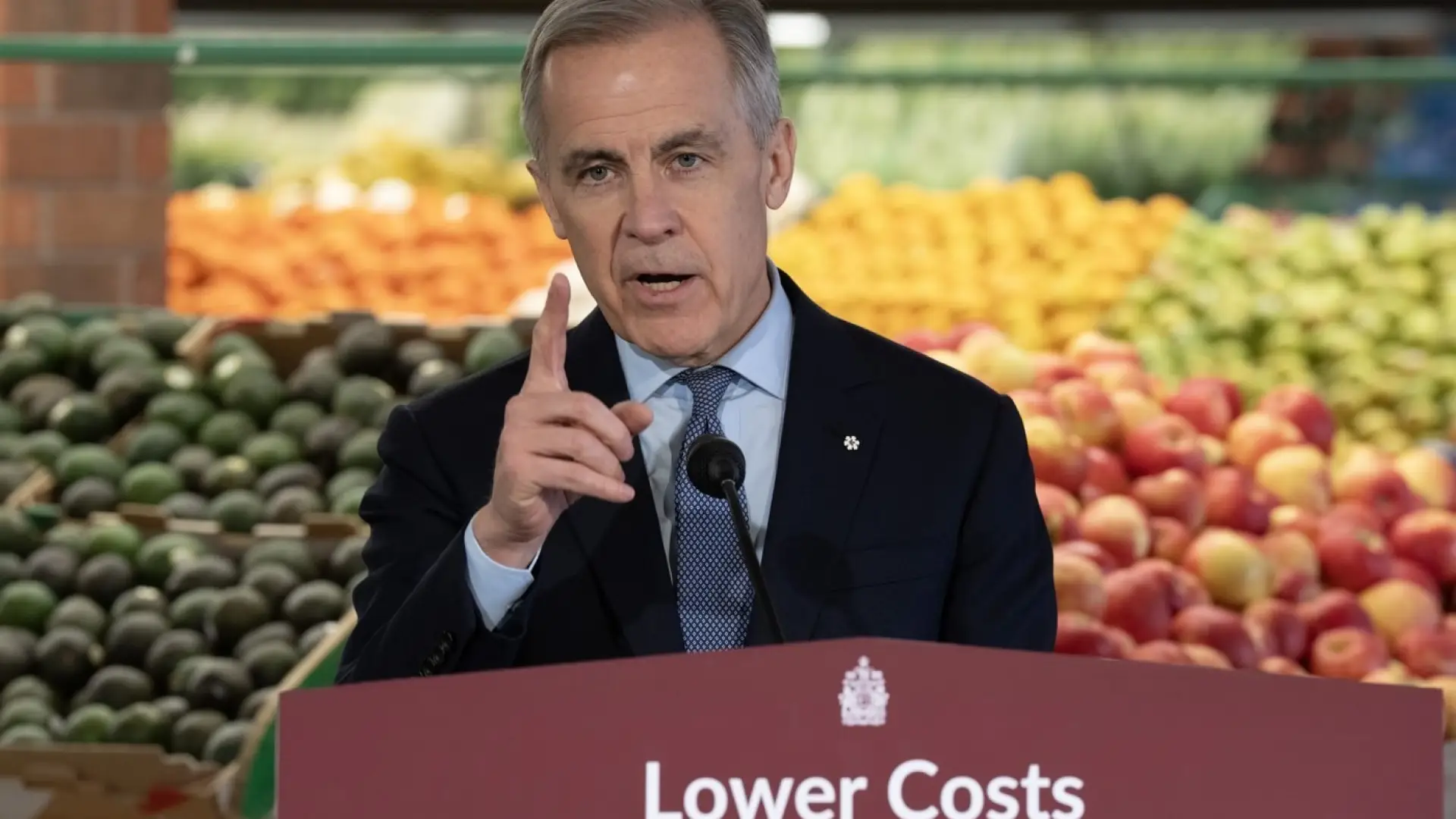
Proposed changes to the GST credit announced Monday by Prime Minister Mark Carney should provide some relief for lower-income Canadians, but experts caution it may not account for future surges in the cost of living.
Carney unveiled a 25 per cent hike to the GST credit in a temporary move set to last for five years, billed as a measure to help lower-income consumers deal with the high cost of groceries.
The federal government will also issue a one-time payment this year worth 50 per cent of the credit.
University of Calgary economist Trevor Tombe called that a "meaningful amount" relative to spending pressures that many households are facing from sky-high grocery bills.
For households that rank in the bottom 20 per cent of income across Canada, excess inflation since 2021 has led to roughly $1,000 more in spending per year, said Tombe, noting groceries represent "a big chunk" of that increase.
Ottawa estimated the relief, being branded as the "Canada Groceries and Essentials Benefit," would provide up to an additional $402 to a single individual without children, $527 to a couple, and $805 to a couple with two children.
In total, a qualifying family of four would receive up to $1,890 this year and roughly $1,400 annually for the next four years. A single person would get up to $950 this year and about $700 for the next four years.
"It is an amount that, at least for lower-income households, actually does compare fairly similarly to the overall cost of certain items that have increased," Tombe said.
But he added that food and energy prices are typically more volatile than other categories of goods included in Statistics Canada's monthly inflation reading.
For that reason, Tombe said it's difficult to forecast whether the Carney government's relief will remain as effective over its five-year lifespan.
"They experience periods of more rapid price increases, but they also experience periods of price decreases so it is really hard to predict," Tombe said.
"Historically, they both rise and fall more than prices overall. It could really go either way."
H&R Block tax expert Yannick Lemay also called the announcement a "significant" step to help low-income Canadians.
"It is really money that you'll have tax-free in your pocket available for you to spend or to use for either groceries, essentials, or other elements," Lemay said.
The government estimated around 12 million Canadians would qualify for the relief.
Lemay said qualification would be determined based on 2025 tax filings, with payments commencing this July.
"So you want to make sure you file your taxes on time to receive the credit," he said.
"There's no additional form that you need to file, there's no additional request. Simply by filing your tax return, if you're eligible, the CRA will pay the amount to you. It's usually an amount that you receive on a quarterly basis."
NerdWallet Canada banking expert Clay Jarvis called it a "considerate move" by the federal government.
However, he questioned how impactful the relief would be as prices continue to rise.
"It works out to a 25 per cent increase each year, which isn't nothing," Jarvis said in a statement.
"But a few hundred dollars spread out over the course of a year won't be enough to stabilize struggling households."
This report by The Canadian Press was first published Jan. 26, 2026.