OTTAWA -- The federal Liberals accepted a Conservative proposal Monday to put guardrails around proposed new cabinet powers as they debated the government's omnibus budget bill.
The finance committee tackled 606 clauses in the budget implementation legislation over five-and-a-half hours Monday as MPs faced a tight timeline to review the fast-tracked Bill C-15.
That legislation proposes to give federal ministers the ability to temporarily exempt individuals or corporations from some non-criminal federal laws — an approach the government refers to as "regulatory sandboxes."
Some members of Parliament have expressed discomfort with the idea of granting such sweeping powers to cabinet in the interest of boosting competitive or economic forces.
Both interim NDP leader Don Davies and Green Leader Elizabeth May appeared at Monday's finance committee meeting, where MPs were going clause by clause through the legislation.
Davies said such a ministerial override would present a "serious threat to Canada’s democratic foundations.”
"Shame on you," May said after committee members did not adopt her own amendment to restrict the application of regulatory sandboxes.
Conservative MP and committee member Sandra Cobena said she was concerned about the "immense concentration of power" implied in the proposal. She introduced amendments that she said would "meet the urgency of the moment" while balancing democratic standards.
The successful amendments, backed by Liberal members of the committee, include a requirement for ministers to consult with Canadians before ordering any legal exemptions, and to report back to Parliament.
Cobena's amendments would also require the approval of both a cabinet minister and the president of the Treasury Board before an individual or corporation is shielded from a law. They also would clearly state that certain laws — including the Conflict of Interest Act and the Access to Information Act — cannot be overridden.
"The government has heard opposition concerns … and we are willing to support the guardrails suggested by these CPC amendments," said Liberal MP and committee member Carlos Leitao.
A spokesperson for Finance Minister François-Philippe Champagne said the government's original proposal wasn't broadly supported by the opposition and was "holding up consensus on a very important bill."
John Fragos said the amendments were adopted "in keeping with the government's commitment to working with the opposition parties to deliver results."
Treasury Board President Shafqat Ali had defended the government's plan at a separate committee meeting earlier this month. He said it would allow the government to speed up processes and that exemptions would be permitted only if they were found to be in the public's interest.
"This saves time, it saves resources," he said.
He said exemptions have been allowed at Transport Canada and Health Canada since 2019.
Bill C-15 states an exemption would be valid for no more than three years, though a one-time, three-year extension can be granted if certain circumstances are met.
The bill says a minister may order an exemption only if they think it would allow for the testing of a product, service, process, procedure or regulatory measure "with the aim of facilitating the design, modification or administration of a regulatory regime to encourage innovation, competitiveness or economic growth."
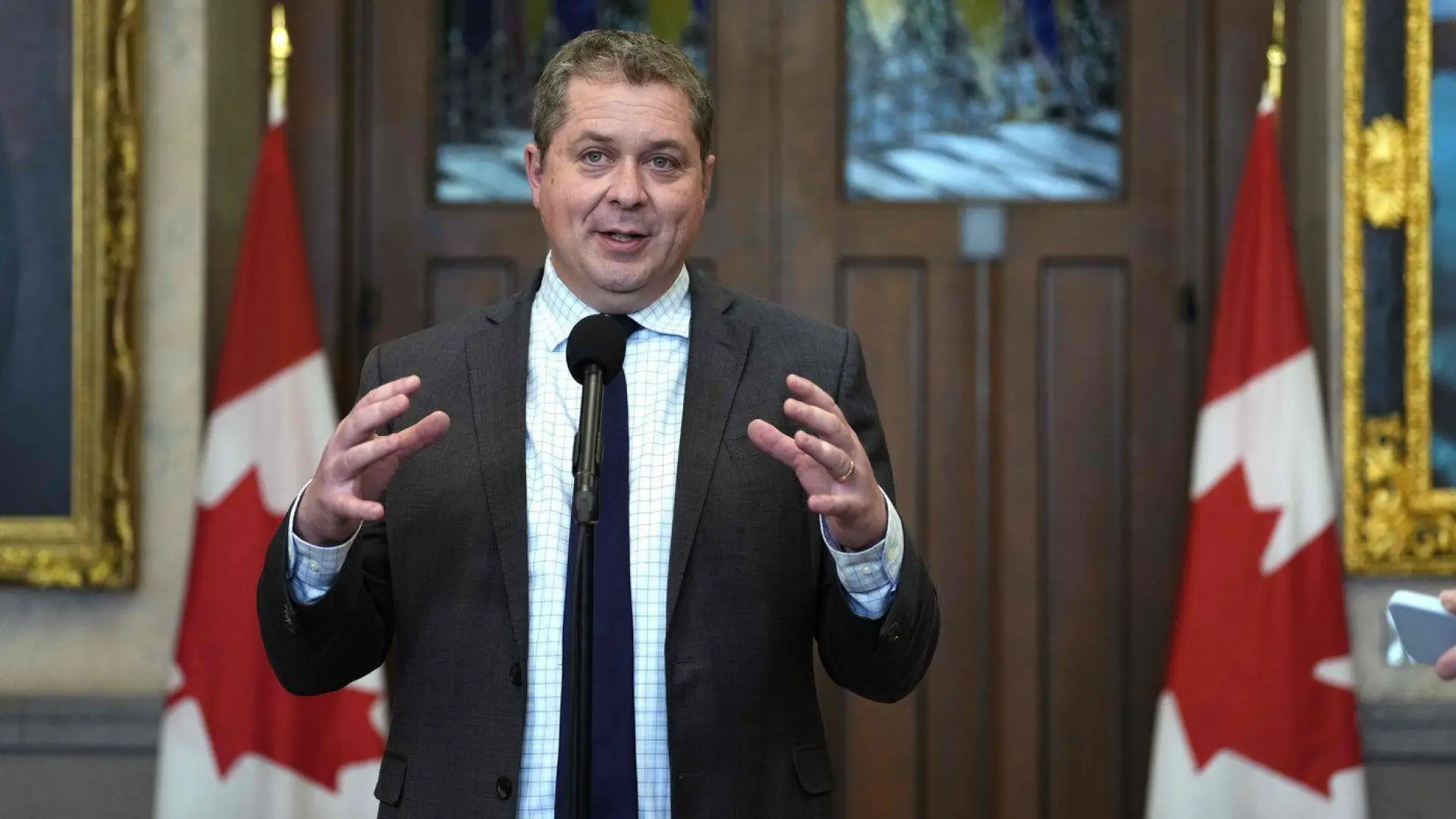
Conservative House leader Andrew Scheer said before question period on Monday that the Official Opposition was "able to force the government" to adopt its amendments.
He said the original proposal would have given the cabinet "unprecedented powers to bypass legislation and regulations."
"We fought very hard, we held the line on that, and now we see that the government has adopted our proposals because of that hard stance that we took," Scheer said.
MPs agreed earlier this month to a motion seeking to fast-track the bill through the committee and report stages of debate.
That motion gave a Monday deadline for Bill C-15 to be considered at finance committee, which must report back to the House by Wednesday. It's not yet clear when the final vote on the bill will take place.
Since the winter sitting of Parliament began, Conservatives have agreed to work with the Liberals on certain legislation — particularly on efforts to get U.S. tariffs removed and build out new markets.
Scheer was asked Monday whether Conservatives will vote for the amended budget bill or just let it pass on division. He did not answer directly.
He said the Conservatives have "lots of tools" at their disposal to hold the government to account on other aspects of legislation that they believe "need to be improved or fixed."
Several Bloc Québécois amendments were also accepted over the course of debate at finance committee on Monday but most proposals from opposition parties were rejected.
The Liberals amended their own bill in some spots, including by codifying into law requirements for Canada Post to provide free library materials for people who are blind and reduced rates of postage for interlibrary loans.
The original text of the bill removed existing regulations setting out special postage rates in those situations so that the Crown corporation could unilaterally set the cost of a stamp rather than asking for government approval — a move that alarmed service providers who rely on the exemption.
The clause-by-clause review proceeded mostly smoothly, with one exception: a mistaken nay vote by Conservative members defeating two clauses relating to the construction of a high-speed rail corridor between Ontario and Quebec.
Late in the day, Conservative MP Jasraj Singh Hallan's request to go back to those clauses and redo the vote was granted, this time with Conservatives allowing the measures to pass.
This report by The Canadian Press was first published Feb. 23, 2026.
— with files from Catherine Morrison