TORONTO -- Ontario will not have a policy in place to publicly fund all medically necessary services from nurse practitioners by April 1, as ordered by the federal government, leaving some patients paying out of pocket for primary care.
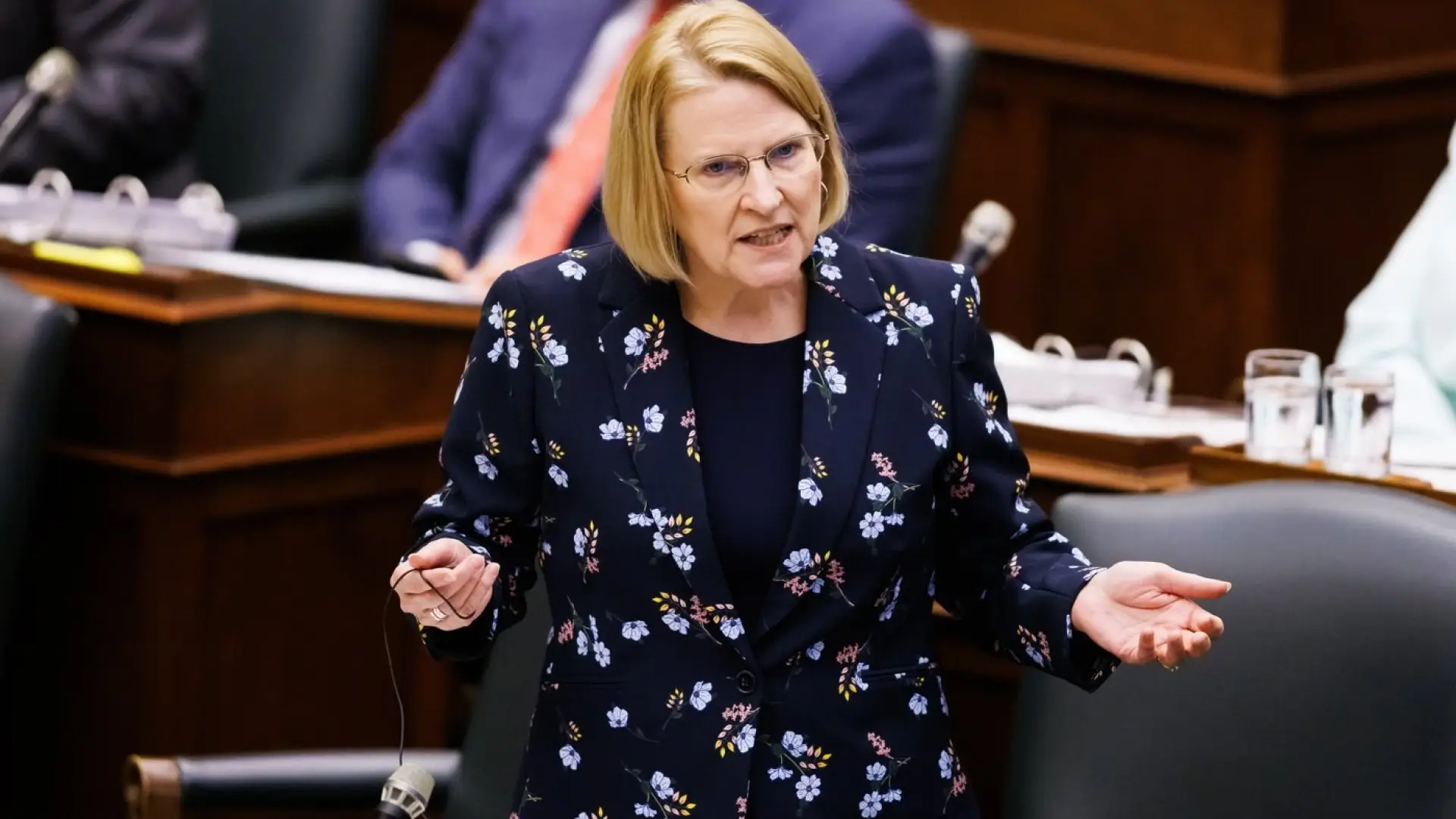
Health Minister Sylvia Jones pushed the federal government years ago to close what she called a loophole in the Canada Health Act that allowed some nurse practitioner clinics in the province to charge patients fees for primary care.
The government has done that, clarifying that nurse practitioner services equivalent to what physicians provide are covered by the Act's requirement that medically necessary services are publicly funded. It has given provinces and territories the April 1 deadline -- but Ontario won't be ready.
"The Ministry of Health is actively reviewing and engaged in ongoing discussions with provincial and territorial partners and the federal government regarding implementation expectations of the federal government's direction," spokesperson Ema Popovic wrote in a statement.
Provinces won't start incurring penalties for non-compliance until April 2027. Critics and nurse practitioners say Ontario should not wait.
"The (federal government's) letter really underscores the importance of the provincial government's immediate implementation of a robust, sustainable funding mechanism to support nurse practitioners as key members of health-care workforce," said Michelle Acorn, CEO of the Nurse Practitioners Association of Ontario. "The lack of easily accessible funding models has historically limited the number of public positions and practice settings for nurse practitioners in Ontario.
"Flexible funding mechanisms will support nurse practitioners in delivering the timely, high-quality, accessible care that Ontarians deserve where and when they need it."
Nurse practitioners in Ontario can assess patients, order and interpret tests, and prescribe medication and treatment. They work in a variety of settings, including family health teams and community health teams, hospitals and long-term care homes, as well as in more than two dozen publicly funded nurse practitioner-led clinics.
Two years ago, a proliferation of private subscription fee-based nurse practitioner clinics made headlines. Jones responded to opposition and media questions by putting the onus on the federal government to close a "loophole" that allowed them to operate.
"If there is a wedge that is allowing these clinics to happen, then perhaps the member opposite could pick up the phone and call their federal counterparts, because that's what I've been doing," she said in question period in March 2024.
"I'm making the case that if the Canada Health Act allows these for-profits, then we will be shutting them down with the changes to the Canada Health Act and federal government involvement."
Ontario Liberal health critic Dr. Adil Shamji said it is "hypocritical" for Jones to now delay the implementation of what she so strongly urged two years ago.
"To me it suggests that it has always been more convenient for this government to allow patients to pay out of pocket than to fund it within our public medicare," he said.
"We know that exceptional primary care can be delivered by nurse practitioners, and there is no reason that, if they are providing a service that would otherwise be covered if delivered by a physician, there's no reason that it shouldn't be covered under our public health-care system as well."
Nurse practitioner Maryanne Green, along with two nurse practitioner colleagues, operates one of the subscription-based clinics Jones had threatened to shut down.
She applied to run a publicly funded clinic in 2023, when the government put out an expression of interest for new primary care teams, but was turned down. Green decided to open a clinic anyway, given the high need for primary care she saw in her community of Kingston, Ont.
"It's frustrating," Green said. "I am not charging because I want to. It's because this is the only way to move forward.
"From the point where I put that proposal in and recognizing that OK, I'm not going to get funding, the options are to sit back and wait until either I get (Ontario Health Insurance Plan), continue trying for funding, or I move forward with the private business plan."
Green's clinic has urgent care services, as well as an annual membership of $1,800 for primary care. She hopes that when Ontario comes out with its plan for funding nurse practitioners, it is at an adequate level.
"I absolutely want public funding, and want to be able to provide patients with hopefully free access to health care," she said.
"I am concerned that we're not going to get enough funding to run a clinic like this properly. We know that there's inherent issues within the existing models where you've already heard family physicians complain that they're not making enough money with the OHIP billing process as it is, that they feel their administrative burden is too high."
Currently in most settings, nurse practitioners are paid a salary, though rates tend to be higher in hospitals, for example, which can make recruiting and retaining nurse practitioners in existing publicly funded primary care settings challenging, Acorn said.
In addition to seeing better compensation for the nurse practitioner positions that are already publicly funded, the association wants to see flexible funding models, such as those for family doctors, who can bill OHIP on a fee-for-service basis or who are paid per patient enrolled.
NDP primary care critic Dr. Robin Lennox said the government should work to fully integrate nurse practitioners into the primary care system, as it works toward a goal of attaching all Ontarians to primary care by 2029.
"I would like to see enough flexibility in the funding model that our nurse practitioners are able to function as they have been trained, which is as independent primary care providers, particularly in, you know, our rural and remote regions where access to primary care is more limited," she said.
"This is a really huge opportunity to prevent nurse practitioners from having to enter into essentially a private-payer system just to be able to provide the primary care they're trained to deliver."
This report by The Canadian Press was first published March 20, 2026.