NEW YORK --
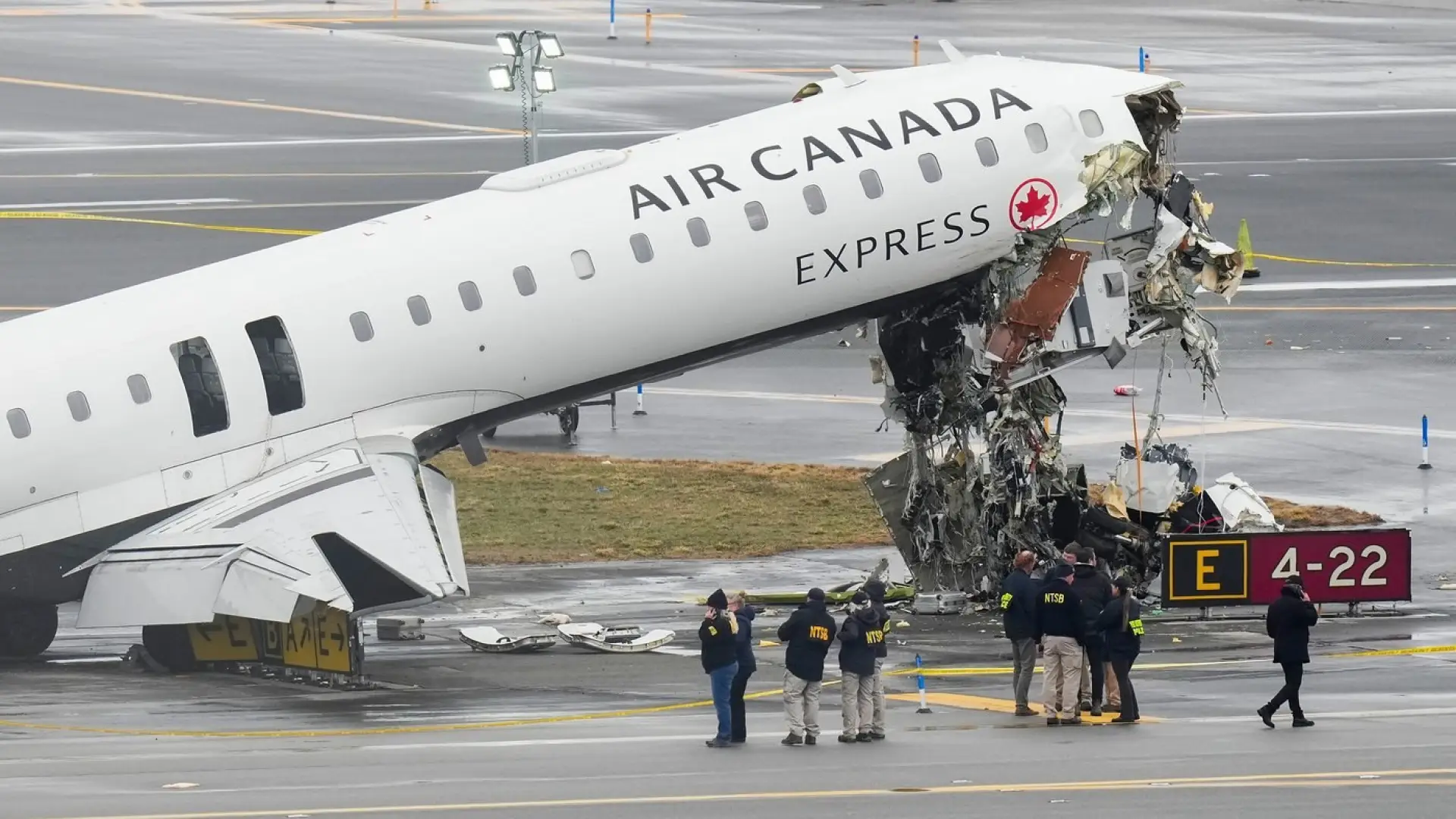
A fire truck had been cleared to cross a runway at New York's LaGuardia Airport only 20 seconds before it collided with an Air Canada jet, the U.S. National Transportation Safety Board said Tuesday in an update to its investigation into the final moments of the fatal flight.
Two pilots were killed in the collision with the truck on the runway Sunday night.
Doug Brazy, the lead investigator, read out details from flight data and radio transmissions of the final three minutes of Flight AC8646 from Montreal to the busy New York airport that showed overlapping issues with staffing and technology.
Early details of the investigation described second-by-second decision-making inside the LaGuardia control tower as the Canadian pilots prepared to land.
Nine seconds before the crash the air traffic controller told the fire truck to stop. A second later, sounds depict the plane touching down on the runway, Brazy said. Four seconds later the tower once again called on the truck to stop.
Jennifer Homendy, head of the safety board, said a runway warning system didn't sound an alarm before the collision. The system didn't work as intended because the fire truck did not have a transponder, she said.
"We have no indication there were transponders on any of the trucks," Homendy told a news conference. "But there are transponders on other trucks at other airports across the nation."
The system would normally allow air traffic controllers to track the movement of aircraft and other vehicles on runways and taxiways, using radar, sensors and other technology that can trigger alarms.
Investigators are still parsing through information and plane debris, Homendy said, including conflicting accounts about how many controllers were in the tower at the time of the collision. They do know there were at least two people, she said, but it's still not clear who held which duties.
It's standard procedure for two controllers to have combined duties on the midnight shift at LaGuardia, Homendy said, but the safety board has repeatedly raised concerns during other investigations about the pressure put on employees during the late shift.
Homendy cautioned anyone from putting blame on the controllers, saying it "is a heavy workload environment."
"We rarely, if ever, investigate a major accident where it was one failure. Our aviation system is incredibly safe because there are multiple, multiple layers of defence built in to prevent an accident," she said. "So when something goes wrong, that means many, many things went wrong."
The Transportation Safety Board of Canada is also taking part in the U.S.-led investigation.
"The hard work now of analyzing the factors that led to this tragic incident has begun and will continue until we get to the bottom of it," Steve MacKinnon, Canadian transport minister, said in Ottawa.
The pilots have been identified as Antoine Forest and Mackenzie Gunther. While Forest lived in Coteau-du-Lac, Que., southwest of Montreal, Toronto college Seneca Polytechnic says Gunther graduated from its Honours Bachelor of Aviation Technology program in 2023.
LaGuardia airport reopened Monday but the runway where the collision occurred remained closed and many flights faced long delays. Lineups to get through security snaked through parts of the airport amid staffing shortages caused by a partial government shutdown that's left agents with the Transportation Security Administration, who navigate travellers through security checkpoints, without pay.
Sunday's crash has brought into focus the increasing pressures on air traffic controllers in the United States. The industry has been plagued by shortages of controllers, who have also repeatedly worked without pay in stressful environments during previous government shutdowns.
This report by The Canadian Press was first published March 24, 2026.
-- With files from The Associated Press