
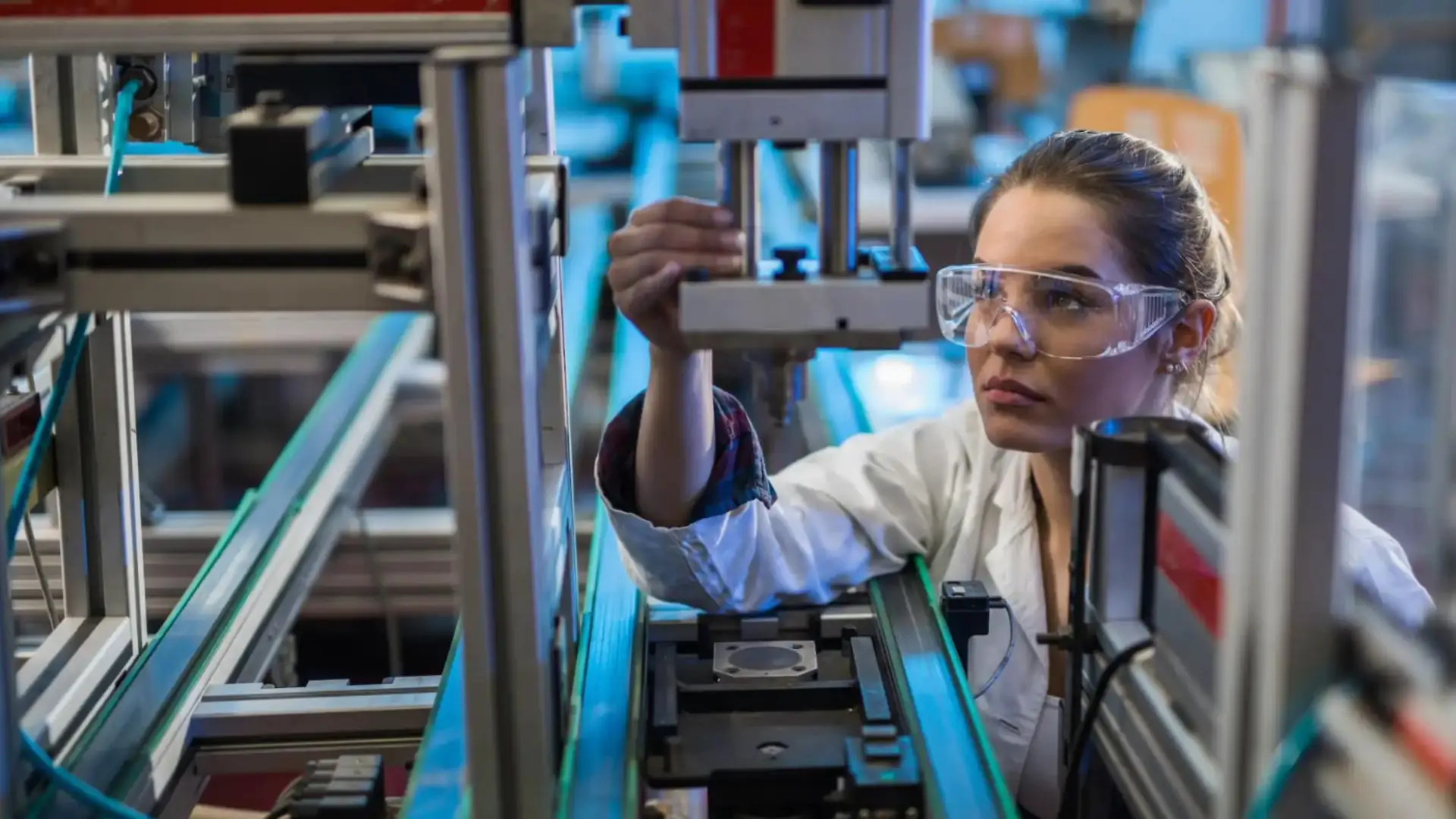
When the next emergency hits, two-day delivery won't save us. And neither will our current approach to defence production.
Covid-19 taught Canada a lesson we paid for in lives and pride. When the pandemic hit, we discovered — with genuine shock — that we couldn't manufacture enough masks to protect our own nurses. We scrambled for vaccines. We waited on shipments. We called in favours from allies who were running low themselves. A wealthy, sophisticated G7 nation stood in line, hat in hand, hoping the order would arrive.
Then the crisis passed. And we went back to the way things were.
That instinct — to treat emergency preparedness as a temporary inconvenience rather than a permanent strategic obligation — is one of the most expensive habits Canada has.
And right now, as the global security environment deteriorates faster than at any point since the Cold War, we are about to pay for it again.
Here is the uncomfortable truth that rarely makes it into defence spending announcements: money alone does not build security. Capacity does.
And Canada, for all its wealth and talent and industrial history, has allowed its domestic defence production capacity to quietly hollow out over thirty years of comfortable assumptions: that allied supply chains would always be open, that critical components would always be available, and that in a pinch, we could simply place an order.
You cannot Amazon Prime your way through a national security crisis.
The Dependency We Built and Chose to Ignore
Think concretely about what modern defence systems actually require: precision components. Advanced materials. Drone and unmanned vehicle systems. AI-enabled sensors and communications hardware. Semiconductors.
Many of these technologies are dual-use, developed for commercial applications but directly transferable to defence needs. While Canada's AI sector, its advanced materials companies, its robotics and automation firms are not defence contractors, they are defence assets – and could play an important role closing a vulnerability for this country.
Because much of what Canada would need to sustain a meaningful defence posture — or surge production rapidly in a conflict scenario — depends on supply chains that run through countries we cannot count on, or through allied nations whose own surge requirements would immediately take priority over ours.
This isn't a hypothetical. It's the lesson Ukraine has taught anyone paying attention.
Countries that can build, repair, and replenish their own systems are the ones that survive. Countries that can't — make the call, and wait.
Canada, right now, would be making the call.
Ottawa's first Defence Industrial Strategy gets the diagnosis right: procurement is too slow, too complex, too foreign-dependent. The strategy tells Canada what to buy and who to fund — but not how to build fast, surge in a crisis, or bring its best industrial assets into the fight.
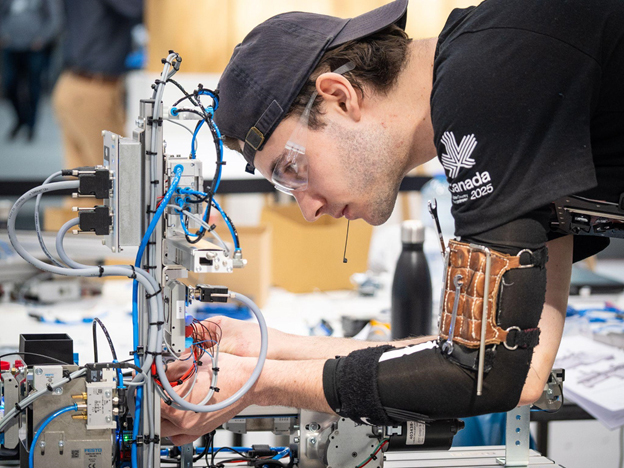
(NGen)
We Don't Need to Start From Scratch — We Need to Start
We have world-class manufacturers, a deep advanced manufacturing technology ecosystem, and a national network — led by NGen — that has spent years connecting innovators, factory floors, investors, and policymakers.
The industrial base exists. The network is proven. What has been missing is the deliberate architecture to mobilize it for defence.
NGen has put a concrete proposal on the table, built around three practical, fundable, executable initiatives, designed to build genuine sovereign production capability.
The first is accelerating the adoption of Industrial AI among the small and medium-sized Canadian manufacturers who are already embedded in defence supply chains but operating well below their potential productivity. These companies exist right now. They're supplying components, machining parts, fabricating materials. With targeted AI integration, their output, quality, and speed improve dramatically — and their strategic value to Canada's defence posture multiplies.
The second is the development of Critical Production Networks: vertically integrated, full-scale production capabilities for advanced defence technologies including unmanned vehicles and drone systems, as well as the critical materials and components that underpin them. Not a pilot project. Not a study. Actual production capacity, built collaboratively, centred on Canadian content, designed to scale.
The third is perhaps the most innovative: modular, reconfigurable, localized manufacturing facilities operating on a Factory-as-a-Service model. Think of it as flexible industrial surge capacity — facilities that can be stood up, integrated with production technologies, and scaled rapidly to meet operational demand when the moment requires it.
In a crisis, these aren't nice to have. They're the difference between a credible response and a press conference.
The Window Is Real and It Is Not Permanent
Canada is increasing its defence spending. That’s raising questions like: to buy what? From whom? And one that is vital as this economy pivots: with what long-term effect on our own industrial base?
Defence is the sharpest edge of this problem — but the same industrial hollowing-out is visible everywhere. We're export-dependent on a single market that just reminded us, loudly, that it has its own interests. We're importing construction systems to build homes we could be manufacturing here.
Sovereign supply chains aren't a defence concept. They're an economic survival concept.
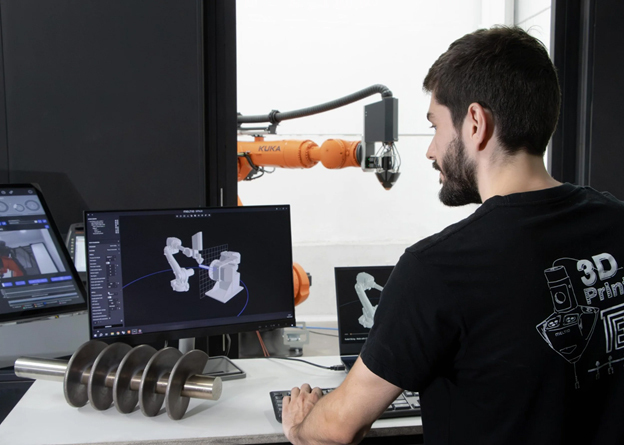
(Sixpenny Additive)
Whether the product is a drone component, a prefabricated home panel, or a precision part for a new export market, the question is the same: can Canada make it, scale it, and control it?
The manufacturers, innovators, investors, and policymakers who are serious about answering that question are gathering in Toronto for the N³ Summit March 31 and April 1.
NGen's rapid-response manufacturing plan will be on the table — not as a concept, but as a call to action: Innovate in Canada. Manufacture in Canada. Surge in Canada.
This country has the talent, the technology, and the industrial infrastructure to stop outsourcing its security to other people's supply chains. What we have lacked is urgency.
The next crisis won't ship with tracking updates. It's time to build something that doesn't require them.
Jayson Myers is CEO of Next Generation Manufacturing Canada (NGen), the industry-led, not-for-profit organization that leads Canada's Global Innovation Cluster for Advanced Manufacturing. The ideas in this piece, and the people ready to act on them, will be in the room at NGen's N³ Summit on Canada's manufacturing future, kicking off March 31 in Toronto. Information and tickets: ngen.ca/n3summit.
The views expressed are those of the author(s). National Newswatch Inc. publishes a range of perspectives and does not necessarily endorse the opinions presented.