

Canada’s 22nd Prime Minister, Stephen J. Harper, was in Kuujjuaq, Quebec on this date in 2008 as his efforts to highlight northern Canada for both domestic and foreign audiences continued. “The destiny of our country is inextricably tied to the True North,” he said. “It is critical that the people who live here are recognized and appreciated as the people who will play a key role in shaping that destiny.”
Harper was in the community and region to help celebrate the historic Nunavik Inuit land claims agreement. In his address, Harper re-stated his government’s northern strategy.
“(It) rests on four planks,” he said. “asserting Canada's sovereignty in the Arctic, boosting social and economic development throughout the region, protecting the fragile Northern environment and providing Northerners with more control over their own destiny. That's why I've toured the North so extensively in the last two years. These trips help remind Southern Canadians how important the North is to Canada's future, and they tell Northerners that our government sees them as full partners in our federation.”
You will find and edited version of his remarks below.
Prime Minister Stephen J. Harper: The 10,000 Inuit who live in 15 communities along the coast of Ungava Bay and the eastern shore of Hudson Bay inhabit a land of enormous potential. Rich in resources and blessed with thriving fish and wildlife populations, there are countless opportunities ahead for Nunavik and its people, in mining and outfitting, tourism, fishing and much more. Our government is committed to making sure the people who live, work and raise their families here can make the most of these opportunities. And I'm very pleased to say that we took a huge step in this direction last month when the Nunavik Inuit land claims agreement finally received Royal Assent and passed into law.
This milestone hails the dawn of a new era for the people of Nunavik, an era of greater self-determination, greater self-sufficiency and self-assurance within our united country. The agreement is also a tribute to your patience and tenacity. I understand it took 30 years to bring it to fruition and I'm proud to be able to say that our government and our ministers did finally come through for you. Now, the Nunavik Inuit have clearly…now in this agreement the Nunavik Inuit have clearly defined and constitutionally protected land and resource ownership rights within the vast Nunavik marine region, plus joint ownership with the Cree have designated lands on Hudson Bay, plus commercial fishing and plant gathering rights off the shores of Labrador, and harvesting rights with the spectacular Torngat Mountains National Reserve in Labrador, which will be formally recognized as a national park.
It is hard to overstate the benefits associated with the resolution of the land claim. First and foremost, it recognizes Nunavik Inuit ownership in a region that has been occupied by your ancestors for thousands of years. Second, by resolving the issue of land ownership and resource rights, it creates a stable environment for investment and development that will mean new jobs and business opportunities for local residents. Third, it provides a new resource royalty revenue stream for the Makivik Corporation so it can build on its already impressive record of entrepreneurship. Air Inuit, First Air and Cruise North expeditions are just a few of its enterprises, and through a variety of joint ventures, it is also engaged in commercial fishing, shipping, investment and scientific research. As I said, the Nunavik Inuit land claim agreement is a big step forward for social and economic development in this region.
Still ahead is the final step in this process: regional self-government for Nunavik. Our Conservative government believes fundamentally that the best government is often that which is closest to the governed, and that's why we are committed to delivering self-government for the people of this region. Once again, I must salute Minister Strahl for his efforts on this file working closely with community leaders here and with the government of Quebec. We achieved an agreement in principal to establish a Nunavik regional government and assembly in December. The agreement sets the stage for Aboriginal self-government in this region and I understand everything is going along on the track to get done on schedule. It will give all Nunavik people a say in how their children are educated, how their health is protected and how their public infrastructure is developed, and it will complement the goals of the land claim agreement that we're celebrating here today by giving the Nunavik Inuit even more control over their social and economic destiny.
Let me just conclude by saying that resolving the land claim and moving forward towards self-government is not just good for the Inuit of Nunavik. It is good for all of Canada. The destiny of our country is inextricably tied to the True North. It is critical that the people who live here are recognized and appreciated as the people who will play a key role in shaping that destiny. We need healthy, prosperous, stable communities all across the North. That's how we'll best achieve our national goals of protecting our sovereignty over the Arctic, of developing our Northern resources and of protecting our precious Northern environment. Working together we are already making great progress towards these goals, and working together we are leading the way toward a stronger, safer and better Canada for all of us.
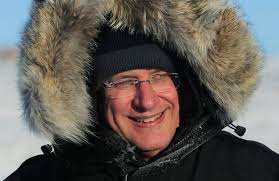
Arthur Milnes is an accomplished public historian and award-winning journalist. He was research assistant on The Rt. Hon. Brian Mulroney’s best-selling Memoirs and also served as a speechwriter to then-Prime Minister Stephen Harper and as a Fellow of the Queen’s Centre for the Study of Democracy under the leadership of Tom Axworthy. A resident of Kingston, Ontario, Milnes serves as the in-house historian at the 175 year-old Frontenac Club Hotel.