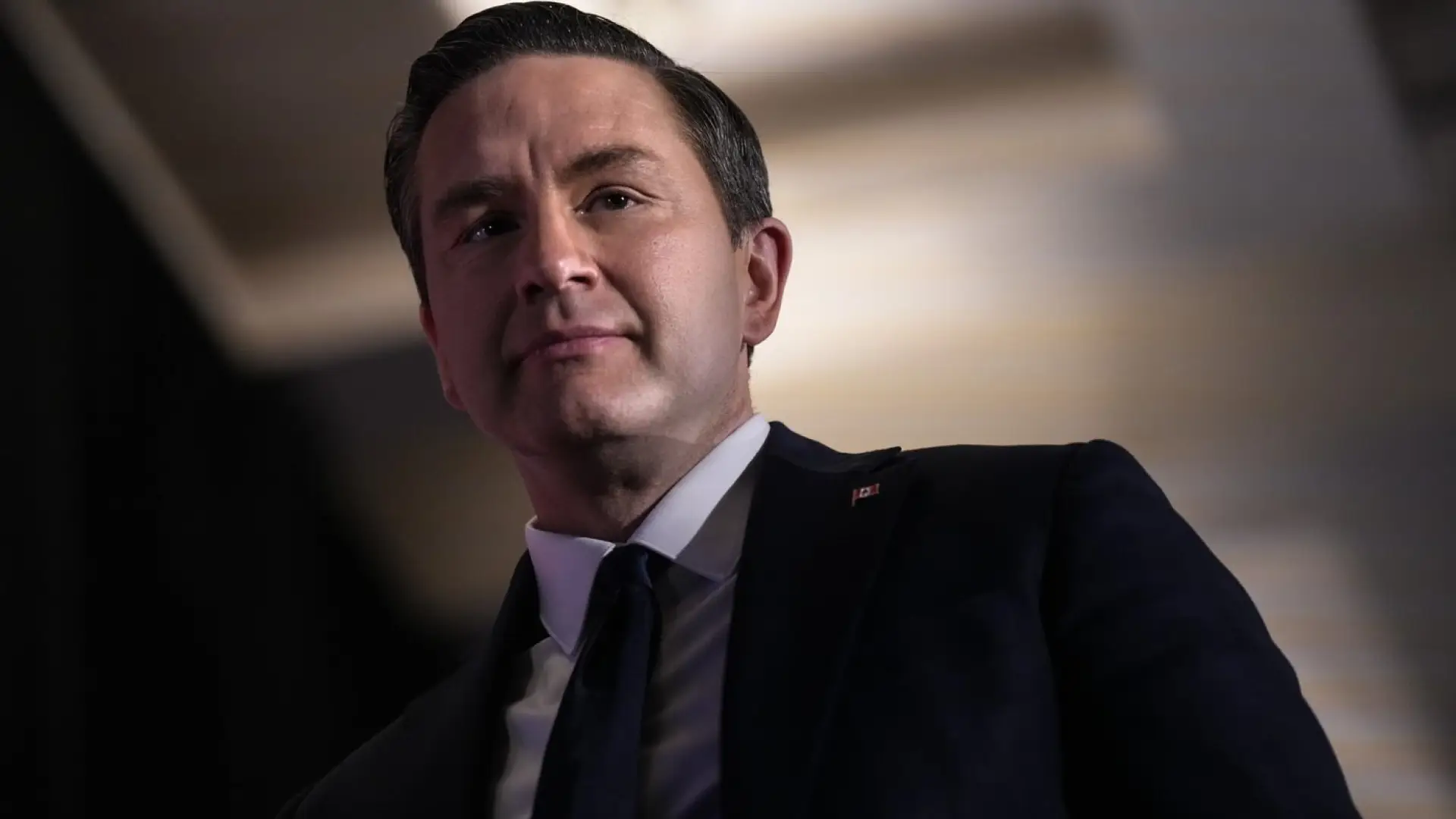
OTTAWA -- Pierre Poilievre was defiant on Thursday in the face of questions about his leadership of the Conservative party after a fourth member of his caucus defected to the Liberals this week.
He reminded reporters that a "record-smashing 8.3 million Canadians" voted Conservative last year.
"Our mandate, and my leadership, does not come from dirty backroom deals. It comes from the people of Canada," he said.
Marilyn Gladu, the member of Parliament from Sarnia—Lambton—Bkejwanong, who has represented the Conservatives in Parliament since 2015, announced on Wednesday that she was joining the Liberal caucus.
A former top aide to Stephen Harper said Gladu's decision feels different than the others who crossed before her, because she "was a true-blue conservative."
"I think this floor crosser, more than the previous ones, weakens (Poilievre's) leadership," said Dimitri Soudas, who was the former prime minister's director of communications.
She didn't directly criticize Poilievre's leadership but said she was joining Carney's team because the country needs "a serious leader."
At a press conference in Richmond, B.C., on Thursday, Poilievre said he feels badly for Gladu's supporters and took credit for helping to boost her support with voters in Sarnia—Lambton—Bkejwanong.
"Mark Carney is saying to Canadians: your vote does not count, that he will overpower the decision that you made," he said.
But he stopped short of promising to try to ban floor crossing. Poilievre joined his Conservative colleagues and the Liberals to vote down an NDP bill that would have done just that in 2012.
He said that in his opinion, constituents should be able to petition to force a byelection if their MP defects.
Gladu's flight to the Liberal bench puts the government in a position to secure a majority by winning at least one of the three byelections set for Monday.
Nova Scotia MP Chris d'Entremont cited Poilievre's leadership style as a factor in his decision to leave the caucus last November.
Ontario MP Michael Ma crossed the floor in December, and Alberta MP Matt Jeneroux switched sides in February. Lori Idlout crossed to the Liberals from the NDP in March.
Rumours have swirled for months on Parliament Hill that more Conservatives are considering crossing the floor.
Poilievre didn't dispute that chatter on Thursday.
"I don't comment on rumours, but what I will say is this: members of Parliament should stand up for the party and the principles that they said they would when they were looking people in the eye in their elections," he said.
Gladu, however, was not among those being discussed as potential future Liberals before Wednesday.
During her time in Ottawa, she has railed against COVID-19 pandemic restrictions, apologized publicly for spreading vaccine misinformation, voted against a bill banning conversion therapy, and taken part in anti-abortion rallies.
NDP MP Leah Gazan called Gladu a "far-right social conservative" in a statement on Wednesday. Bloc Québécois Leader Yves-François Blanchet accused the Liberals of flirting with opponents who "are a bit intense about controlling women's bodies."
Amanda Galbraith, a former adviser to Harper and a partner at public affairs firm Oyster Group, said Gladu's past political views will present a challenge for Carney in his caucus.
She argued the MPs who have chosen to leave are not the core of the Conservative caucus.
"I think that is actually a good sign for caucus unity," she said.
"But obviously, these things are challenging."
Galbraith said she thinks Poilievre's leadership is safe and she hasn't heard of anyone organizing against him.
Conservative strategist Jeff Rutledge said Poilievre needs to convey a message of confidence to his caucus — particularly since Gladu's departure came a day after Poilievre's director of communications, Katy Merrifield, said she was leaving her post.
"You can't have all of these things happening and necessarily present the public image that everything is ticking along fine. And so that's where the role of a leader is to communicate honestly about what's going on, but also have a plan," he said.
Poilievre's hold on the leadership has been questioned several times since last year's election, when he lost the Ottawa-area riding he held for more than 20 years to a Liberal.
The Tory leader was sidelined from the House of Commons last spring, but returned in the fall after winning a byelection in the Conservative heartland in Alberta.
For much of the past year, pundits have called for Poilievre to shift his tone and message as poll after poll showed he was personally unpopular with many Canadians.
The questions seemed to be settled when Poilievre won the support of 87 per cent of delegates at the party's convention at the end of January. The party said it was strongly united around his leadership.
"It's easy to win the leadership of your party if you believe you've got the core base support," Rutledge said.
"It's a much more challenging thing to secure the support of your caucus, who have individual constituent issues to address, who have their own kind of goals and desires when it comes to politics."
Galbraith said Poilievre's recent efforts to present himself as a prime minister in waiting — through international trips and appearances on high-profile podcasts like "The Joe Rogan Experience" — have been "broadly well-received."
"When you are the opposition leader … everybody's an armchair quarterback around how you could do stuff differently," she said.
Soudas said he expects to see more floor crossers.
"At some point I think Mr. Poilievre has to think hard as to whether or not he is the right person to lead this party into the next election and deliver a Conservative victory," he said.
A parade of Tory MPs posted messages to their constituents on social media on Thursday to say they will not leave the party, including Costas Menegakis, Rhonda Kirkland, Lianne Rood, Mike Dawson and Mike Guglielmin.
This report by The Canadian Press was first published April 9, 2026.
2110