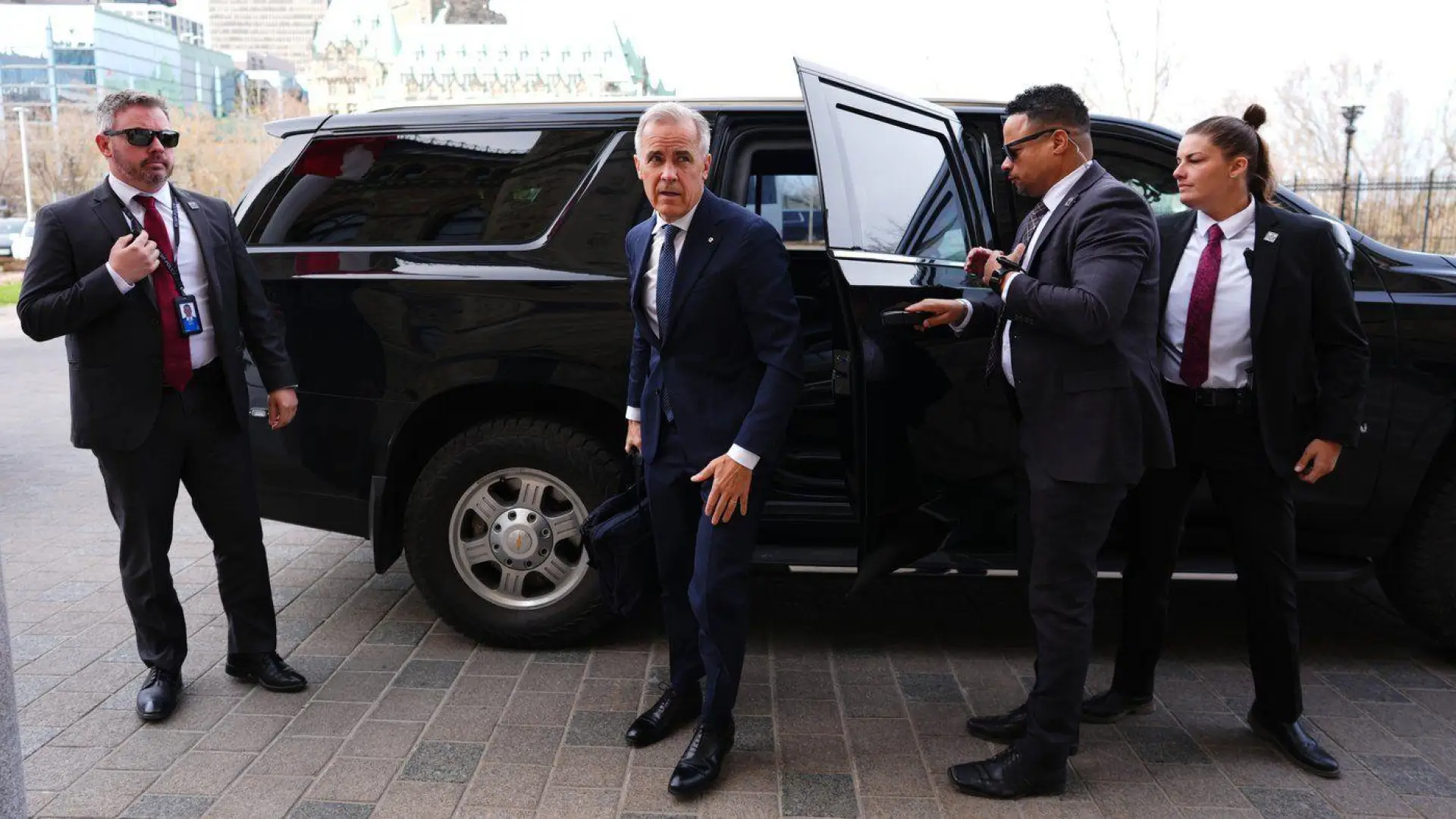
OTTAWA -- Prime Minister Mark Carney says the Liberals are "good fiscal managers" — and he'll have the chance to prove it when the federal government tables its spring economic update Tuesday afternoon.
The federal government typically tables mid-year updates between annual budgets to revise its economic and fiscal projections. These updates can include new spending and are sometimes referred to as "mini-budgets."
The Liberals' fall budget — the first under Carney's leadership — projected a deficit of $78.3 billion for the last fiscal year, with deficits declining and averaging around $64 billion annually over the five-year horizon.
The federal fiscal monitor for April 2025 to February 2026 shows the deficit came in at $25.5 billion over the first 11 months of the last fiscal year.
March typically sees a large one-month jump in the deficit, though some analysts still expect the federal government will post a lower deficit than projected in Budget 2025.
Speaking to reporters on Monday, Carney suggested there would be "good news" on the federal government's fiscal position in the spring update.
A reporter asked the prime minister why the deficit would come in lower than projected. "Because we're good fiscal managers," Carney replied.
"We focus on the numbers. And we were determined to get spending down with a lot of very … difficult decisions. You can't do everything at the same time," he added.
Conservative Leader Pierre Poilievre has called on the Liberals to slash spending and get the deficit on track to balance. He calls the Liberals' approach to spending "credit card budgeting" and argues it will cost Canadians through higher inflation and interest payments down the road.
Poilievre did not suggest a timeline for balancing the budget when asked by reporters Monday.
"Let's figure out how badly Mark Carney messes up the books before we announce how long it will take for Conservatives to clean it up," he said.
The prime minister has justified deeper deficits by citing the need to build major projects, ramp up defence spending and transition Canada's economy away from reliance on the United States.
On Monday, he announced the creation of a sovereign wealth fund with an initial $25-billion capitalization to invest alongside the private sector in nation-building projects.
Since the fall budget, the federal government also has unveiled new affordability measures — including a boost to the GST benefit for lower-income households and a pause on the federal fuel excise tax until Labour Day — that will add new expenses to the fiscal outlook.
In a video statement released on Sunday, Finance Minister François-Phillippe Champagne touted those efforts, saying "bringing down everyday costs is at the heart" of the fiscal plan.
Many economists expect the federal government will receive additional revenues from the oil price shock tied to the war in Iran, though uncertainty over how long the Middle East conflict will last is sure to cloud Ottawa's forecasts.
Champagne acknowledged in his statement that "volatility is omnipresent" and said the government's plan is aimed at protecting economic sovereignty.
Carney pushed back Monday when a reporter suggested the government's revenues would be better because of higher inflation. He noted the annual rate of inflation has been within the Bank of Canada's target range of one to three per cent for the entirety of his time in office.
Statistics Canada also has revised up past gross domestic product data since the fall, giving the federal government a better starting point for many of its fiscal guideposts.
The Liberals had a minority mandate when they tabled their first budget in November and legislation enacting the spending plan only came into force in March, with a handful of amendments from opposition members of Parliament.
After a Liberal sweep of three April byelections, the party's new MPs were officially sworn into their seats Monday — meaning Carney now has a formal majority government and more power to get bills passed.
This report by The Canadian Press was first published April 28, 2026.
1202