
2026 is truly Canada’s year of sport. We are hosting major events like the World Cycling Championships and the FIFA Men’s World Cup. The Olympics, Paralympics and Arctic Winter Games are fresh in our memory banks, and last week our new Government announced the most significant investment in our sport system, ever. Let’s unpack that a little.
It’s been referred to as “generational”, “monumental” and “long-awaited”. All true things, but it’s also a major investment in Canadians, particularly young people.
The Spring Economic Update outlined $755 million over the next 5 years, with $118 million ongoing, to empower the organizations that lead sport programs all the way across this big, beautiful country. It represents a renewed vision to ensure that more Canadians can play and succeed, and it includes the means to our collective ambition to tangibly improve our quality of life.
Prime Minister Mark Carney is an athlete--we see him out running or lacing up his skates whenever he can. He is also a world-renowned economist, someone who appreciates the difference between an investment and an expense. Our new government is investing in sport because it pays dividends, socially, economically, and in terms of our overall health, happiness and wellbeing.
Sport is a big part of who we are as Canadians, we love it. Currently, it’s not as accessible or affordable as it should be. And unlike in other countries, here at home it hasn’t been leveraged as the powerful economic engine that it is. The system has also had longstanding governance, equity and safe sport issues, as the Future of Sport in Canada Commission has indicated. The common thread throughout the Commission’s recommendations is to increase funding in key areas to make our system stronger.
This generational approach – the largest ever in the history of our country – ambitiously addresses these matters head-on.
For the sake of comparison, let’s recall the last time a federal government made a significant sport investment. It was 2005, and Canada was coming up on another Olympic and Paralympic Games at home. The goal? Finally win a gold medal on home soil. It’s kind of incredible, but we are the only country to not win gold at a home Games, and we missed out twice, in Calgary and Montreal.
The Vancouver Whistler Games in 2010 didn’t go the same way. Team Canada won gold medals in 10 Paralympic events, and 14 Olympic events. We won the whole thing. That’s because Own The Podium was created to achieve a very specific goal – and it was a very intentional decision we made as a country.
That initial investment in Own The Podium was about $118M over 5 years. Our national level sport organizations proved resoundingly that when given a clear objective and the means to accomplish it, our coaches and athletes deliver. Not shockingly, sports people know how to achieve goals.
The 2026 Spring Economic Update has $118M as the baseline ongoing annual boost, with an incremental $165M spread out over the next five years. We are now asking national level sport stakeholders to again deliver results for Canada, and Canadians. But this time, there is more to it.
With this investment, backed by the utmost confidence in our sport system, we are broadening our mandate all the way from playground to podium, to include partnerships and the delivery of high-quality, affordable, accessible, safe, inclusive and fun sport for all. Some have asked if that means a reduced emphasis on winning international medals, and I want to be clear that Canada remains a country that wants to win. We believe that an active and healthy population is vital for success in life and international competition alike. Every world champion that Canada has ever produced started out as a little kid splashing around at swimming lessons or kicking a ball at a community park.
This new results-driven approach will make those opportunities available to more people.
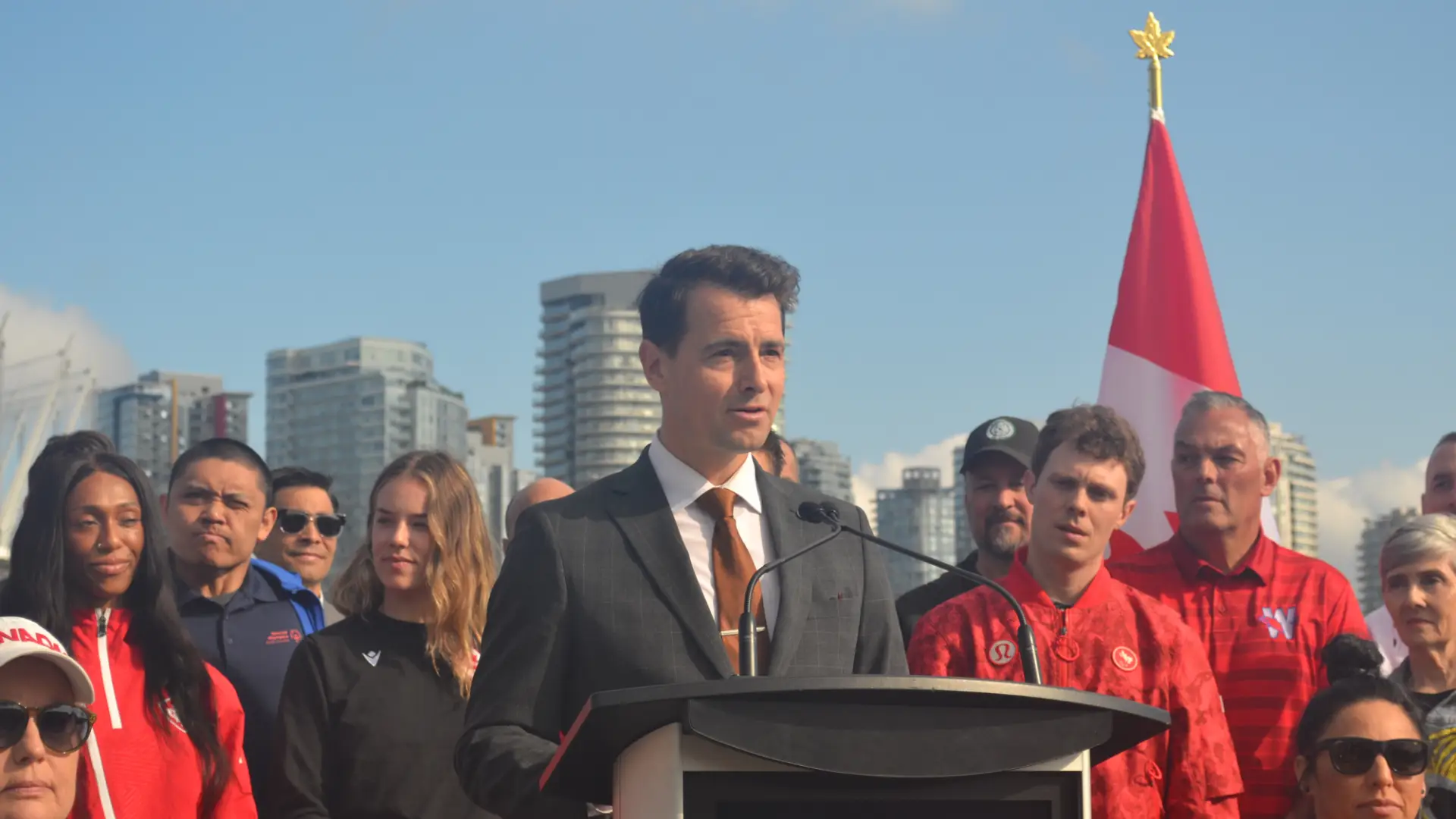
I announced this new funding measure at the Mattamy Cycling Centre in Milton with athletes from gymnastics, swimming, cycling, bobsleigh, athletics and sailing. Parents, mentors, volunteers and coaches were there too, and they applauded when they heard some of the details: more funding for the Athlete Assistance Program, safe sport initiatives, more international hosting in Canada, support for our Next Gen initiative, and reduced participation barriers, as well as new supports for grassroots level sport.
I answered questions, and spoke with parents, but it was one conversation that stuck with me a little more than the others. It was with Alex, a 17-year-old cyclist, and a Canadian record holder. It wasn’t his question that struck me, so much as how he asked it. He looked me in the eyes, said thank you, but he still had questions about what this really means for athletes like him and across the entire sport system. There are thousands of people like Alex across Canada. People who for years have wished so much more of their sport system.
Athletes like Alex are at the heart of this new investment, by expanding access to services and opportunities that help Canadian young people develop, compete and succeed. By giving more young Canadians the chance to try new sports and activities, investing in the programs that create opportunity, and increasing the number of events we host in new and revamped community infrastructure we will support Canadian record holders like Alex and the active lifestyles of grassroots activity participants all at the same time.
That is because a dollar invested in sport shouldn’t be viewed as either for high-performance or community programs, because when done properly that dollar will serve both endeavours. Additionally, the knock-on effect of that dollar goes well beyond the possibility of high-performance success down the road. We get lower healthcare costs, happier and more confident Canadians with stronger connections to their community. We get role models in our communities and leaders that know how to build trust, how to coach and be coached, and they turn out to be better managers, employees and leaders.
As everything seems to be heading in a more digital direction, sport is a space that prioritizes field, ice and pool time over screen time, and results in stronger friendships rather than higher follower counts.
As our sovereignty is being tested from outside and within, participating in sport is also a reminder of how proud we are as Canadians, how much stronger we are when we all play on the same team and that representing our country with the Maple Leaf matters so deeply to each and every one of us.
From playground to podium, your new government is reducing barriers to access sport, by investing in the means to our ambitions. Whether that’s a fun afterschool basketball program, or a world-record. Making the varsity volleyball team, finding affordable swimming lessons, or getting a great summer job coaching at the canoe club – none of that should be out of reach for a Canadian who wants to try.
Just like 20 years ago, the Government of Canada is making a very intentional choice – an investment in sport. Sport for fun, for our health, for our economy. Sport to strengthen our communities and deepen connections, here at home and around the world. Sport to develop, to compete, and to win. Your government is investing in sport to Build Canada Strong.
Adam Van Koeverden, Secretary of State for Sport, Member of Parliament for Burlington North—Milton West