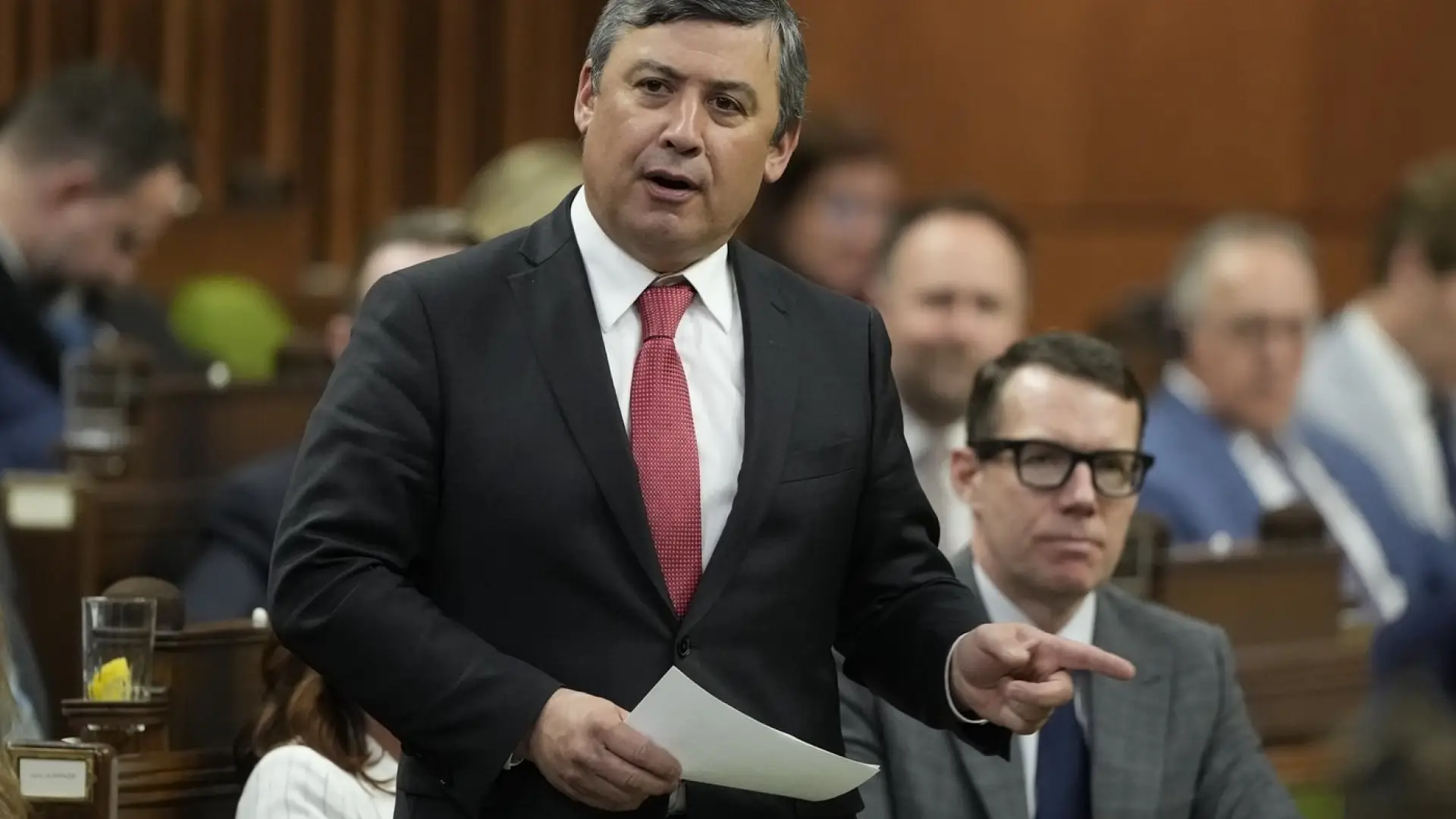
OTTAWA -- Conservative MP Michael Chong said his meeting with Taiwan's President Lai Ching-te on Wednesday was meant to assert Canadian sovereignty in the face of Beijing's warnings to Canadian lawmakers that such visits are inappropriate.
"I thought it was important to make it clear that we are not going to take direction from a foreign government about where Canadian MPs can travel internationally," Chong said in an interview from Taipei.
Beijing's envoy told The Globe and Mail that he was optimistic about warming relations between Canada and China but said official visits by Canadian lawmakers to Taiwan risk setting back that progress.
Chong, the Conservative foreign affairs critic, said he and Lai spoke about "Taiwan's importance as a democracy at the front lines of threats from an authoritarian state" and its participation in international bodies like the World Health Organization.
Several of Taiwan's media outlets covered Chong's meeting with Lai, with one headline praising Chong for "ignoring China."
Photos shared by Lai's office showed him shaking hands with Chong. He thanked the MP for showing "fearlessness against foreign pressure."
In a Chinese-language press release, Lai's office said Chong's support for Taiwan over the last three years has helped foster closer relations between Canada and Taiwan. Lai also noted that Chong has been sanctioned by Beijing and has been a target for transnational repression over his condemnation of China's treatment of the Uyghurs.
The meeting was overshadowed by local coverage of U.S. President Donald Trump, who said Wednesday that he would be speaking to Lai — the first such contact between a U.S. president and Taiwan's leader since the U.S. established diplomatic relations with Beijing in 1979.
Taiwan considers itself an independent nation but China views Taiwan as its territory — and has not ruled out taking the island by force.
China's naval activities in the South China Sea are closely monitored by Western countries, including Canada.
Canada's official position under the long-standing "One China" policy neither challenges nor endorses China's claim to the island.
The policy means Canada maintains unofficial economic and cultural ties with Taiwan and operates a local trade office there.
Beijing is opposed to foreign parliamentarians visiting Taiwan and views such trips as external interference.
When news of Chong's visit became public on Monday, the Chinese embassy in Ottawa said it contravened Canada's One China commitment and sent "a wrong message of support for 'Taiwan independence.'"
"The one-China principle is not only the political foundation of and an inviolable red line for China-Canada relations but also a basic norm governing international relations and a universal consensus in the international community," an embassy spokesperson wrote.
Chong's visit comes as Canada-China relations seem to be experiencing a warming trend.
Prime Minister Mark Carney, who has made restoring relations with China a priority, met with President Xi Jinping last fall and travelled to Beijing for an official visit in January.
The two leaders announced a deal that will see Canada drop its 100 per cent tariffs on Chinese electric vehicles, up to a certain limit, while China has removed retaliatory tariffs it had placed on Canadian agricultural goods, including canola, peas and seafood.
Liberal MPs Helena Jaczek and Marie-France Lalonde cut short a sponsored trip to Taiwan in January ahead of Carney's visit to Beijing.
The MPs said in a statement that they were informed by advice from the government and wanted to "avoid confusion with Canada's foreign policy."
Conservative MPs Melissa Lantsman, Adam Chambers and Shelby Kramp-Neuman continued with the trip after their Liberal counterparts left. Chong criticized the government members for choosing to return to Canada.
Chong said Wednesday the federal government was aware of his travel ahead of time.
He said he was joined at the meeting with Lai by Marie-Louise Hannan, executive director of the Canadian Trade Office in Taipei, and Charles Hudon, another official from the trade office.
Foreign Affairs Minister Anita Anand did not answer directly when reporters asked her Wednesday whether she supported Chong's trip. She noted that successive Canadian governments have maintained the One China policy since the 1970s.
"The independence of Canada's Parliament is a pillar of Canada's democracy, and members of Parliament and senators have a long-standing practice of visiting Taiwan," she said.
Chong said the officials he met with this week were reassured by his visit.
"They clearly want to maintain peace and stability across the Taiwan Strait, and that begins by ensuring that Beijing is not allowed to unilaterally change the goalposts," he said.
Chong paid for the trip on his own. He said while the House of Commons could pay for official travel in some circumstances, he wasn't willing to wait for the necessary planning to take place.
"I thought it was really important to act quickly to make it clear that the goalposts had not moved and that these visits would continue," he said.
This report by The Canadian Press was first published May 20, 2026.
— With files from Chuck Chiang in Vancouver
1757