OTTAWA -- A majority of the House of Commons voted against a non-binding motion on Monday that called on the federal government to protect private property from First Nations land claims — a political issue the Crown-Indigenous Relations minister has said is rife with partisan rhetoric.
The motion stems from a 2025 B.C. Supreme Court ruling that confirmed the Cowichan Tribes hold Aboriginal title over about 300 hectares of land in Richmond, B.C.
The ruling led to questions about how Aboriginal title and private property rights can coexist.
B.C. and the Cowichan Tribes have both said they do not want to invalidate any privately held fee simple titles on the lands covered by the court decision.
The federal and provincial governments opposed the Cowichan Tribes' claim. There are now appeals on both sides of the issue — including an appeal by the federal government.
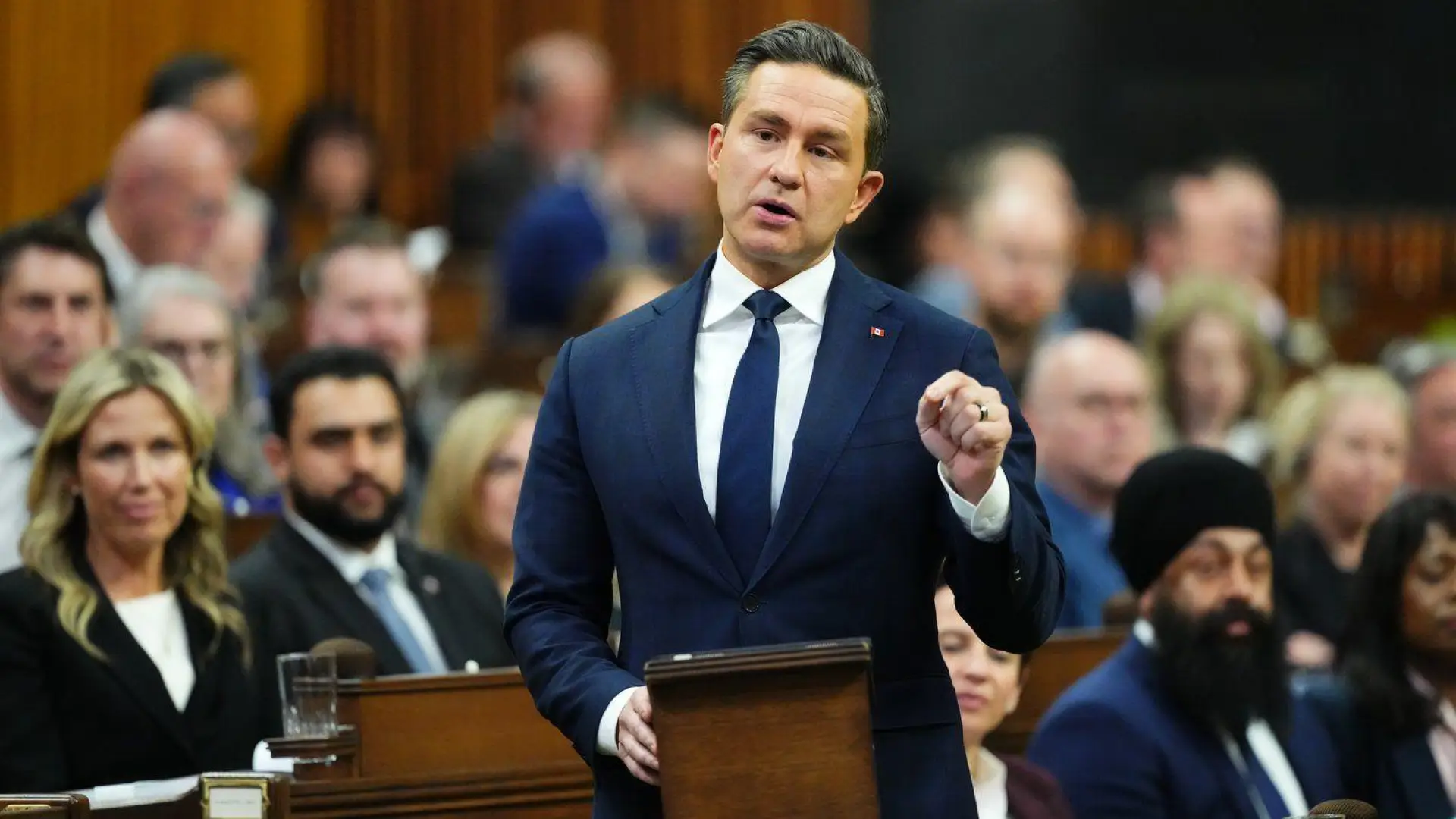
Conservative Leader Pierre Poilievre and his party have seized upon the uncertainty created by the decision and have for weeks been calling on the federal government to take action. Poilievre held a press conference and town hall events in B.C. about the issue last week.
On Friday, the First Nations Summit released a statement accusing the Conservatives of fearmongering and claiming Poilievre is desperately trying to stay relevant.
"The Cowichan decision is not and never was about taking away people's homes or private fee-simple property. The court simply reaffirmed principles that have existed in Canadian law for decades — namely that First Nations title was never automatically extinguished by the Crown," said Laxele'wuts'aat, Chief Shana Thomas of the First Nations Summit political executive.
Last month, Poilievre appointed B.C. MP Tako van Popta to lead a Conservative task force on property rights. He was tasked with, among other things, convening a parliamentary committee to study the issue.
"The ruling has shaken the foundations of British Columbia's economy and sparked fear among landowners provincewide," Poilievre said in a statement on April 23.
The Conservative motion called for a number of actions, including the creation of a special committee to study the legal, constitutional and political steps that could be taken to protect private property rights.
It also called for the government to put private property first and argue that it has priority over all other forms of title, and to ensure it does not make future agreements with First Nations that do not include explicit protection of fee simple property rights.
The Conservatives voted in favour of the motion, while the Liberals, NDP and Bloc Québécois all voted against it.
Cowichan-Malahat-Langford MP Jeff Kibble told reporters after the vote on Monday that the court decision has increased division and economic uncertainty in his community.
"It's damaging reconciliation and it's a failure of leadership of the prime minister," he said.
Fellow Conservative MP Marc Dalton said the ruling sets a troubling precedent for all residents of British Columbia, where there are a number of outstanding land claims.
When the motion was debated in the House of Commons earlier in May, Crown-Indigenous Relations Minister Rebecca Alty said Parliament should not weigh in on something that is still the subject of active litigation and appeal.
She said the federal government has appealed because it wants further clarity on the ruling and its implications for private property, noting that private property ownership "gives people certainty and confidence in their homes and businesses."
She also said while the government agrees with "some of the principles in the motion and takes many of them into negotiations," she would not allow the Conservatives to create "a platform to continue to spread disinformation" with a parliamentary committee.
"It is already Government of Canada policy to only make rights and title agreements that protect the private property of Canadians. I can assure this House, and all Canadians, that we will not, nor would we ever, entertain or even consider an agreement where Canadians lose their private property," Alty said.
She noted that none of the modern treaties signed with First Nations since the 1970s have resulted in people losing their privately owned land.
Alty said the motion was "an opportunistic political play by the Conservatives to create fear, stress and division."
The Conservatives have also launched a petition calling on the Liberals to protect property rights.
The debate spilled into an unrelated House of Commons committee meeting on Monday.
B.C. Conservative MP Aaron Gunn pressed Housing Minister Gregor Robertson — who was set to discuss the government’s main estimates — on whether fee simple property rights could exist in conjunction with Aboriginal title.
Robertson said the government has seen no challenges to private property to date as a result of Aboriginal title.
Gunn asked whether Robertson thought the Cowichan ruling was creating uncertainty for B.C. homeowners, which could push property values lower.
Robertson responded by accusing Gunn and the Conservatives of spreading "misinformation" and "fearmongering."
"Many of us disagree with the uncertainty that’s being whipped up by the member and some of his colleagues trying to turn this into a very difficult situation, when what we need is clarity from the courts," Robertson said.
This report by The Canadian Press was first published May 25, 2026.
— With files from Craig Lord
1841