OTTAWA -- Three days after the February mass shooting in Tumbler Ridge, B.C., government officials warned Prime Minister Mark Carney that online sentiment was shifting from collective grief toward "emerging accountability narratives" -- including questions about mental health intervention, firearms access and whether warning signs were missed.
The memo to Carney from the Privy Council Office said the overall public reaction was dominated by a sense of shock and national mourning, with strong expressions of solidarity and support for victims, families and the devastated northeastern British Columbia community.
It also advised that confidence in first responders remained intact after the violence that claimed nine lives and left more than two dozen injured, "but scrutiny of broader systems is likely to increase as investigations progress."
The Canadian Press used the Access to Information Act to obtain a copy of the memo. Several passages were redacted from the document before its release.
On Feb. 10, 18-year-old Jesse Van Rootselaar killed her mother and half-brother in their home, then shot six others at a school before taking her own life.
The RCMP soon began disclosing details about the shooter.
Van Rootselaar was born a biological male and began to transition to female about six years ago. Police had visited the home due to mental health concerns over the years. Guns were seized on at least one occasion and later returned.
It then emerged that Van Rootselaar's OpenAI account was shut down over troubling posts, including some that described scenarios of gun violence.
Two gun control advocacy groups recently renewed calls for information about the firearms used in the February shootings.
B.C. Public Safety Minister Nina Krieger said last Thursday the police investigation was in its final stages but making information public too soon could compromise the probe.
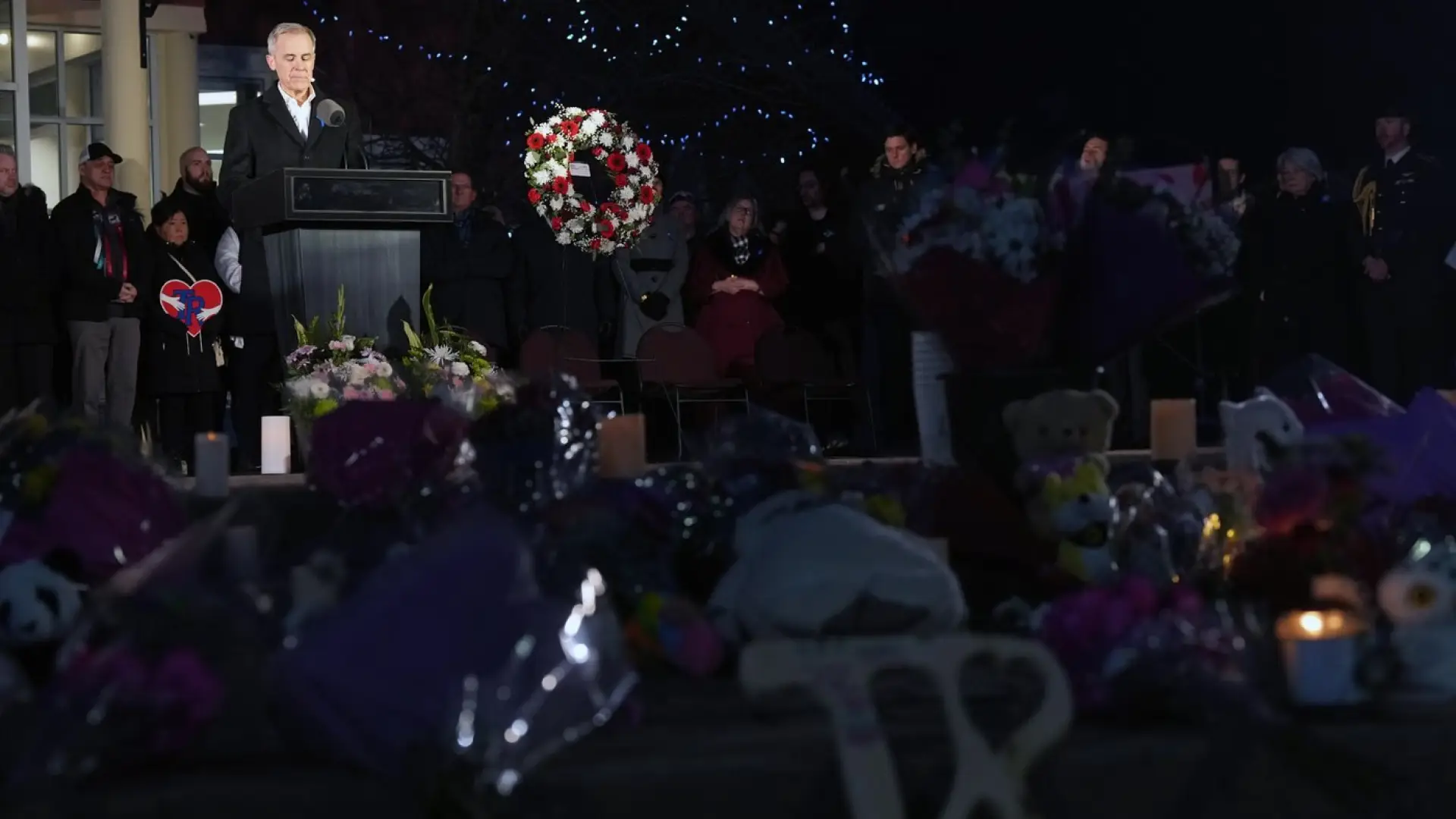
Carney attended a vigil in Tumbler Ridge on Feb. 13, the day the memo is dated.
The memo summarized what was known about the shootings and Van Rootselaar, detailed the federal government's response and described the public reaction in the media, including online platforms.
The memo included an attached "sentiment analysis" that delved more deeply into statements reported by media outlets and on social media.
"Early signs of polarization are emerging, particularly on social media, where identity-related narratives, policy debates, and misinformation are beginning to fragment public discourse," the memo said.
It added that some themes likely would grow in prominence over the days and weeks to follow, including questions about mental health.
"Families and observers have raised concerns about whether warning signs were missed," the memo said.
"The tragedy has already given rise to more discussion around gun control."
It described the sentiment about possible systemic failures as emotional but analytical and said it was often directed at institutions such as law enforcement and regulators.
The memo also warned that social media was revealing polarization tied to the shooter's identity, including hostile exchanges between ideological groups.
"False claims and misinformation involving transgender violence have circulated online," the memo said.
"Media reporting confirms social media narratives fuelling anti-trans rhetoric."
Officials concluded that online sentiment was emotionally intense, and predominantly empathetic -- but highly vulnerable "to polarization and misinformation amplification."
This report by The Canadian Press was first published May 26, 2026.