VICTORIA -- The B.C. Conservatives are expected to announce their new leader on Saturday, nearly six months after John Rustad was chased out of office.
But the announcement at a leadership convention in Vancouver could also represent a pivotal moment for the governing NDP, which Angus Reid Institute president Shachi Kurl says has suffered a "brutal, bruising" spring session.
"It has not been this government's finest hour," she said, after controversies over the government's handling of Indigenous relations, the province's finances and health care.
Both parties are at a crossroads, said Kurl.
"This (leadership) race could represent a moment that starts to mark the beginning of a more unstoppable decline for the NDP, or it could mark a lost opportunity for the B.C. Conservatives," she said.
Kurl said a key question for the NDP is how they will counter the new opposition leader, while the Conservatives must consider how their new leader will hold up under broader scrutiny.
"It's very much a hinge moment for both parties," he said.
The circumstances of the race are unusual. Rustad's resignation on Dec. 4 came less than 14 months after he brought the party from fringe status to the brink of power in the 2024 election.
But caucus chaos followed, with the exit of five MLAs from both ends of the party's ideological spectrum.
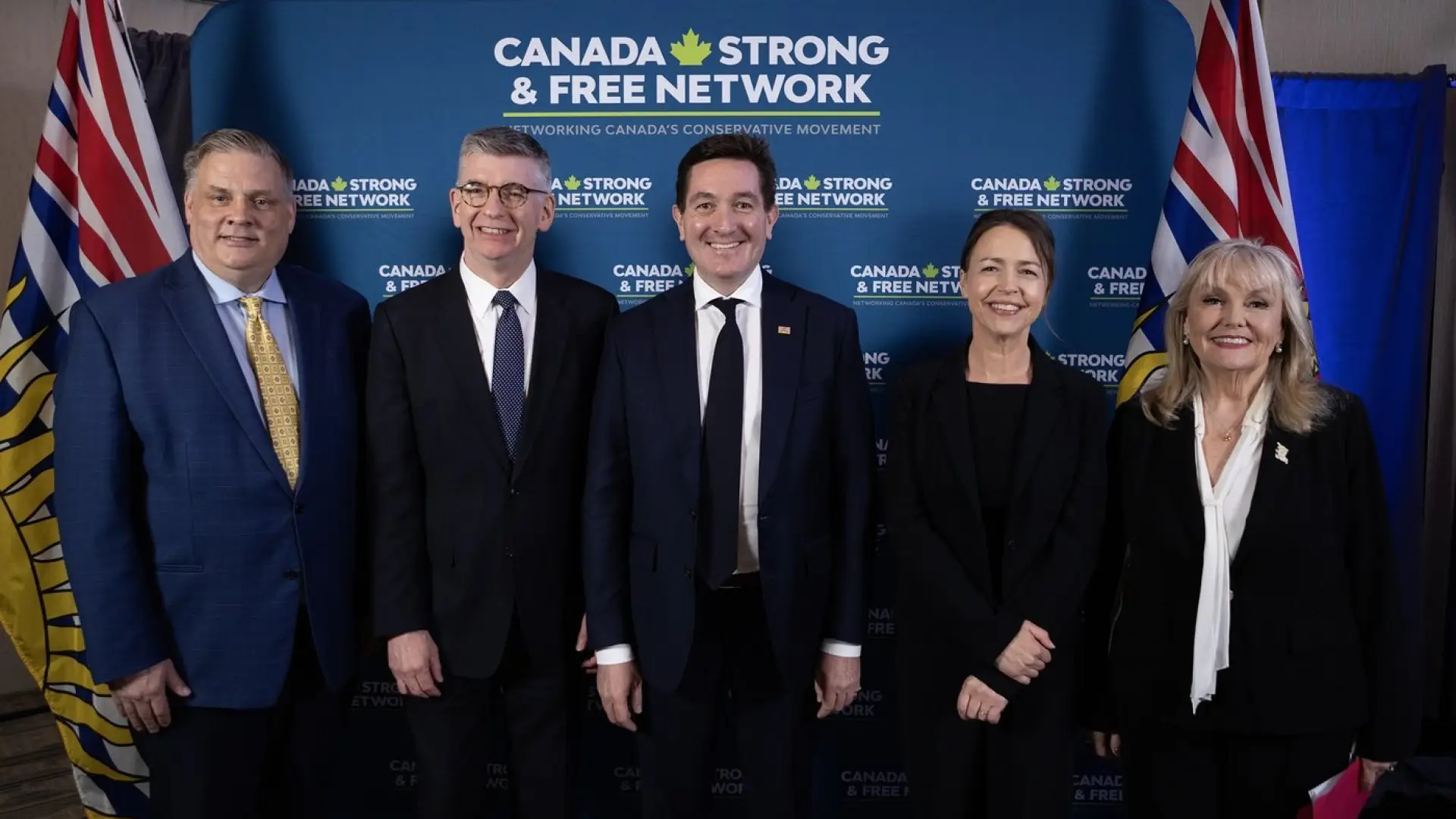
Rustad said he resigned to prevent a civil war. At one stage there were 11 candidates to replace him, but five now remain -- former B.C. Liberal cabinet minister Iain Black, commentator Caroline Elliott, former federal MP Kerry-Lynne Findlay, MLA Peter Milobar and entrepreneur Yuri Fulmer.
Kurl said "it's fairly clear that there isn't" ideological cohesion, at least on some matters, while David Black, who teaches political theory at Royal Roads University, pointed to the leadership debates as evidence .
The remaining candidates represent the full ideological spectrum of the conservative movement and that was what divided them rather than policy or political experience, he said.
He pointed to the leadership debates that feathered "a lot of purity tests, a lot of debates around who the authentic conservative is," as well as calling out opponents "who gave a land acknowledgement, and who didn't."
Black told his four rivals in the first debate that the "real enemy" was the NDP, and if they continued their ideological debates, it would bite Conservatives in the "backside in the months to come."
The ideological squabbling took on a personal note in the final debate this month when Findlay suggested that Milobar had "a conflict of interest issue," because his wife had worked for the Kamloops Indian Band.
"Just say it: my wife's Indigenous, so you think I'm in conflict of interest," Milobar shot back. "I've never heard of anything so ridiculous in my life."
There were other ugly moments, such as the resignation of Milobar's campaign manager amid questions about his connection to an anti-Rustad website, while a media report said Findlay was being investigated for wrongdoing in the last federal election. She called the accusations "unproven and anonymous."
Black said the party needs to balance passion and discipline and he saw Elliott as the most likely candidate to square this circle, drawing from the playbook of Ontario Premier Doug Ford.
This meant being "performatively populist but mainstream enough to please the centre-right," he said.
As for the NDP, it would likely prefer Fulmer as the winning candidate, Black said. That's because of a deal designed to avoid vote-splitting with OneBC, the party of former Conservative MLA Dallas Brodie who exited the caucus amid charges of residential school denialism.
Black said the party's next leader should focus on building the party and getting everybody on the same ideological page.
Interim leader Trevor Halford said Wednesday that internal conflicts were "par for the course" in a leadership race, and that whoever won on Saturday, it was important to introduce them to B.C. as the next premier.
He is less concerned about ideological cohesion and labels.
"Over 95 per cent of British Columbians walk around without a party membership," he said.
This report by The Canadian Press was first published May 28, 2026.