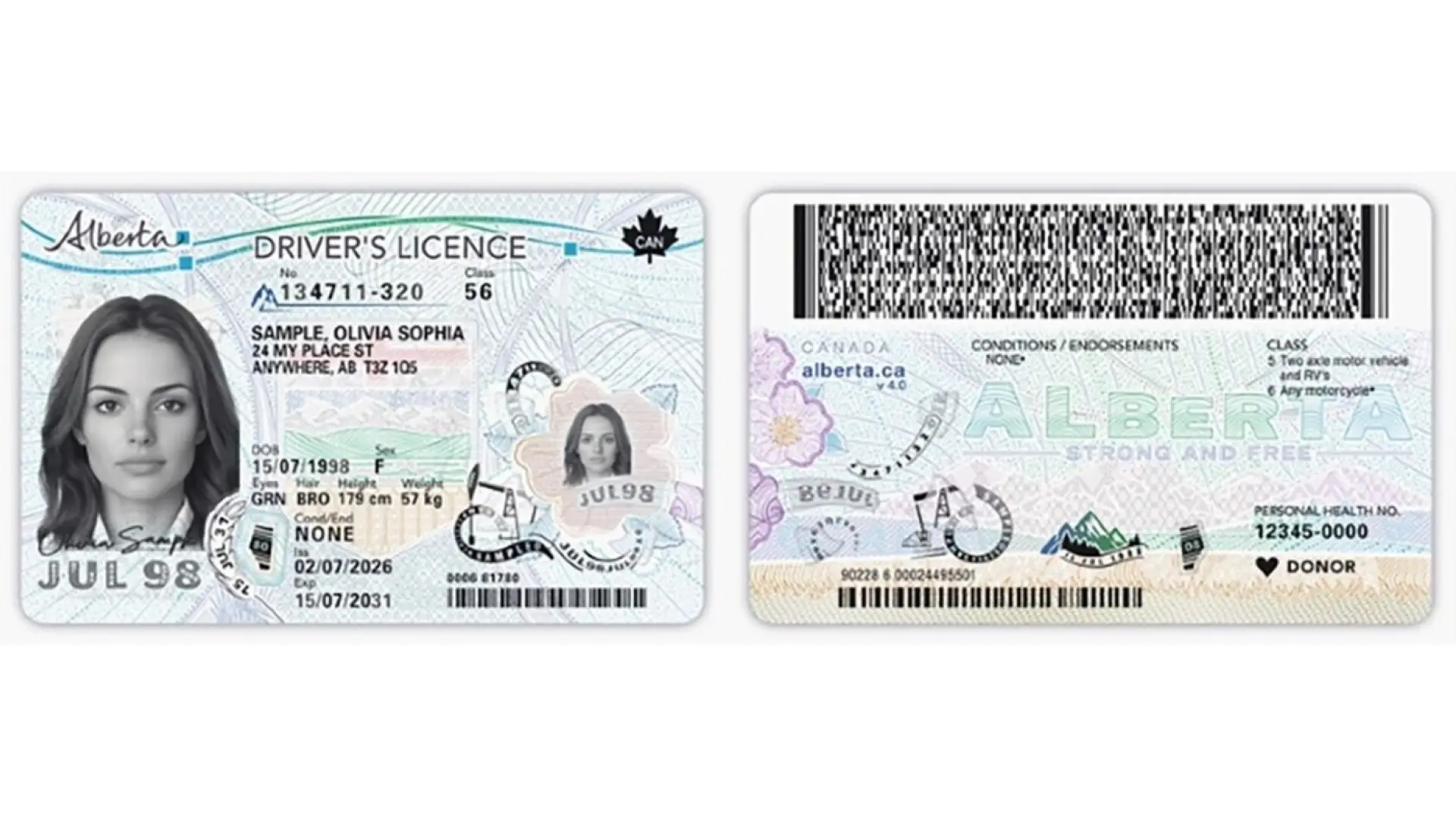
EDMONTON -- Alberta's government says it will begin rolling out three-in-one identification cards, ultimately replacing the province's long-reviled paper health cards.
Starting July 2, new driver's licences and ID cards are to include personal health numbers and citizenship markers, a move Premier Danielle Smith's government says will streamline access to services.
In a video posted to social media, Smith and Service Alberta Minister Dale Nally celebrated finally getting rid of the flimsy paper health cards.
"One card -- that's it," Smith said. "And we're doing it at no extra cost, because Albertans shouldn't have to pay more for something that just makes sense."
The iconography of the card is changing, too.
An oil pumpjack replaces the driver's licence image of a dinosaur fossil, and the words "Alberta Strong and Free" mark the back.
The inclusion of a citizenship marker -- to appear as a Maple Leaf with "CAN" on the card -- has drawn concern that its absence could lead to discrimination, a concern dismissed by the government.
The province said showing proof of authorization to be in Canada -- such as with a work permit or passport -- when applying for the card is mandatory.
The citizenship marker, first announced last year, comes as the province hurtles toward an Oct 19 referendum, which is to include a question of holding a future vote on Alberta separating from Canada.
Smith's United Conservative Party government is also putting five questions related to immigration to Albertans.
One question proposes the province create its own Alberta-approved immigration status and withhold services such as health care or education from some newcomers.
Another question asks if there should be a law requiring individuals to provide proof of citizenship to vote in provincial elections.
Nally said the ID changes were in the works well before the government considered holding a referendum.
"This is not intended for that," he said.
"This is about convenience for Albertans when they're applying for benefits."
Nally said the new ID will save some Albertans the trouble of reapplying for a lost birth certificate or applying for student aid, Assured Income for the Severely Handicapped and some health benefits.
Opposition NDP Service Alberta critic Gurinder Brar said updating the cards to make them easier to use is a good idea, but adding citizenship markers shows the government has the wrong priorities.
"Only the UCP would turn an ID card into a political tool by adding a citizenship marker, while also spending tens of millions of dollars on a referendum that could put at risk the Canadian citizenship of every Albertan," Brar said in a statement.
"This change could also cause real harm, making it easier for people to target others and possibly leading to discrimination or racist incidents," he said.
Nally said starting in December, the cards -- with the option for a photo and a signature -- would be made available for free for children under 14 who are eligible for provincial health-care coverage.
The government estimates it will cost $17 million to roll out the cards for some five million residents over six years.
Nally said the cards will have more than 50 security features and that extra protection would reduce fraud, so the cards should pay for themselves.
Why ditch the dinosaur?
"I don't have anything against dinosaurs, we were just looking for a refresh," said Nally.
The image of a pumpjack is a way to recognize the province's wellspring oil and gas industry and speaks to Alberta's "bold identity."
"Oil and gas has been important to our province, and it will continue to be." Nally said.
This report by The Canadian Press was first published June 3, 2026.