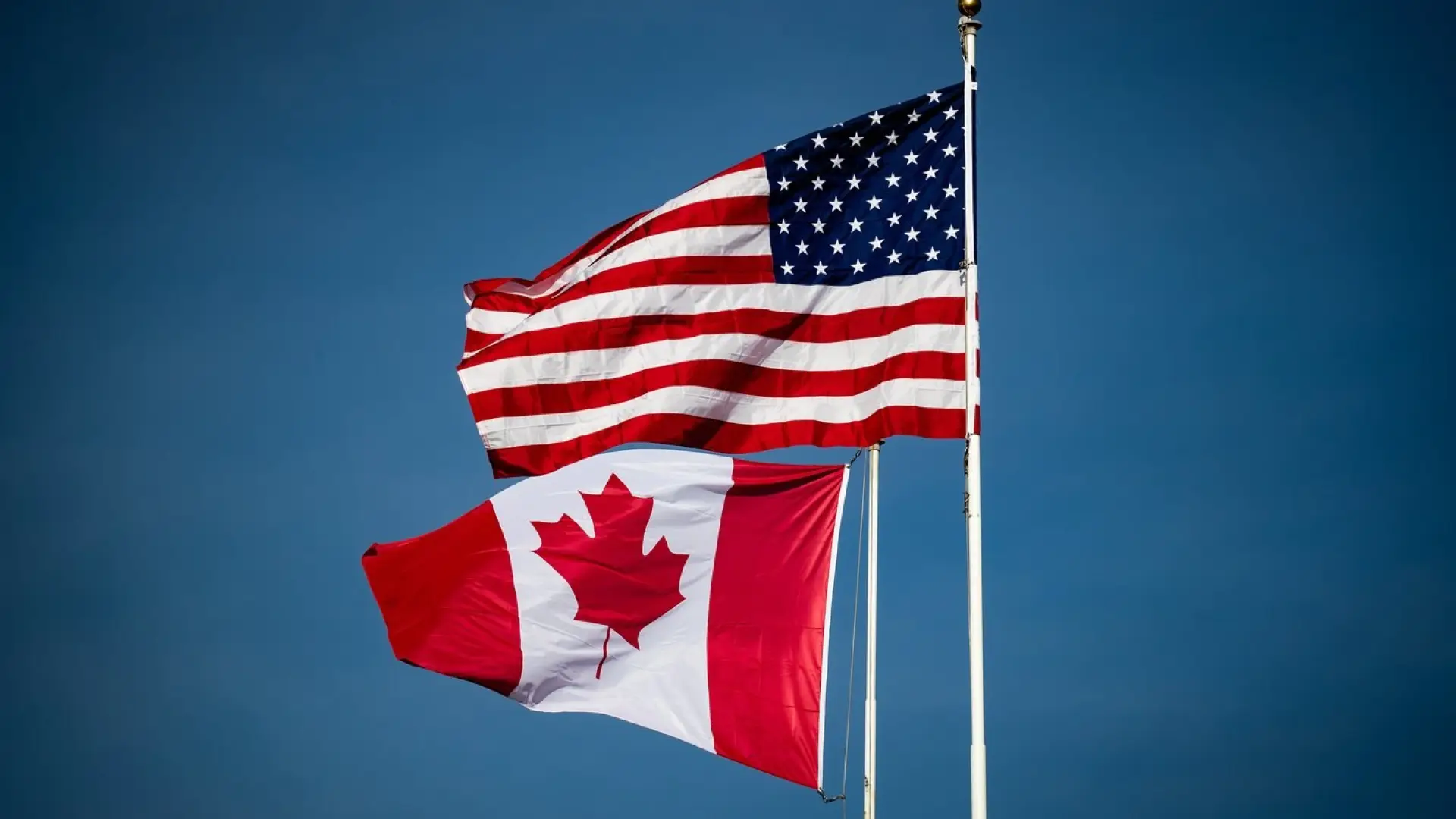
MONTREAL -- When the Trump administration took aim at free trade last year, Ryan Zoehner felt like he was under fire.
"Our supply chain got caught in the crosshairs," said the CEO of Algo, a Vancouver-area manufacturer whose 165 employees make speakers, strobe lights and intercoms for use in schools, hospitals and airports.
The maze of tariff walls thrown up by U.S. President Donald Trump as well as Canada's retaliatory duties meant Zoehner had to reroute the flow of 5,000 parts that wind up in Algo products, many of which ultimately land on American loading docks.
More than the cost of the tariffs, it was the turbulence stirred up by a barrage of trade threats and shifting rules that menaced his bottom line.
"Volatility is the main word," he said.
Zoehner hopes the opposite will emerge from trade talks.
"The No. 1 thing as a business leader I'm looking for is consistency and clarity," he said. Close integration is the ideal, hammered out quickly if possible, longer if necessary.
Zoehner isn't alone, and he straddles a divide over how to handle discussions with America's famously fickle head of state.
Canada's business community says a deal that lets most goods flow to the United States tariff-free is the top goal as negotiators gear up for a renewal deadline of the continental free trade pact. But corporate leaders disagree on how to reach that outcome, diverging on whether a quick-and-dirty deal or a wait-and-see approach offers the best path to stability.
The heads of groups representing manufacturers, steel makers and CEOs fall on one side of the debate, saying the cloud of uncertainty hanging over North American trade has stifled capital investment, hurt bottom lines and upped the urgency to lock in an agreement.
On the other side, many small business owners and tech firms believe that the more time passes, the more pressure builds on Trump to ink a deal, as his popularity sags amid rising gas prices in the run-up to the midterm elections.
Just this week, the Trump administration proposed a 10 per cent additional tariff on Canada and other countries, though the vast majority of goods exported to the U.S. are compliant with the existing trade pact and exempt from levies.
"We're desperately in search of certainty, in search of predictability, both of which would inspire confidence to deploy capital," said Goldy Hyder, CEO of the Business Council of Canada.
"Stretching this out is going to be harmful for all of us."
Many companies have gone into survival mode, he said, resulting in sluggish economic growth across the continent over the past year, especially in Mexico and Canada.
Some level of baseline, near-universal tariff should be expected, Hyder said, echoing other business leaders. But they say the vast majority of trade should be exempt from those levies under the trade agreement.
"You've got to pay to play now," he said. "Tariffs in some shape or form are going to be there."
Others warned against hurrying to shake hands with the dealmaker-in-chief.
"Rushing to a deal may not be a helpful outcome," said Dan Kelly, who heads the Canadian Federation of Independent Business.
"I don't love the idea of us going into this kind of year-to-year renegotiation. But at the moment, that may be less problematic than a bad deal that we sign right away or a deal that then is not respected three weeks later," he said, noting Trump's history of reneging on trade agreements -- including his own, the United States-Mexico-Canada Agreement.
The review deadline for the USMCA, also known as CUSMA, is July 1. By then, the countries will have to decide whether to renew it or renegotiate it.
This report by The Canadian Press was first published June 5, 2026.