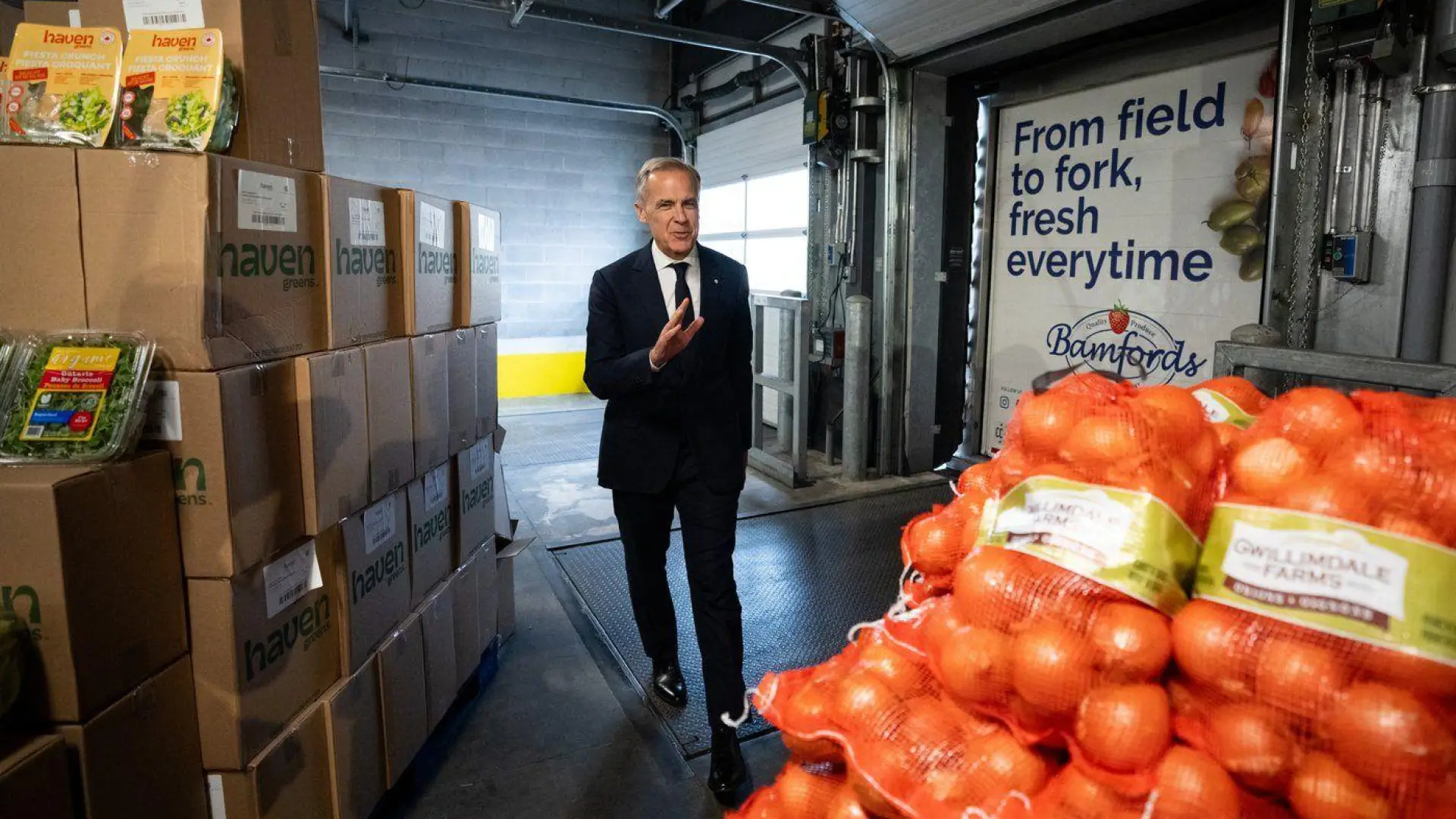
OTTAWA -- The Liberal government has announced a national food security strategy aimed at giving Canadians more access to locally produced fruit, vegetables and other fresh items at lower prices.
The plan outlined Thursday is intended to change the way food is bought, sold, transported and distributed in Canada to better support farmers, small independent players and consumers.
The government says the strategy is backed by more than $3 billion in investments over 10 years.
It includes $1 billion for infrastructure — including food terminals and hubs — to help independent grocers compete with large retailers by making it easier for them to buy from farmers and food processors.
The government promises initiatives to help small- and medium-sized processors modernize and increase productivity so they can compete in the global marketplace while attracting investment from major manufacturers.
Ottawa also has earmarked $750 million for greenhouses and hydroponics to expand year-round Canadian production of fruits and vegetables, including in rural and northern communities.
The government also plans to speed up approvals for seeds, feed, fertilizers and veterinary products, and to reduce backlogs that slow down the system.
Canada is one of the world's largest exporters of agri-food products and its farmers, ranchers and producers send $100 billion worth of goods abroad every year, Prime Minister Mark Carney said Thursday.
"We are an agricultural superpower. Yet for most Canadians, it doesn’t feel like that at the checkout counter," Carney said at a food terminal in the Toronto suburb of Etobicoke.
Grocery prices have gone up by nearly 35 per cent since 2019, he said.
"And today, the average Canadian family spends about $10,000 a year on groceries — more than $800 a month. There are multiple reasons," he added.
"One of them is that while Canadian farmers, ranchers and producers are producing enormous amounts of food, we're relying on other countries to process a lot of it.
"At the same time, we all know our growing seasons are too short to keep up with year-round demand."
Carney said Canada relies on other countries for essential foods, meaning it imports nearly 90 per cent of its supply of fresh fruit and nuts and more than 70 per cent of its vegetables.
"We're going to grow more at home, process more at home, and feed more Canadians with Canadian food," he said.
"Our national food strategy will help create a strong, stable food system in Canada, from the farm to the grocery store to your dinner table."
The government says five large retailers dominate 75 per cent of Canada's grocery market, along with much of the system for distributing food.
It says independent grocers can't compete because they often depend on competitors for supply and may also face restrictions on where they can operate.
The strategy says farmers need more places to sell their products and smaller, independent grocers need more places to find product for their stores so they can compete with large retailers.
"Consumers need more affordable choices when they shop, and people in rural, remote and northern communities need better access to fresh produce at reasonable prices," the strategy document says.
"We need to reduce our dependence on other countries by processing more of the food we grow and use new technologies to grow the foods we cannot currently grow at scale year-round."
This report by The Canadian Press was first published June 11, 2026.