OTTAWA -- The federal government wants another high-speed rail stop — making the would-be line less speedy.
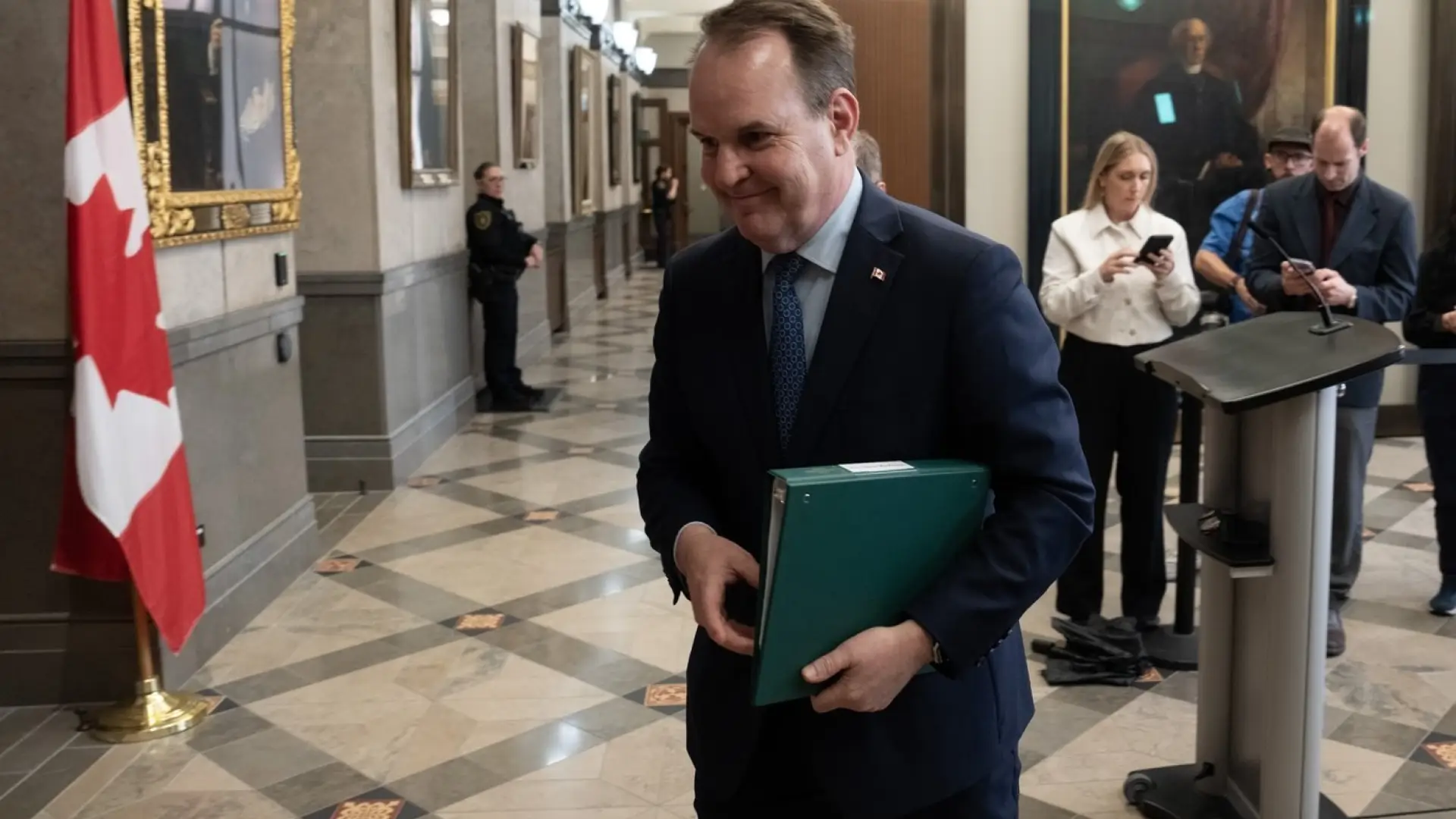
On Monday, Transport Minister Steven MacKinnon directed Alto to consider an additional stop in Kingston, Ont., in what would be a potential major change to the project — a move that drew swift criticism from opponents and raised questions about planning and costs.
Coming on the heels of a three-month public consultation, the extra stop would lengthen travel times along the 1,000-kilometre corridor between Toronto and Quebec City but draw more riders, MacKinnon said.
"Yes, it is a longer route, but it does not add enough time such that it would dissuade people," he told reporters in Kingston on Monday.
To the contrary, the stop could open up zippy travel to tens of thousands more, including students at the city's two universities — "people in Kingston who might want to go to a Blue Jay game or a Montreal Canadiens game and can be back at home in their bed by midnight."
"By our presence here today, we’re telling you what our strong preference is," he said.
Not everyone is on board. The possibility of an eighth stop on the route drew immediate criticism from opponents online and in person, with protesters demonstrating outside the event.
"You get a stop. And YOU get a stop. And we all get a stop. Pretty soon we have just rebuilt Via," said Kathleen O'Connell Renaud, a resident of St-Eugène, Ont., and a spokeswoman for the so-called Altno movement, in a post on the group's Facebook page.
Others questioned why, if the project was based on a fully fleshed-out business case, Kingston wasn't on the map from the start.
"This Alto project is improvisation," said Christian Hébert, president of Quebec’s Union des producteurs agricoles, in a social media post.
MacKinnon countered that the proposed change stems from feedback from residents through the first four months of the year.
"One of the very distinct and clear voices that we heard from was that of this community led by their member of Parliament, their mayor, councillors," he added.
The project has garnered vocal opposition in rural parts of Eastern Ontario and in Mirabel, Que., where critics worry about how the line would slice through their properties and force expropriations.
So far, the cost estimate sits between $60 billion and $90 billion, though complex rail projects have a reputation for blowing through budget caps.
The line would see trains running between Quebec City and Toronto on dedicated electric tracks at speeds breaching 300 km/h. Three-metre walls would frame the corridor, which would see no at-grade crossings.
Ahmed El-Geneidy, a professor at McGill University's School of Public Planning, claimed the government's push to tack on a stop in a Liberal riding reveals that politics plays an outsized role in the project, though it's run at arm's length by a Crown corporation.
"It means that this project is a highly politicized one, and we are not looking at what is the best; we are just trying to make sure that different politicians are happy," he said in a phone interview.
Each stop adds another 15 to 30 minutes, said El-Geneidy, who co-authored a study of the line in March.
"This is a train that you can't stop right away," he said. "Then you have to take a while until you get to the 300 km/h, and then you needed to stay at 300 km/h as long as possible.
"The more you stop, the slower it's going to be," he said.
In April, Alto CEO Martin Imbleau said the Greater Toronto Area could be home to two stations rather than one as previously planned. "Toronto will probably require a secondary station," he told The Canadian Press at the time. If Kingston goes ahead, that would bring the tally of stops to nine.
On Monday, the government said it instructed Alto to produce a plan assessing a southern route option between Ottawa and Peterborough, Ont., that includes a "potential stop in Kingston." The stop would connect with the city's Via Rail station — the fourth-busiest in the country, according to Alto.
A more northerly corridor as well as a southern one that excludes Kingston officially remain on the table.
The latest stop would reduce travel times between Kingston and Toronto by about an hour to 90 minutes and allow the vast majority of residents between Peterborough and Ottawa to drive to a station in less than 30 minutes, according to the government.
Construction of the first phase of the rail line is set to kick off in 2029 or 2030, linking Montreal and Ottawa in an effective test case for what would be a massive infrastructure project intended to transform rail travel in Canada’s most densely populated region.
So far, the federal government has mandated seven stops: Toronto, Peterborough, Ottawa, Laval, Que., Montreal, Trois-Rivières, Que., and Quebec City.
The project has garnered backlash from a grassroots coalition of farmers and small-town residents as well as the federal Conservatives and the Parti Québécois. Critics say the rail corridor would cleave communities, prompt hundreds of land expropriations and offer locals few benefits while costing taxpayers billions of dollars.
This report by The Canadian Press was first published June 22, 2026.
— With files from David Baxter in Ottawa