

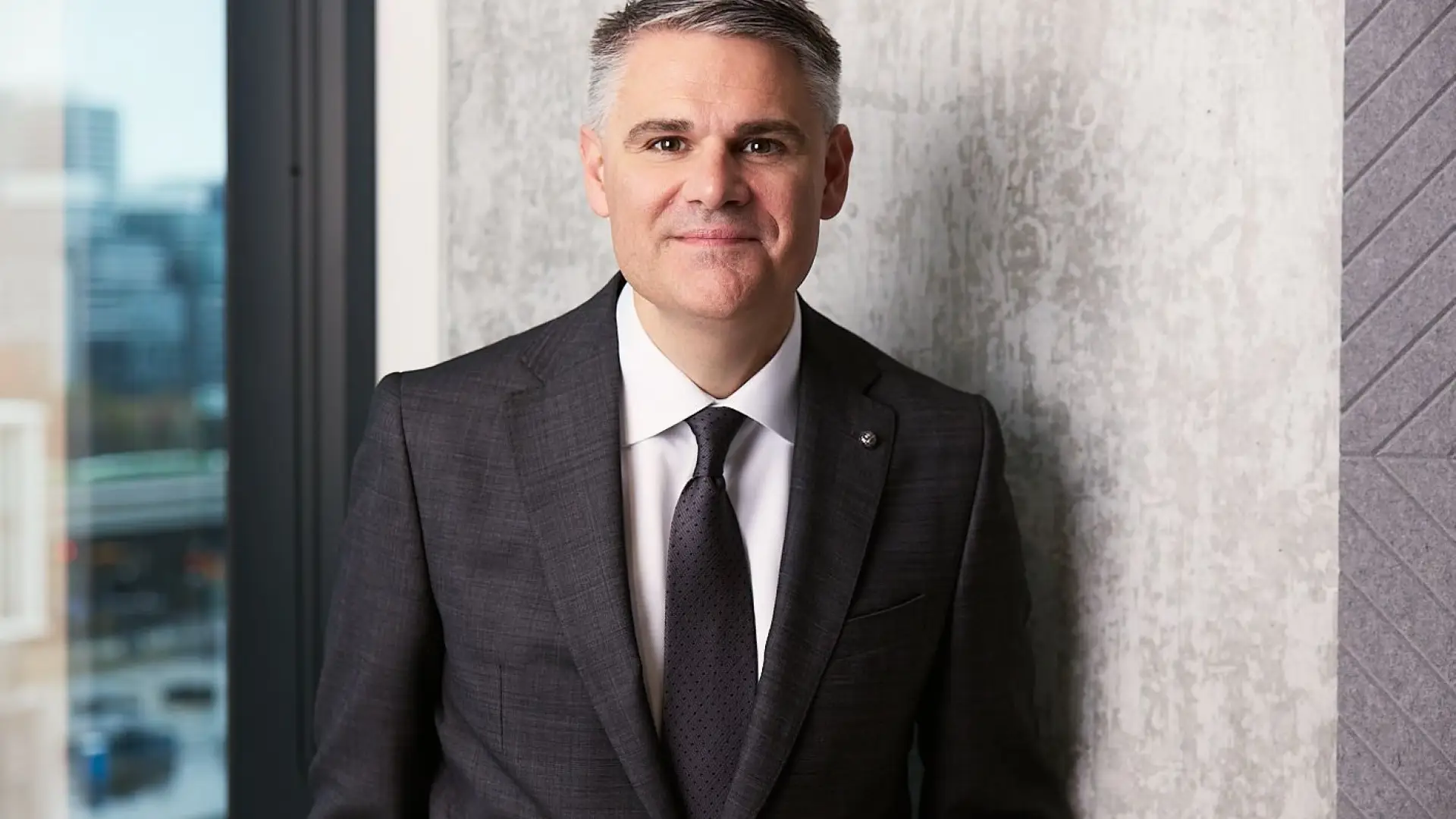
On June 22nd James Scongack will be recognized by The Pearson Centre with its first Catalyst for Change Leadership Award.
In a country where corporate leaders often speak loudly about social responsibility while doing little of substance, James Scongack stands out for the opposite reason: he rarely advertises his charitable work, yet his impact is unmistakable. He is most often associated with nuclear energy, medical isotopes, and Bruce Power’s operational excellence. But there is much more to his character than just his executive title; it is the decades-long pattern of service, advocacy, and community-building that has shaped lives far beyond the energy sector.
Scongack’s charitable footprint is not an accessory to his career, it is a defining feature of it. And in an era when Canadians are increasingly skeptical of corporate altruism, his example offers a compelling counter-narrative: that leadership, at its best, is measured not only in megawatts or economic output, but in the quiet, persistent work of improving lives.
A Lifelong Commitment to Childhood Cancer Care
If there is one area where Scongack’s charitable leadership is most visible, it is in childhood cancer care. His long-standing involvement with the Pediatric Oncology Group of Ontario (POGO) is not symbolic, it is deeply personal. For years, he and his wife Jenny have been active contributors to POGO’s mission, offering strategic advice, raising awareness, and mobilizing community support for families navigating the most difficult moments of their lives.
In 2024, Scongack became Chair of the POGO Board of Directors, a role that reflects both his credibility and his commitment. He is a hands-on Chair, lending his time, influence, and emotional and financial investment.
What makes his involvement particularly resonant is the personal history behind it. His wife was treated for cancer at age two by one of POGO’s founders, Dr. Mark Greenberg, a connection Scongack openly acknowledges as a driving force behind his dedication. This is philanthropy rooted in gratitude, empathy, and lived experience.
Championing Medical Isotopes as a Public Health Mission
Scongack’s charitable work extends beyond traditional philanthropy into the realm of public health advocacy. As Chair of the Canadian Nuclear Isotope Council (CNIC), his vision has helped build a national coalition dedicated to securing Canada’s leadership in the production of life-saving medical isotopes.
This work is not merely technical or industrial, it is humanitarian. Medical isotopes diagnose and treat cancer, sterilize medical equipment, and support therapies used in hospitals across the world. Under Scongack’s leadership, the CNIC has become a powerful advocate for ensuring that Canada’s isotope supply remains stable, innovative, and globally competitive.
His efforts were recognized in 2024 when he received the King Charles III Coronation Medal, awarded for significant contributions to Canada. The citation explicitly highlighted his dedication to improving lives through medical isotopes, his volunteerism, and his work supporting communities during the COVID-19 pandemic, including organizing vaccination hubs for local residents.
Scongack’s charitable leadership has driven systems change: improving public health not just one donation at a time, but by strengthening the infrastructure that makes modern medicine possible.
Supporting Families and Patients
Scongack’s charitable commitments extend into multiple corners of Canada’s health ecosystem. He has been a long-time supporter of the Brain Tumour Foundation of Canada, advocating for patients and families affected by neurological cancers.
Green Ribbon Panel
Scongack’s leadership of the Green Ribbon Panel is marked by a disciplined, evidence-based approach to advancing Canada’s clean-energy strategy. As Chair, he unites industry, labour, Indigenous, and public-sector leaders to develop coordinated policy recommendations that strengthen national energy security and support the deployment of clean-energy technologies, including nuclear power. Under his direction, the Panel has become a credible, non-partisan forum shaping Canada’s long-term competitiveness in a low-carbon economy.
Leadership at Bruce Power
Scongack played a central role in Bruce Power’s Unit 6 Return to Service, helping steer one of Canada’s largest clean-energy projects back into service ahead of time and on budget. As Chief Development Officer, he worked across engineering, labour, and supply-chain partners to keep the Major Component Replacement program disciplined and predictable, an approach that became a model for the remaining units. He was also involved in shaping Bruce Power’s
Long-Term Agreement with the Province of Ontario, which secured stable pricing, enabled life-extension of the site into the 2060s, and positioned nuclear power as a backbone of Ontario’s clean-energy strategy. His work helped align industry, government, and community interests around long-term reliability and affordability.
A Builder of Community Infrastructure
Beyond health care, Scongack has been deeply involved in community-based charitable work through Bruce Power’scommunity investment and sponsorship programs, its environment and sustainability fund, and its Indigenous community investment fund.
These initiatives support local organizations, environmental projects, and Indigenous communities across the region. Scongack has been personally engaged in these initiatives, helping shape partnerships, championing local initiatives, and ensuring that Bruce Power’s resources are deployed in ways that strengthen community resilience.
His long-time support for Easter Seals, including serving as a board member and chairing its fundraising committee, earned him a Diamond Award of Distinction in 2016. This recognition reflects years of hands-on involvement, not just financial support.
Leadership During Crisis
Scongack’s community-first approach was highlighted during the COVID-19 pandemic. While many organizations struggled to adapt, Scongack helped lead efforts to support both the Bruce Power workforce and the surrounding community by organizing vaccination hubs, critical infrastructure at a time when access was limited and demand was overwhelming.
A Philosophy of Service, Not Spotlight
What distinguishes Scongack’s charitable work is his consistency and his role as a catalyst for change. He does not jump into causes for publicity. He commits for years, sometimes decades. He builds relationships, strengthens institutions, and uses his influence to mobilize resources where they are needed most.
His approach reflects a broader philosophy: that leadership is not measured by visibility, but by impact. That communities are strengthened not by grand gestures, but by sustained, thoughtful engagement. And that those who have the capacity to help have a responsibility to do so.
In a time when many leaders talk about purpose, James Scongack quietly practices it leading to a better country and an impact that is felt around the world.
Kevin Bosch is Chair of the Pearson Centre and a former Liberal staffer who worked on Parliament Hill. Pam Damoff is a former Member of Parliament and the President and CEO of the Pearson Centre.