
Canada’s peacekeeping expertise and robust military capabilities can play an integral role in achieving meaningful success.
The announcement on Monday that Hamas has formally dissolved its government marks a significant milestone on the path toward implementing the U.S. brokered peace plan made public in September. The terrorist group won Palestinian parliamentary elections in 2006, and up until now it has refused to relinquish governing authority in Gaza.
This next chapter marks a generational opportunity to achieve sustainable and durable peace in the Middle East. It’s time for Canada to step up and help convert the dream of peace into an enduring reality.
Canada takes pride in having played “a key role in creating the concept of UN peacekeeping.” The country is known for its “long-standing reputation as a nation of peacekeepers and humanitarians” and it has recent experience supporting a challenging UN peacekeeping mission in Mali.
Because of the extraordinary stakes involved with the looming mission in Gaza, Canada’s peacekeeping expertise and robust military capabilities can play an integral role in achieving meaningful success. But setting conditions for a significant deployment of Canadian troops and equipment will require steadfast political will, and it is up to the current Liberal government to make it happen.
While calling for Canada to take on a direct role in peace support operations, it is important to acknowledge how the country is currently involved in the region.
Last November, assistant deputy minister for foreign affairs Alexandre Lévêque indicated during parliamentary testimony that Canada has “deployed civilian and military personnel to the U.S.-led Civil-Military Coordination Center” to “monitor the ceasefire and help implement the peace plan.” Canada has also carried out Operation Proteus since 2005 to help security forces of the Palestinian Authority “build their capacity.” And Canada has reportedly contributed more than $355 million “to respond to the humanitarian crisis in the West Bank and Gaza” since the current conflict began.
These and similar activities are commendable, but they will not be enough as the next phase in the demilitarization of Gaza gets underway.
Let there be no mistake: the road ahead will be challenging. Palestinian Authority president Mahmoud Abbas welcomed Trump’s comprehensive peace plan soon after it was released, but Hamas has since balked at the condition calling for it to disarm. Although the plan requires that “Hamas and other factions agree to not have any role in the governance of Gaza, directly, indirectly, or in any form,” Hamas has reportedly sought support for its own police force of up to 10,000 members in postwar Gaza.
The Board of Peace that is tasked with managing the transition of authority in Gaza welcomed Monday’s announcement that Hamas has dissolved its government, yet the Board nonetheless insisted that its assessment will be “guided by actions, not promises, to meet the critical needs of the people of Gaza.”
If Hamas does not voluntarily disarm and refrain from a governing role in Gaza, these non-negotiable objectives may yet require overwhelming military force to achieve. This means the prospect of intense—even deadly—combat operations remains.
Despite the dangers on the horizon, the potential for this plan to finally achieve durable peace in Palestinian territories is worth the risk.
But doing so will require commitment, resolve, and skilled military capabilities. This is why the Canadian Armed Forces are especially well suited to the task.
One potential roadblock is the current strain in relations between Canada and the United States. Despite current tensions, the government still maintains that “Canada has had no closer friend and ally than the United States” for over 150 years.
And although the peace plan is an American-led initiative for which Trump is appointed chair of the fledgling Board of Peace, the United Nations Security Council has welcomed the board and authorized establishment of an International Stabilization Force (ISF).
This provides international legitimacy to the peace plan, which is a point the government can emphasize to the domestic constituency in light of current diplomatic tensions with America.
Last fall, the Carney government along with Australia, France, and the UK recognized the State of Palestine even though it doesn’t currently qualify for traditional criteria of statehood. Committing robust military capabilities to the ISF in Gaza represents an opportunity to pursue a credible two-state solution.
The Carney government insists that “Canada is a strong supporter of the Middle East Peace Process” and that its approach to the conflict “is guided by its historic and unwavering commitment to a two-state solution, with Israelis and Palestinians living side-by-side in peace and security.”
If Canada is genuinely committed to long-term peace while also supporting “free and fair elections in Palestine in which Hamas must play no role,” political rhetoric, humanitarian aid, and capacity building simply will not be enough.
The consequences of failure are predictable: perpetual conflict, resurgence of Hamas and other Iran-backed regional proxy militias, and eventually a repeat of the October 7 atrocities followed by catastrophic large-scale hostilities.
A coalition of the willing must seize this moment by demonstrating the resolve needed to convert wishes to results.
The time is now for Canada to step up, join in, and take on a decisive role to foster genuine peace in Gaza and beyond.
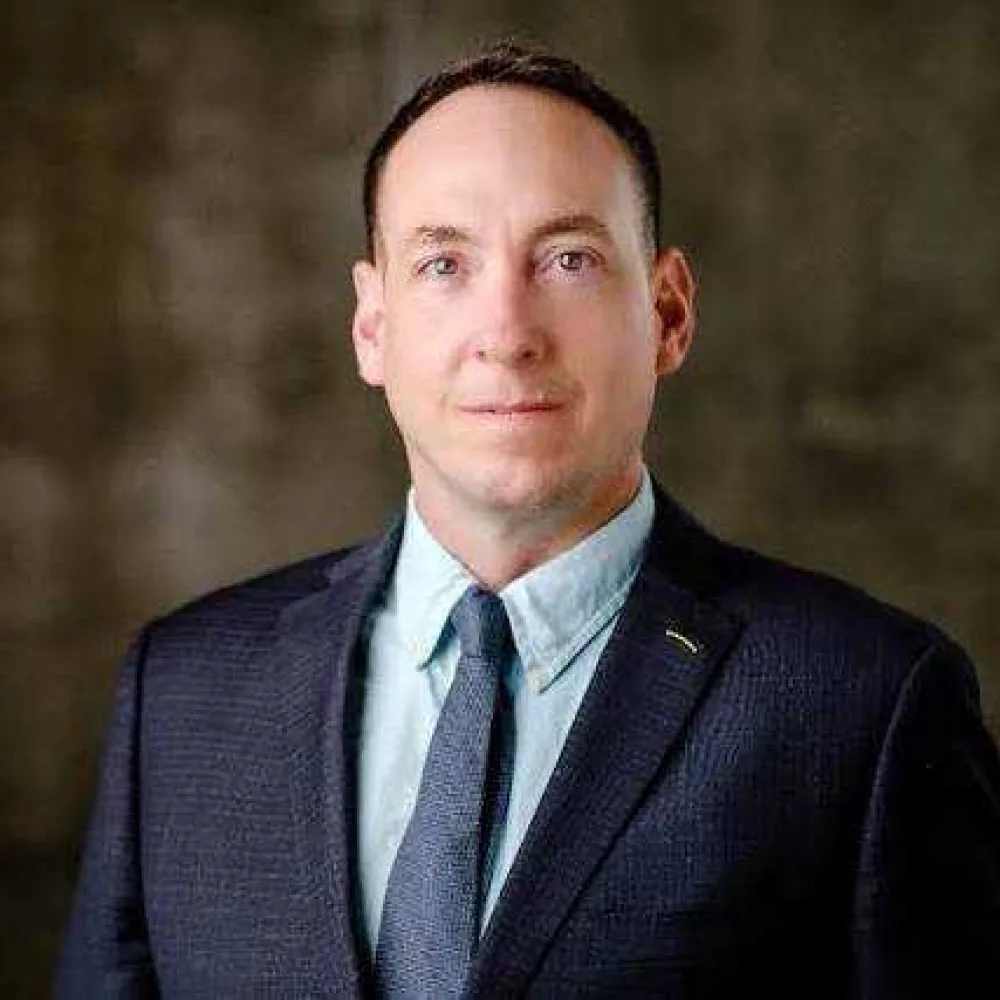
Dr. Brian L. Cox is a senior fellow at the Macdonald-Laurier Institute, a former professor at Cornell Law School, and a retired US Army judge advocate. You can follow him on X @BrianCox_RLTW
The views expressed are those of the author(s). National Newswatch Inc. publishes a range of perspectives and does not necessarily endorse the opinions presented.