HALIFAX -- Nova Scotia's premier says the province has the infrastructure and people needed to meet the expected demands of hosting a new submarine fleet, but critics say more should be done to address clogged roads and hospitals and increased housing prices.
Tim Houston says officials have been investing in housing, health care and skilled trades in anticipation of increased pressures on Halifax, home to the country's largest naval base.
"We've had these plans, we've been executing on these plans, and now we have a prime minister who sees the value," Houston told reporters after a cabinet meeting Thursday.
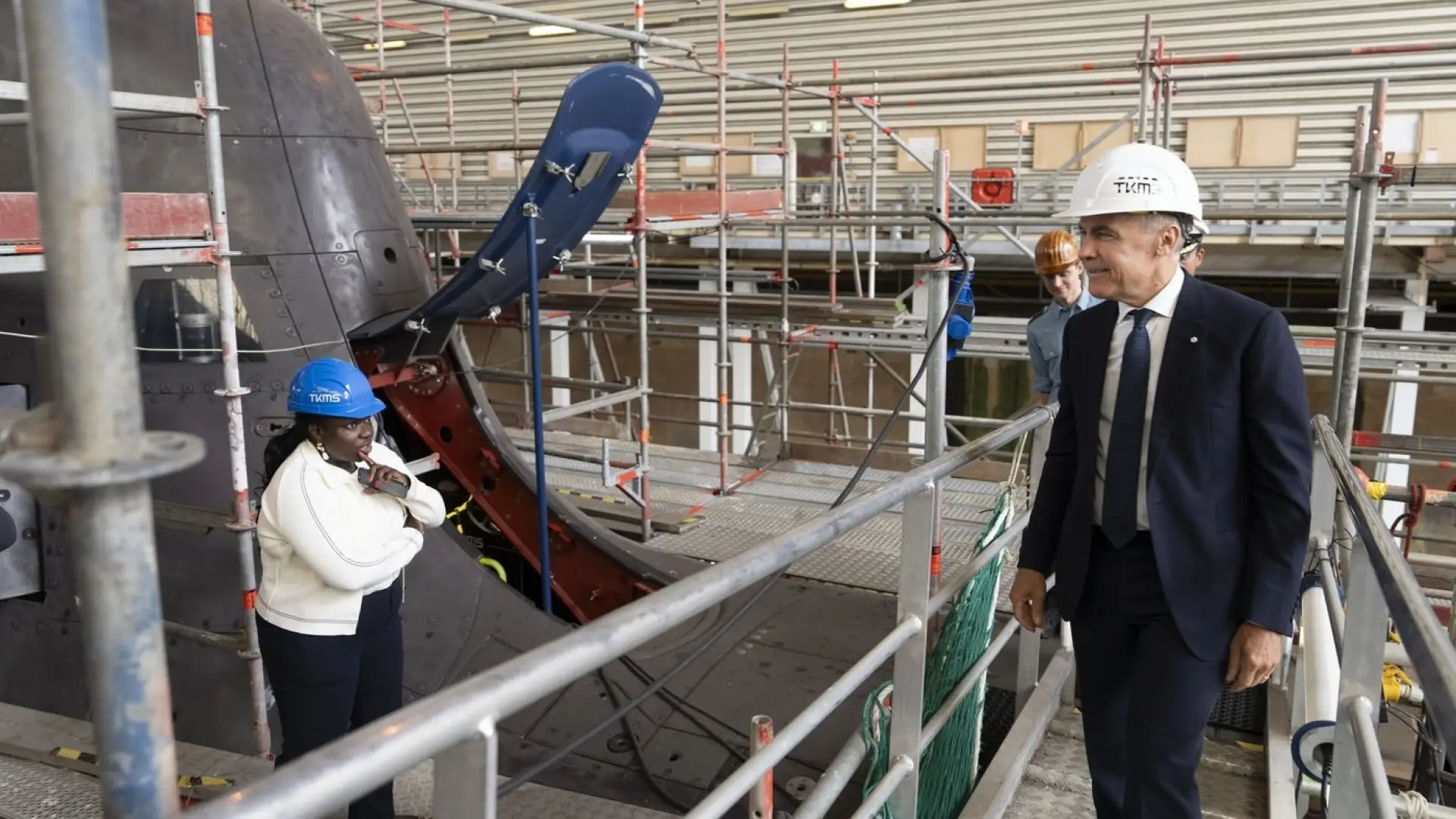
Prime Minister Mark Carney was in Halifax on Monday to announce German firm TKMS as the preferred bidder to build up to 12 new submarines, estimated to cost $24 billion, with maintenance and operations costs expected to be much higher.
The details of the deal have yet to be hammered out but it's expected to increase the number of sailors, maintenance workers and naval suppliers in Halifax and Esquimalt, B.C., the navy's home on the West Coast.
TKMS said its proposal would deliver $86 billion in economic impacts for Canada.
Carney said naval ship construction has changed Halifax in recent years, and there will be substantial defence activity in the city for decades to come.
NDP leader Claudia Chender said defence projects are an exciting opportunity for Halifax, but worried the city's infrastructure is already overburdened.
"I don't think we heard anything that really is going to put people at ease, that we're going to have places for people to live in. Roads for people to travel on. I mean, it's gridlock right now in the entire (Halifax Regional Municipality)," she said.
Liberal caucus chair Becky Druhan also said the government has a lot of work to do.
"We continue to have gaps in health care. We know that housing is unattainable and unaffordable for many people. Certainly the challenges around transportation and roads is something that we hear about," she told reporters.
Halifax's population has increased by about 100,000 people over the last decade to about 517,000 in 2025. That's driven up the cost of housing which could present challenges for incoming workers.
Statistics Canada says the cost of a two-bedroom apartment in Halifax has increased nearly 60 per cent to $2,350 at the beginning of this year, up from about $1,470 a month at the beginning of 2020.
StatCan says there were 9,760 housing starts in the city last year, 32 per cent more than in 2024. However, Nova Scotia's finance department says housing starts fell 22.5 per cent over the first five months of 2026.
Nova Scotia's housing minister said the province has invested in student housing and smoothed the way for more than 63,000 housing units approved for construction in Halifax.
"We've cut the red tape, we got (developers) ready to move and they are in a steady flow to go and build," John White said Thursday.
"So, I'm asking developers today to believe in what's in front of their eyes... and to start building."
Halifax traffic has also become congested, potentially creating logistical hurdles for moving defence personnel, supplies and equipment. Navigational company TomTom says the city had the 13th-worst traffic in North America last year.
Fred Tilley, the province's public works minister, said his department is studying options to improve bridges over Halifax Harbour, major highways and connector roads that will all benefit the defence sector.
Houston cited health care as another example of provincial preparation, noting the number of Nova Scotians without a family doctor has fallen dramatically in recent years while Halifax's largest hospital is undergoing a multibillion-dollar expansion. Nova Scotia Health says surgical wait times last year fell to their lowest level since 2019-20.
This report by The Canadian Press was first published July 9, 2026.