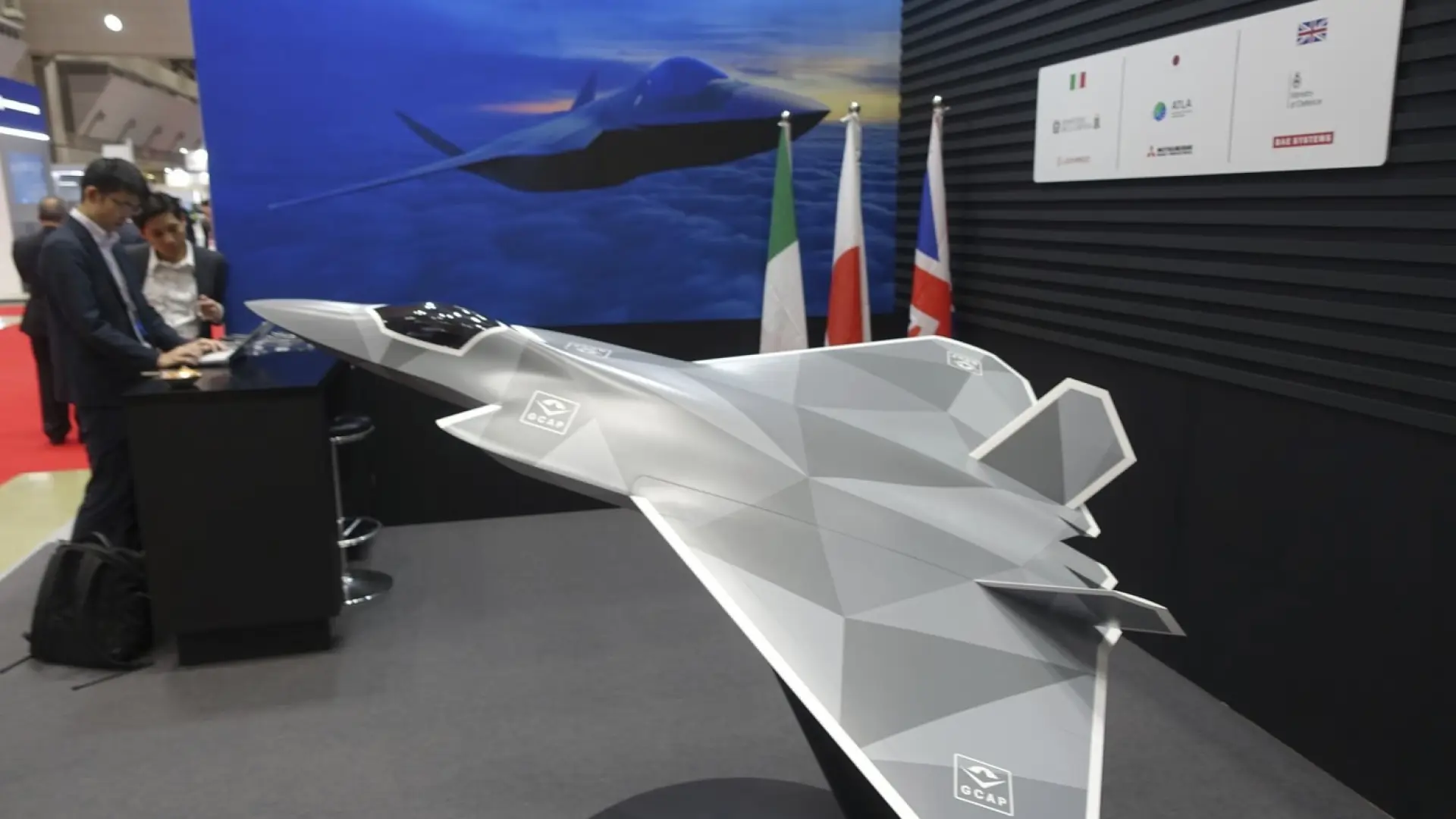
OTTAWA -- Canada has become the first country to gain observer status in a future fighter jet program run by the U.K., Japan and Italy, even as a decision on Ottawa's current order of F-35s remains up in the air.
As an observer nation, Ottawa will gain insider access to information about the Global Combat Air Program as the sixth-generation fighter is under development. Observer status does not commit Canada to buying the jets.
The four countries' defence ministers announced the news in London on Tuesday in a statement timed to coincide with a major U.K. international air show where the next-generation fighter is being promoted.
Defence Minister David McGuinty called it an "important milestone" at the joint news conference.
"Observer status will give Canada the opportunity to deepen its understanding of next-generation combat air capabilities, strengthen our industrial collaboration and contribute more closely to the partnerships that will define the future of air power," the minister said.
The three partner countries launched the program to replace the Eurofighter Typhoons and Japan's F-2 jets and set a timeline to bring the new fighter into service by 2035.
No details were revealed about what Canada's new status with the program will mean, but Ottawa's expression of interest was welcomed by the partner countries.
"Canada's participation in the program as an observer will provide great momentum to further strengthen Japan-Canada defence co-operation," said Japanese Defence Minister Shinjiro Koizumi.
Experts cautioned the planned new fighter jet is still in the very early stages of development.
"It's still very conceptual," said Philippe Lagasse, a professor at the Norman Paterson School of International Affairs.
"Research has begun on it. The viability is not yet clear. The importance of it is not yet clear. You'll have a lot of critics who will argue we should be abandoning traditional fighters altogether. There's a lot of things to iron out and some uncertainty ... but this is normal for a project like this."
David Perry, president of the Canadian Global Affairs Institute, said there are a lot of unanswered questions about how Canada could get involved and whether there's an entry fee.
But gaining observer status could help crystallize the federal government's thinking on future involvement in the program, he said.
"I think it makes sense for us, at a minimum, to go kick the tires and then see whether or not if it looks like it's a good initiative to be a part of more seriously," Perry said.
"I don't think it's something that, at least in the near to medium term ... has much of an impact on the fighter decision that we need to get on with making right now."
Canada's plan to purchase a fleet of American fifth-generation F-35 fighter jets has been under a review for more than a year.
Prime Minister Mark Carney put the full order of 88 jets under review in March 2025 in response to the ongoing trade war started by U.S. President Donald Trump. Carney's government has not indicated when the review will conclude or where it's headed.
The United States is currently working on its own sixth-generation fighters. Boeing is designing the F-47, a twin-engined fighter to replace the U.S. air force's F-22 Raptor.
The F-47 has an estimated cost of about US$300 million per aircraft -- much more expensive than the F-35s.
Daniel Norton, senior management systems analyst at the RAND Corporation think tank, said the U.S. might not want to export that technology and it could be "cost-prohibitive for smaller air forces like the RCAF."
The Global Combat Air Program, he said, "may be less expensive and offer a greater chance for Canadian firms to become involved in development and production."
"At the very least, the threat of participation could provide some leverage in negotiations with other contractors," he added.
McGuinty told a news conference in Tokyo last month that the U.S. is "pursuing its own individual initiatives" on sixth-gen fighters and "wants to go alone at this stage."
Richard Shimooka, a senior fellow at the Macdonald-Laurier Institute, said the Global Combat Air Program has suffered some internal tensions and it's not clear where the program will be a few years down the road.
The U.K. dragged its heels for nearly a year on committing to financing for the Global Combat Air Program, while Japan has pushed for a faster pace.
Shimooka pointed out there's another option for Canada: joining the U.S. navy's sixth-generation project, the F/A-XX.
Canada could still seek to join that once the political dynamics change between Ottawa and Washington, he said.
"Canadian industries are very effectively aligned with U.S. industry," he said.
This report by The Canadian Press was first published July 21, 2026.