OTTAWA -- Labour leaders are denouncing what they call a direct attack on the right to strike in the sweeping economic bill the Liberal government tabled Monday.
The Canadian Labour Congress on Tuesday accused the federal government of enshrining in the proposed legislation new powers allowing the federal government to quash strikes at a minister's whim.
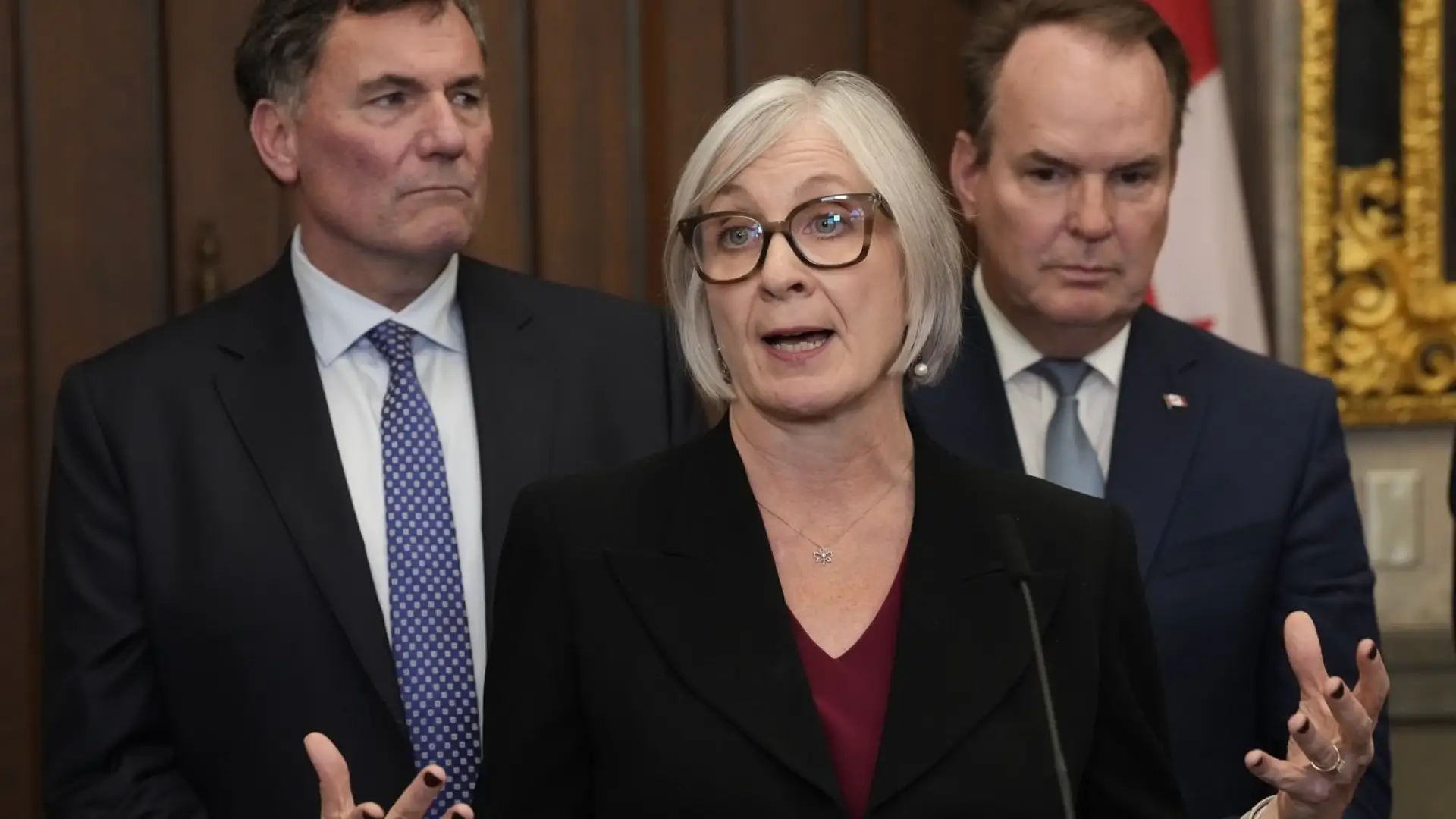
The Liberals, meanwhile, claim the bill would instead place "guardrails" around a minister's power to end work stoppages in federally regulated industries. Jobs Minister Patty Hajdu argues the changes in Bill C-39 are aimed at improving labour relations and reducing the number of times negotiations hit a boiling point.
According to the proposed Building Canada Strong Act, a work stoppage must be affecting the "national interest" before the minister can trigger Section 107 of the Canada Labour Code to end a strike or lockout. The government says it must balance threats to the national interest — which could include economic impacts or social disruptions — with the need to protect the right to free association and to strike.
Section 107 has been used repeatedly by the federal labour minister in recent years to refer deadlocked parties to the Canada Industrial Relations Board to declare an impasse, end a work stoppage and move talks into binding arbitration.
Bea Bruske, president of the Canadian Labour Congress, told reporters in Ottawa on Tuesday that she spoke with the heads of Canada's major unions the night before and the bill is raising red flags in the labour community.
"The government said it would protect the workers' right to strike, but instead this bill explicitly gives government the power to end legal strikes when a minister decides that a strike is or could become contrary to the national interest," Bruske said.
A senior government official briefing reporters on Monday on Bill C-39 said the jobs minister would gain no additional powers through the legislation.
Bruske and the Canadian Labour Congress disagreed with that reading.
The government's proposal "enshrines" a power to break strikes in Section 107 that was never intended when the provision was first introduced in the Canada Labour Code in 1984, said Mark Rowlinson, lawyer with Goldblatt Partners LLP, who spoke to media alongside Bruske on Tuesday.
"It provides the complete and unlimited discretion to the federal minister to decide who gets to go on strike and who does not," Rowlinson said.
Bruske said labour leaders are considering legal avenues to address the proposed changes but suggested those conversations are still in the early stages.
In an interview after the bill was tabled on Monday, Hajdu said the government is trying to make it harder to use Section 107, so that it becomes an "in-emergency-break-glass kind of tool."
The minister said she can't give a "blanket answer" on when the federal government would move to end a strike or lockout under the new labour legislation. There's no set timeline for federal government intervention in a strike affecting a critical industry, she said.
“It is a high bar to establish a national interest," Hajdu said. "What I would say is that each strike in each industry is different and so it's very hard to answer that with a blanket answer."
The federal government has leaned on Section 107 in recent years to end walkouts at Canada Post, the CN and CPKC railways, and at the B.C. and Montreal ports. Air Canada flight attendants defied an attempt to use the measure to end their strike in 2025.
Four of those instances gave rise to ongoing court challenges, which contend that the government overstepped its authority with Section 107.
Rowlinson argued the changes to the law would formalize the government's power to break strikes.
Removing workers' power to withhold their labour nullifies their leverage in collective bargaining, Bruske argued.
Hajdu said strikes could still happen under the proposed legislation and acknowledged the point of a work stoppage is to inflict economic pressure in a labour dispute.
But she said that pressure can mount quickly when, for example, a work stoppage hits the transportation sector and puts perishable goods at risk. She said the government will be evaluating each strike individually.
Other proposed changes to the labour code include the introduction of a special mediator to publish a report outlining both sides’ positions in an impasse. The act would also require pre-emptive relationship repair work with the federal mediation service in cases where there has been a history of acrimony between the union and employer.
Bruske said labour leaders can support many features of the proposed legislation. She welcomed additional resources for the Canada Industrial Relations Board and for workplace safety inspections, as well as efforts to crack down on wage theft and contract flipping.
Hajdu said the bill is intended to reduce the number of work stoppages by boosting transparency and reducing “bad blood” between the parties.
“Hopefully, this sharpens both employers' minds and unions' minds to the task at hand, which is to really, really get that deal,” she said.
This report by The Canadian Press was first published Sept. 22, 2026.
1751