
For more than three decades, I watched Canada’s natural resource debates unfold as a journalist and newsroom editor. Today, as a leader in not-for-profit policy advocacy, I spend my time at the intersection of resource development, governance, and public policy. From these vantage points, I have watched a quiet crisis take hold in Canadian policymaking: a growing willingness to sacrifice vital, science-backed sectors on the altar of political narrative and emotional rhetoric.
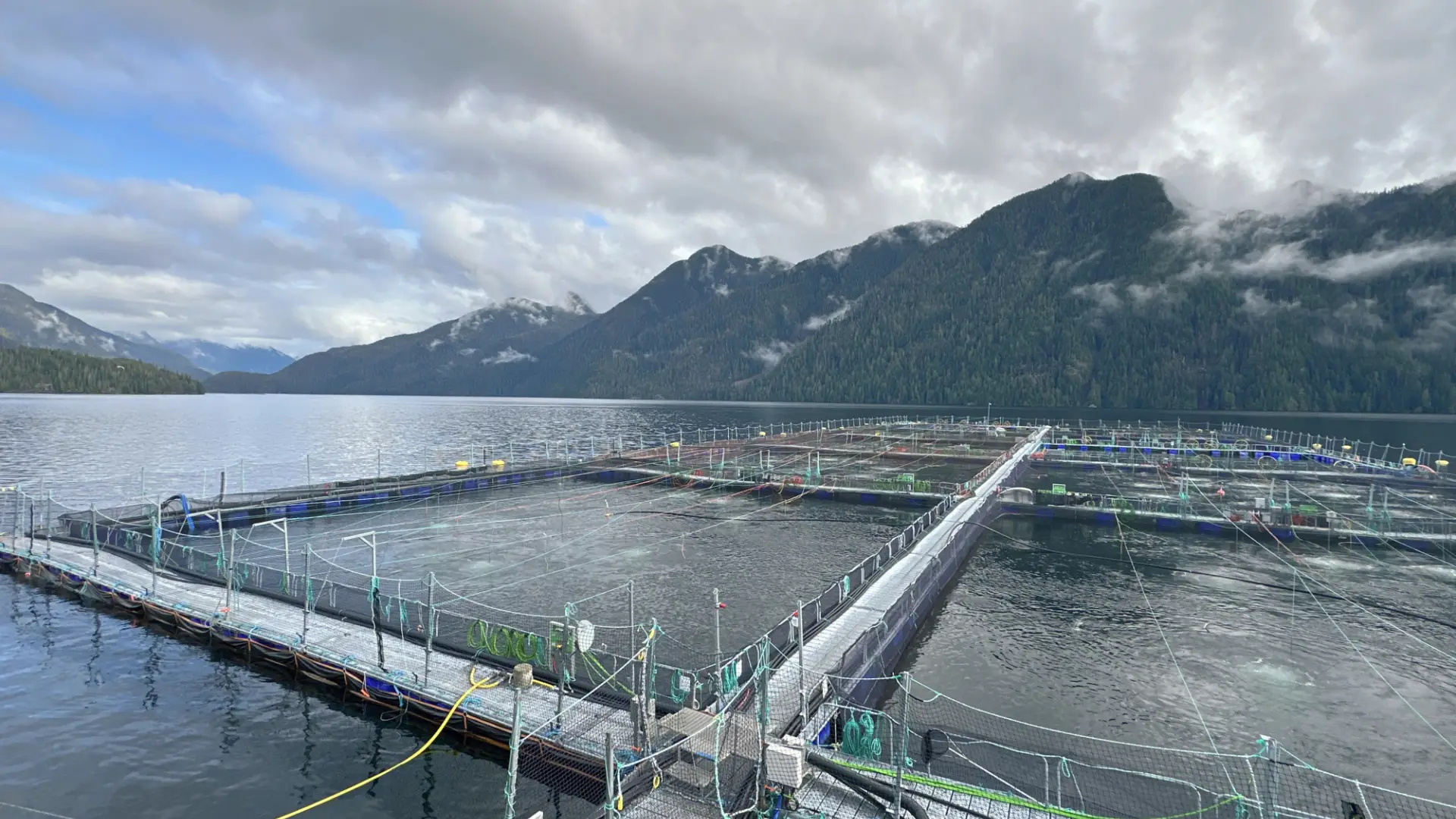
Nowhere is this dynamic clearer than in Western Canada’s ocean salmon aquaculture sector. In June 2024, Ottawa announced that open-net pen salmon farming in British Columbia coastal waters would be banned by 2029. No parliamentary vote was held. No scientific body declared the industry was destroying wild salmon runs. It happened anyway.
How do you dismantle a billion-dollar, heavily regulated sector without the backing of rigorous science? You follow a modern regulatory playbook – nine simple steps that should concern anyone who cares about Canadian industry, governance, and economic credibility.
1. Don't call the ban a ban – call it a "transition"
Language is everything in policy drafting. "Transition" is an enticing term; if you oppose transitioning to a better state, something must be wrong with you. But a transition requires a real destination. In urban planning, we saw local natural gas bans pitched as a seamless transition to clean energy – until housing developments stalled and municipalities had to quietly backtrack. A transition to an unproven destination isn't a transition; it is an exit strategy.
2. Change the question to demand a universal negative
For decades, the policy question was a conservation one: Are wild salmon runs declining, and if so, why? The campaign replaced it with an impossible test: Can you prove ocean farms pose absolute zero risk? In applied science and risk management, proving zero risk requires proving a universal negative – an impossible standard for hydro dams, highways, or sport fishing. By weaponizing the precautionary principle as a mandate for absolute certainty, uncertainty becomes an infinite tool for regulatory shutdown.
3. Sell a cure for a problem you can't prove
The promise was simple: remove farms from wild migration corridors, and wild fish will bounce back. Farms were removed from the Discovery Islands. When wild sockeye returns spiked in 2025, proponents claimed credit. But in 2026 – a dominant-cycle year – returns collapsed to roughly 3 million fish, resulting in the first dominant-cycle year on record with no public Fraser sockeye fishery. Removing the farms did not alter broad ocean realities. When a claim cannot lose regardless of outcome, it isn't science – it's a narrative.
4. Borrow an established campaign machine
Modern advocacy groups function like businesses, constantly seeking new markets. The infrastructure, funders, and market-campaign tactics used against salmon farming were adapted directly from earlier resource conflicts. High-profile endorsements, viral video clips, and retail pressure don't constitute peer-reviewed evidence – but they are effective. Decision-makers often end up responding to political volume rather than technical data.
5. Invent an unproven destination
Once you mandate a "transition," you must point to a replacement. Policy advocates insisted that ocean farming could simply move onto land into Recirculating Aquaculture Systems (RAS). Yet full-lifespan, land-based Atlantic salmon farming remains commercially unproven at scale anywhere in the world under current technology and economics. Forcing an industry onto land before the technology is economically viable at scale is betting national policy on an unproven concept.
6. Leave the people who depend on the industry out of the story
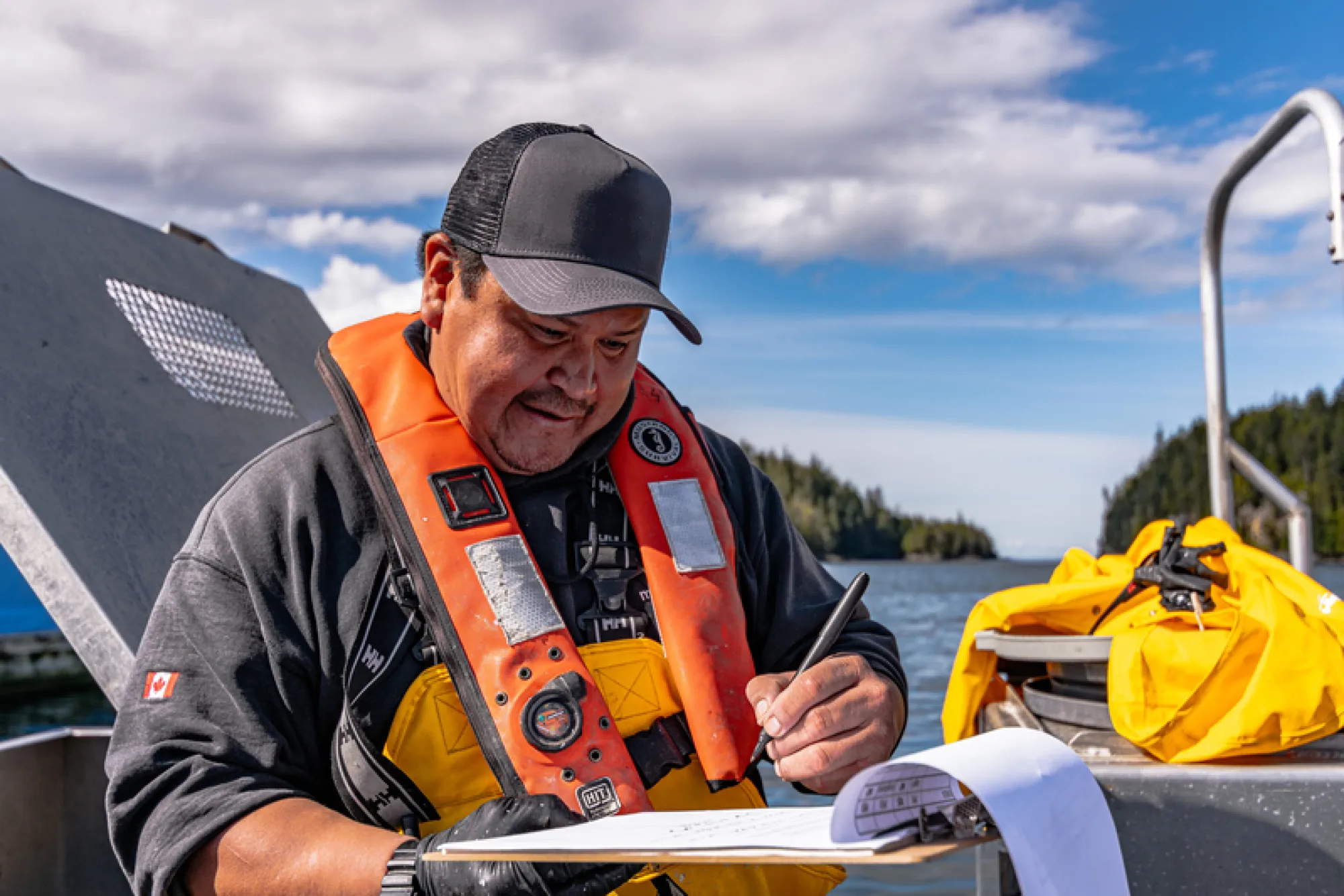
Complex resource debates are often reduced to a simplified binary: environment versus corporation. This framing conveniently erases processing workers in rural hubs like Campbell River and Port Hardy, specialized marine suppliers, and research scientists. Crucially, it erases First Nations who have chosen salmon aquaculture as a foundation for economic self-determination, own-source revenue, and sustainable employment in remote territories.
7. Set an arbitrary date and let capital walk away
You don't need to pass explicit prohibition laws to close an industry; you only need to make it uninvestable. Announcing a firm closure deadline freezes capital plans instantly. Equipment upgrades stall, research spending halts, and long-term financing evaporates. The resulting economic decline is then cited by critics as proof that the industry was failing all along.
8. Dismantle existing innovation clusters
While federal programs spend heavily to cultivate regional tech "clusters," a genuine aquaculture cluster grew organically over decades along Vancouver Island – uniting fish health professionals, vaccine developers, marine engineers, and academic researchers. Imposing a closure date on the core industry dismantles the very innovation ecosystem government claims to foster.
9. Let emotional arguments override empirical evidence
When policy decisions are anchored in emotional declarations rather than empirical data, evidence-based governance loses its anchor. Allowing performance to substitute for peer-reviewed risk assessment sets a dangerous precedent for every regulated sector in the country.
Conclusion: The Moment for Canadian Food Security and Economic Reality
This nine-step sequence is not just an abstract policy exercise – it is unfolding right now in Ottawa as international leaders like Norwegian Prime Minister Jonas Gahr Støre visit Parliament Hill. While activists seize on foreign delegation visits to make sweeping, hollow claims against ocean aquaculture, decision-makers are ignoring a fundamental truth: Canadians love farmed salmon. They love the taste, rely on its health and nutritional benefits, and depend on it as a high-quality, affordable protein to feed their families during a time of relentless grocery inflation.
This is precisely the wrong moment to dismantle a domestic industry producing healthy, affordable food that Canadians actively want and enjoy. When the arguments against ocean farming are as factual as a house of cards, sacrificing Canadian food security and coastal livelihoods to satisfy political activism is deeply misguided. It is time for Ottawa to look past the political theater, reject hollow anti-industry playbooks, and anchor Canadian resource policy back in empirical science, economic reality, and respect for the families and coastal communities that feed this nation.
Stewart Muir is a former deputy managing editor of The Vancouver Sun, the founder and CEO of Resource Works, a non-partisan organization focused on natural resources and the Canadian economy, and a member of the CEO Advisory Panel for the Empire Club of Canada.