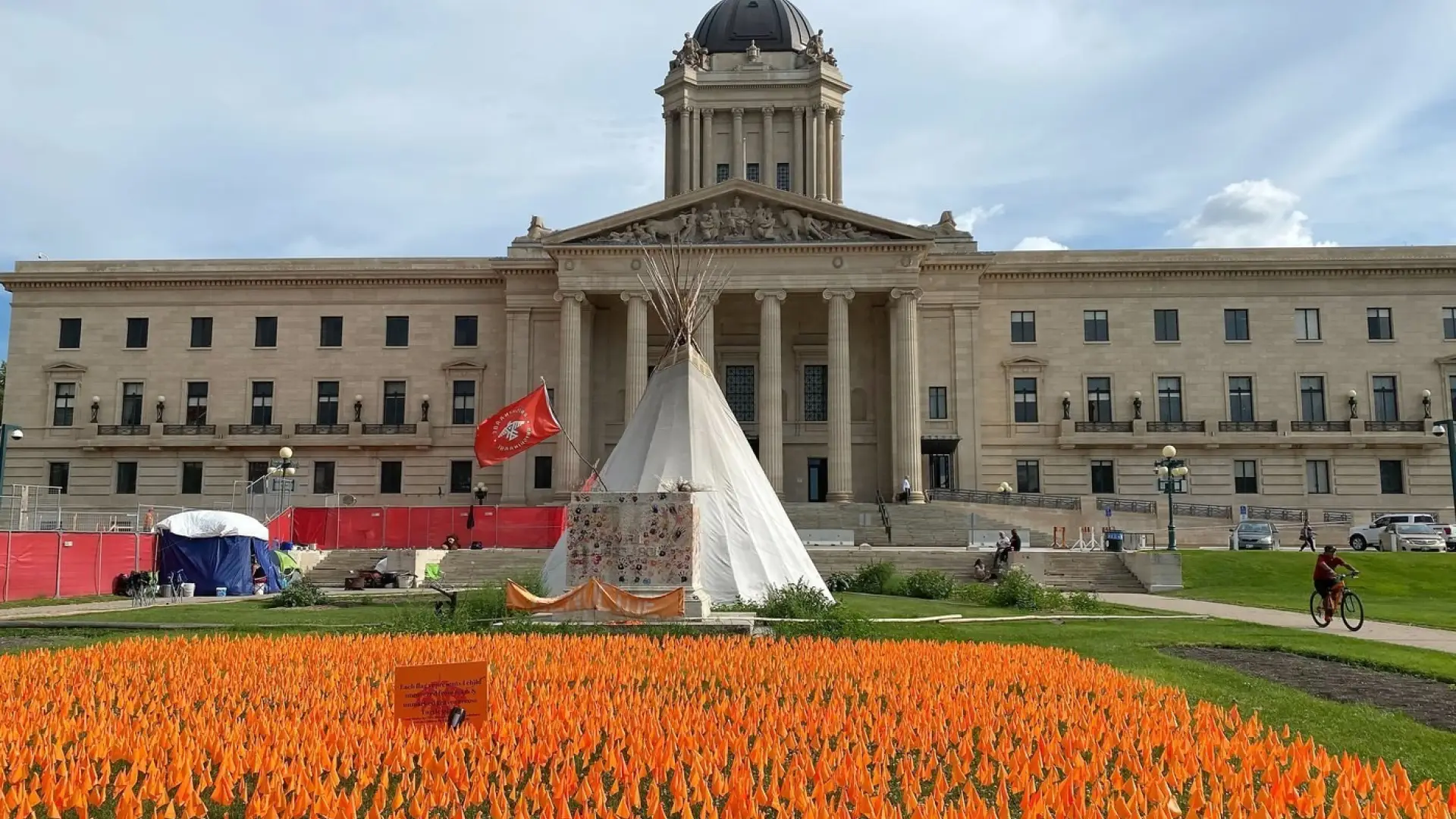
WINNIPEG -- The high price of getting by will be front and centre as Manitoba politicians head back to the legislature this week.
Both Premier Wab Kinew and Opposition Progressive Conservative house leader Derek Johnson named it as a key priority ahead of Tuesday's start to the fall sitting of the provincial legislature.
"Cost of living is number one when you talk to Manitobans, so cost of living is number one for us when we go back into the legislature," said Kinew at a press conference last week.
He highlighted the NDP's move to remove tax off some grocery items before adjourning for the summer.
The premier also pointed to legislation around rent control as some of the unfinished business about helping keep costs down. On Friday, he criticized the conservatives for holding the legislation back.
The Opposition PCs say both affordability and crime will be significant.
"We're going to focus on the issues that Manitobans continue to raise with us every day, and what we're hearing is affordability and community safety," said Johnson.
The NDP has already approached affordability this year through several targeted moves, such as increasing homeowner and renter tax credits and cutting the provincial tax on prepared foods like rotisserie chickens as well as bags of chips.
The PCs have been pushing their much more sweeping plan to boost how much Manitobans can take home income tax-free to $30,000, up from the $15,780 it has been since 2024.
Johnson said the NDP's proposed rent control changes will mean landlords won't invest in proper maintenance and buildings will deteriorate.
Besides duelling it out on how best to help Manitobans financially, the state of health care will also be top of mind.
Over the summer, Kinew highlighted how the province had added more than 4,700 net new health-care staff since being elected, as well as introducing more than 100 safety officers at hospitals.
The government also announced during the break that it had signed a construction contract for a CancerCare Manitoba facility, expanded capacity to train doctors in emergency medicine, and pointed to improvements in access for procedures like endoscopies and knee replacements.
Johnson said among the private members' bills they plan to push will be one to force public disclosure of wait times for specialists and treatments as a way to keep government accountable.
He said that while the NDP campaigned on health care, it's not showing up in the results.
"Manitobans deserve more than excuses and blame, they deserve shorter wait times," said Johnson.
In his throne speech at the start of the session, Kinew noted that when the NDP took office in 2023 Manitoba faced the worst doctor shortage in the country, a gap they've been closing through both more training and aggressive recruitment from abroad.
Kinew also promised in the speech to open a safe consumption site in January this year. That didn't happen, but the site did open in August. For now it's operating out of temporary structures as work continues to prepare the building, in the north part of Winnipeg's downtown, for longer-term use.
The premier also committed in the speech that he would enshrine Canada's first Crown-Indigenous corporation into law. He said it would be a way to create true partnerships with First Nations and the Red River Metis as the province hopes to move forward on a major expansion of the Port of Churchill.
Asked last week if the legislation would move forward, Kinew said the government was still working on it and was noncommittal on whether they'll pass it this session.
The summer saw the government also move forward on some lower-stakes commitments, including unveiling the chosen parks-themed licence plate. A picture of a loon won.
And while not in the throne speech, and something he had dismissed six months earlier, Kinew announced in mid-September that the province would be sticking with daylight time permanently.
But that didn't need legislation. Kinew made the change official in a proclamation on Friday.
This report by The Canadian Press was first published Sept. 28, 2026.