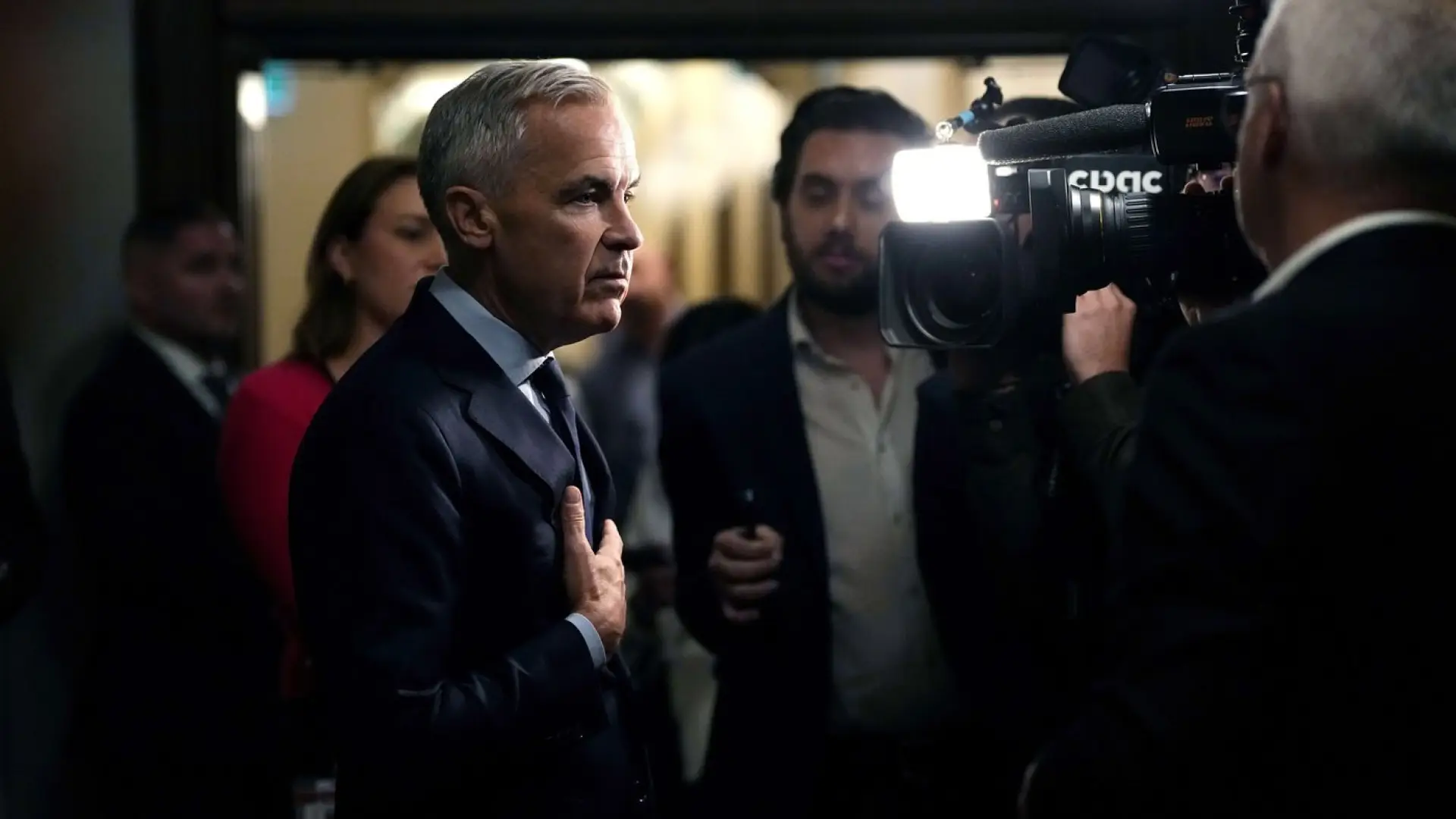
OTTAWA -- Prime Minister Mark Carney and Quebec's incoming opposition party leaders pledged Tuesday to work with the sovereigntist Parti Québécois as it prepares to form a government with a minority mandate.
On his way into a cabinet meeting on Tuesday, Carney told reporters he spoke with Quebec premier-designate Paul St-Pierre Plamondon after Monday's provincial election.
St-Pierre Plamondon has promised to call an independence referendum in his first term, but not until after U.S. President Donald Trump leaves office in 2029.
Carney called it a "crucial time" for the country, and said it's important to focus on the now — not issues that are years into the future.
"This is a crucial time for our country, it's a crucial time for Quebec," he said. “This is not a time to wait for something a few years down the road. It's a time to act. It's a time for boldness."
Carney said being bold was what his own government has been doing, including on promoting affordable housing, big projects such as the Churchill Falls energy agreement with Quebec and Newfoundland and Labrador, and support for workers affected by American tariffs.
Carney said he and the PQ leader discussed some of those issues, including infrastructure funding and support for Quebec workers hurt by the U.S. trade war.
St-Pierre Plamondon told supporters in Montreal he will work with Quebec's English speakers and with Carney when it serves Quebecers.
Parti Québécois candidates were elected in 59 ridings in Monday's election, falling five seats short of the 64 needed for a majority government.
While the party had strong support across much of Quebec, it had its weakest level of support in the province's two largest cities where the Liberals and Conservatives largely dominated. While the PQ failed to win a single riding in the Quebec City region, it won only two seats on the Island of Montreal.
Quebec's opposition party leaders also said they were open to working with the new government, but made it clear that their support has limits.
Liberal Leader Charles Milliard, whose party finished with 40 seats, said the election results show that Quebecers want the parties to work together. He said he was open to collaborating on issues such as health care and support for families and businesses, but that none of his members would support a referendum.
"It's not worth crossing the room to come see us, because for us, it's no," he said.
Milliard said St-Pierre Plamondon would likely seek support for his referendum among the members of left-wing sovereigntist party Québec solidaire, which won nine seats.
The Quebec Liberal leader also invited the Coalition Avenir Québec's defeated candidates and volunteers on Tuesday to rally to his side.
"If you want to continue to move Quebec forward within Canada, come over to us," he said.
Québec solidaire co-spokespersons Ruba Ghazal and Sol Zanetti indicated Tuesday that they would work to grow support for independence, but said it was important that the public be on board.
"If there is a single condition for independence, it is that the population wants it," Ghazal said.
Conservative Leader Éric Duhaime, who will soon be leading a 19-member caucus, following a historic breakthrough, said his party would fulfil its promise to act as a "watchdog" for taxpayers. However, he said he also expected to speak with St-Pierre Plamondon in the coming days to discuss areas of common interest, including eliminating taxes on used goods and reducing state spending.
The Coalition Avenir Québec was swept out of power in a resounding defeat, failing to win a single seat after eight years in power.
St-Pierre Plamondon has opposed the Alto high-speed rail development, a priority project of the Carney government, and has vowed a PQ government would withdraw from the project.
Back in Ottawa, Industry Minister Mélanie Joly said she remains convinced both the Alto project, as well as the Churchill Falls energy development, will still go ahead.
"I'm convinced because this is in the interest of Quebecers. When it comes to Churchill Falls, it is the biggest investment in clean energy in the entire history of North America … $70 billion in investments," Joly said.
"When it comes to high-speed rail, we believe that it is an important project for Canada but also specifically for Quebec because it will link the three major cities of Quebec which are Montreal, Trois-Rivières and Quebec (City)."
The minister added the rail link has been a "long-standing ask" by many Quebecers, "including those who voted for the new government."
Heritage Minister Marc Miller said he would not speculate on the future of these projects but that Ottawa will press its case to the province.
This report by The Canadian Press was first published Oct. 6, 2026.
This is a corrected story. A previous version incorrectly paraphrased a quote from Quebec Liberal Leader Charles Milliard inviting defeated candidates and volunteers from his party to rally to his side. In fact, his quote was about inviting defeated Coalition Avenir Québec candidates and volunteers to rally to his side.
1517