For decades, public discourse regarding Indigenous economies in Ontario has been framed through a narrow lens of dependency or isolated community-level initiatives. Our firm’s comprehensive report, Indigenous Economic Contribution Analysis of Ontario, changes that narrative entirely. By integrating Statistics Canada’s Indigenous Peoples Economic Account with provincial input-output models, new data show that Indigenous economic activity is a robust, widely distributed engine driving the provincial economy.
The numbers are striking. In 2022, direct Indigenous economic activity in Ontario generated $27.21 billion in direct output, $14.16 billion in gross domestic income (GDI), and supported 214,420 direct jobs. But looking only at direct figures misses the broader picture. When you factor in supply-chain and household-spending effects, the expanded contribution reaches $48.36 billion in total economic output, $25.77 billion in GDP, and nearly 308,000 supported jobs, roughly 3.9% of all jobs in Ontario.
More importantly, this activity is not confined to a single sector or a remote corner of the province. Indigenous economic footprints span all 20 sectors of the North American Industry Classification System (NAICS). In 2022, Ontario had over 7.85 million jobs, and the Indigenous economy supported 307,844 of them. That is nearly one in every 25 jobs in the province. This is not a niche economy. It runs through all of Ontario’s major industry sectors, from hospitals and classrooms to construction sites, retail floors and factory lines. Meanwhile, industries like mining, quarrying, and oil and gas extraction have the highest Indigenous workforce representation at 9.39%.
Yet, the most profound shift underway is not just about participation or employment; it is about the first wave of ownership. Across Ontario, First Nations are moving decisively up the economic value chain. We see this in major clean-energy equity partnerships, such as the Henvey Inlet Wind facility and the Lower Mattagami River hydroelectric project, and in majority-owned transmission systems like Wataynikaneyap Power and Hydro One's offer of 50% ownership for new transmission lines to Indigenous Nations. We see this in a First Nation that made a multi-million-dollar equity investment in a critical minerals project, and in Indigenous-led acquisitions of major real estate and hospitality assets. These initiatives demonstrate a structural evolution from traditional employment to long-term asset ownership, equity governance, and self-determination. They prove that Indigenous economic development is a vital pillar of regional growth, innovation, and stability.
Of course, economic contribution doesn't automatically translate into long-term, evenly distributed prosperity. The report also documents persistent gaps in Indigenous employment, earnings and educational attainment. Demographics also raise the stakes. Ontario’s Indigenous population grew 8.6 percent between 2016 and 2021 and is, on average, about six years younger than the non-Indigenous population. That is a workforce that a graying province will need. Yet only 12 percent of Indigenous adults hold a bachelor’s degree, against 30 percent of other Ontarians. Left unaddressed, a demographic advantage becomes a missed opportunity.
The report also notes the size and scale of Indigenous business. Of roughly 25,800 Indigenous-owned enterprises in Ontario in 2021, 83 percent have no employees and 61 percent report under $30,000 in annual revenue. The Indigenous entrepreneurial base is wide; however, it is not yet deep. That is why the next wave of Indigenous economic development must continue to focus on skill development, access to capital, meaningful procurement, equity participation and greater control over economic assets.
Ontario doesn't need to wonder whether Indigenous people fit into its economic future. The evidence shows they're already actively shaping the provincial economy. The real opportunity is to move beyond asking how Indigenous Nations can be included in the economy and start asking how they can own more of its assets.Because the next Indigenous economic wave won't simply be about how much wealth Indigenous people help create. It will be about how much of that wealth they get to keep.
https://indigenousengagement.ca/ontario-report/
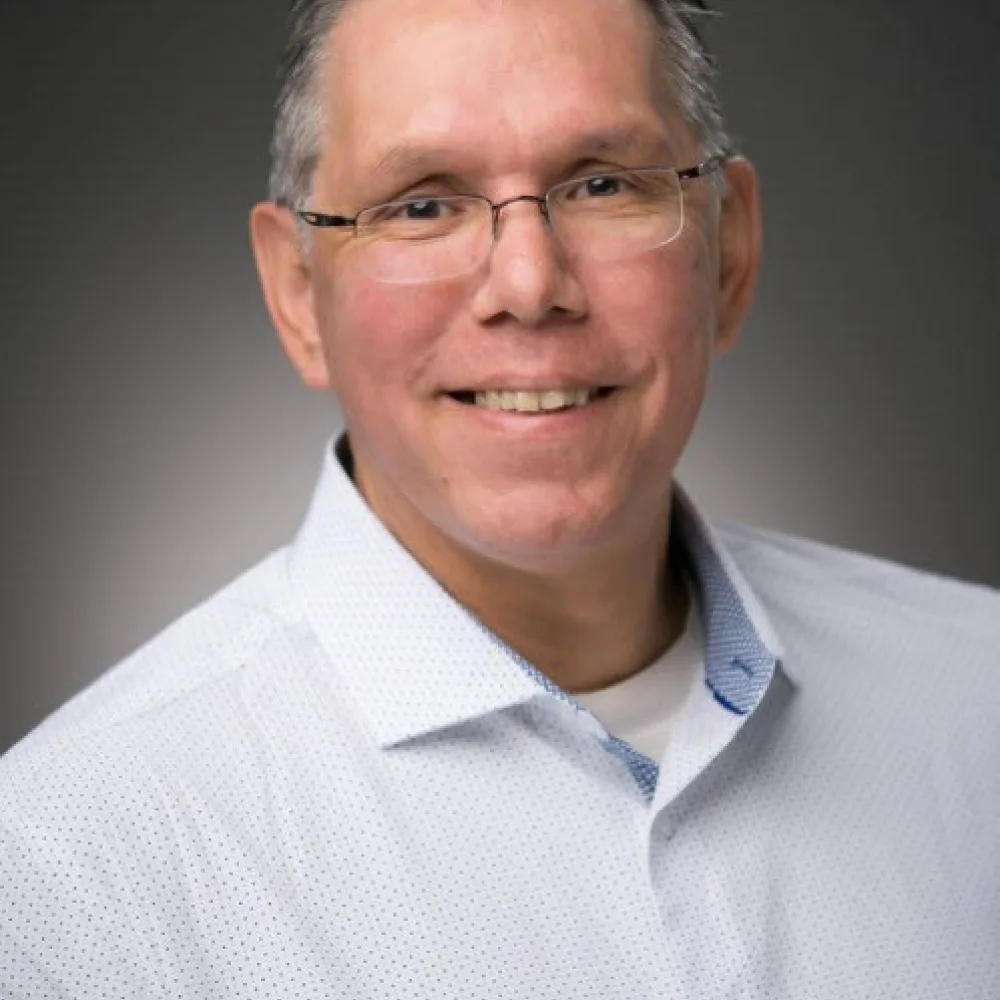
Michael Fox, President and CEO of Indigenous Community Engagement.