MONTREAL -- Nevien Waly worries she'll never get to teach in Quebec schools after the Supreme Court of Canada upheld the province's law banning public servants in positions of authority from wearing religious symbols while on the job.
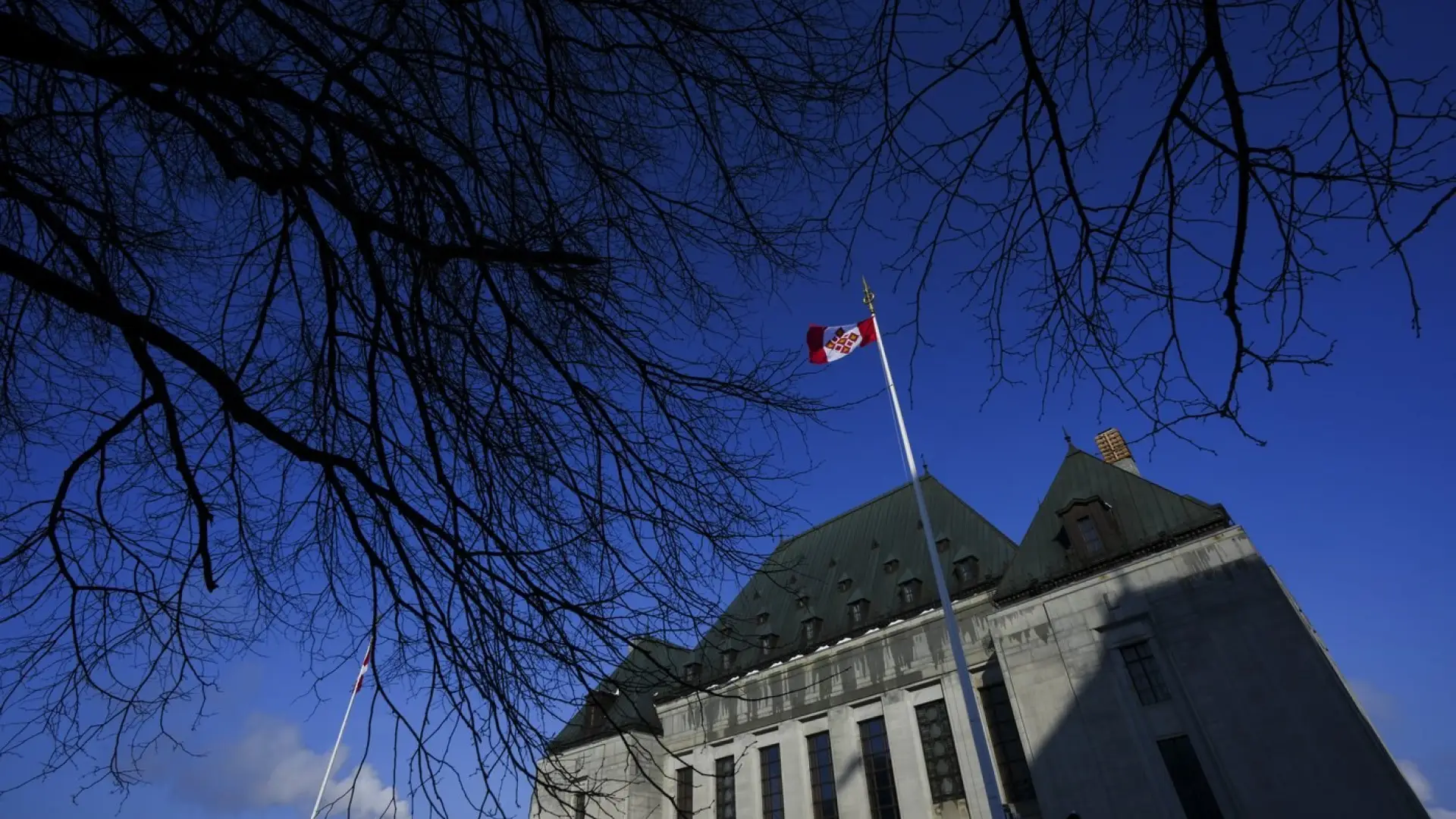
In a landmark 520-page decision, the top court largely upheld most of the Quebec secularism law known as Bill 21, except for a section that banned members of the legislature from wearing religious symbols.
The law applies to public school teachers, police officers, government lawyers and other officials.
It also applies to Waly, who wears a hijab.
Speaking to The Canadian Press moments after the court released its ruling, Waly explained how she left her career as an accountant and started studying education in 2019, right before Bill 21 was adopted. Now that the court decision is out, the 45-year-old said she feels sad and disappointed.
She said the law has even prevented her from volunteering at the schools of her four children.
"When there was no final decision, there was always a glimpse of hope that things could change around, and now it's kind of set in stone, so it's just kind of like a mourning period," she said in an interview.
The Supreme Court's historic decision provides more clarity on how governments can use a section of the Constitution that allows legislatures to override Charter rights. The justices agreed that governments can use the so-called notwithstanding clause of the Constitution pre-emptively as Quebec did when it introduced Bill 21.
They also said the Constitution allows a legislature to override multiple Charter rights at the same time by pre-emptively using the notwithstanding clause.
"Similarly, a legislative body is not required to show a link or relationship between the law in question and the rights or freedoms it intends to override," wrote Chief Justice Wagner, and Justices Malcolm Rowe and Suzanne Côté in the ruling. "More fundamentally, it is not for the courts to substantively review the legitimacy of the legislative policy pursued by the legislative body or the appropriateness of invoking the notwithstanding clause."
It's a victory for the Quebec government, with Premier Paul St-Pierre Plamondon having promised to expand secularism laws to schoolchildren.
St-Pierre Plamondon has also denounced the federal government's involvement in the legal challenge. Ottawa participated as an intervener and asked the court to set limits around how provincial governments can override the Charter of Rights and Freedoms.
Prime Minister Mark Carney reacted to the ruling in a radio interview, saying his government respects the independence of the court and the provisions in the Constitution.
He added it's important for all legislators to respect the rights and liberties of all Canadians, including minority rights.
While the court unanimously determined that the override clause was used correctly, justices were divided over whether to declare that Bill 21 violated Charter rights, without overturning it.
While the majority did not address whether the law violated rights, three of the seven justices overseeing the Bill 21 case wrote in the ruling that the Quebec secularism law is incompatible with freedom of religion, freedom of expression and the right to equality.
The majority ruled it can issue a non-binding declaratory judgment on the inconsistencies of such laws with Charter rights, but the majority also declined to do so in the case of Bill 21.
Justices Michelle O’Bonsawin and Andromache Karakatsanis wrote that “there can be no serious question that Bill 21 violates freedom of religion.”
“It treats visible religious minorities as less worthy of full participation in Quebec society, influences their life choices and mobility, and creates professional barriers for them by preventing qualified individuals from being hired, promoted or transferred within public sector workplaces,” they wrote.
They also wrote that Bill 21 is not so incompatible with freedom of religion or human dignity as to be invalid because the notwithstanding clause must be renewed every five years.
Three justices — O’Bonsawin, Karakatsanis and Sheilah L. Martin — also argued that court had the power to strike down Bill 21, despite the use of the notwithstanding clause, since the law violates gender equality, which falls under a section of the Charter that governments are not allowed to override.
The three justices noted in their dissenting opinion that Bill 21 has a disproportionate effect on Muslim women.
“The attorney general of Quebec chose not to address whether any breaches related to Bill 21 could be justified in a free and democratic society,” they wrote.
However, Wagner, Rowe, Côté and Nicholas Kasirer determined that the section protecting gender equality in the Canadian Charter could not be used to strike down Bill 21.
The Supreme Court heard the case over four days last March in what was one of the longest hearings in its history. Sixty-one parties participated in the case, including 51 interveners, which the court says is a record number.
The case was brought forward by the English Montreal School Board, which argued the law also infringed on minority language rights.
"This result is very disappointing for many people today," said Joe Ortona, chair of the school board, speaking to journalists after the ruling.
But, he added, it was encouraging to see a split vote on whether the law could have been abolished under the guarantee to gender equality.
He promised to continue to lobby the government to amend or abolish the law.
The CEO of the National Council of Canadian Muslims said the decision provides an “unrestricted licence” for governments in Canada to pass legislation that strip away the fundamental freedoms and legal rights of every Canadian.
“Your freedom of expression. Your freedom of religion. Your right to equality. Your right to a fair trial,” Stephen Brown said Friday on Parliament Hill.
He said if rights can be violated when governments find it politically convenient to do so, those rights do not exist.
“This fight is not over. Whether it takes a year or a generation, we will put these discriminatory laws on the trash heap of history.”
Since Bill 21 passed in 2019, Quebec, Ontario, Saskatchewan and Alberta have all invoked the notwithstanding clause pre-emptively to shield some of their own laws from legal challenges.
These include laws restricting the rights of transgender people in Alberta and Saskatchewan, back-to-work orders in Alberta and Ontario, and Quebec’s language-law reform.
— with files from Anja Karadeglija and Alessia Passafiume in Ottawa
This report by The Canadian Press was first published Nov. 27, 2026.
1401