
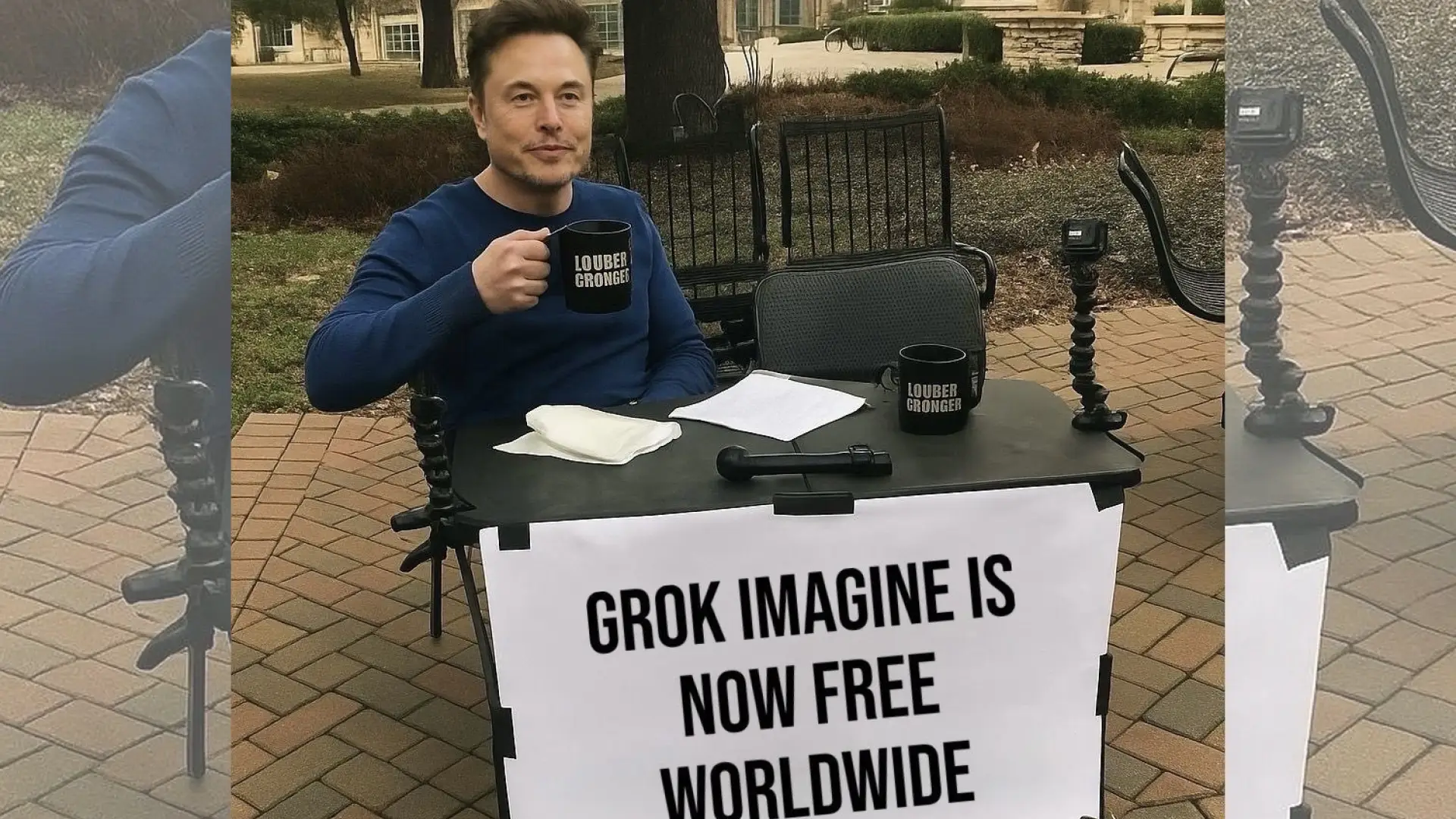
If you’ve been on political social media for long, you’ll remember how it used to feel—like a small town: friendly, argumentative, sometimes petty but mostly human. Now it’s more like Dodge City: disinformation, echo chambers, bots, and bile. Longtime users are starting to despair. Is our town dying? Elon Musk thinks AI can clean it up, starting with Twitter. But can this new sheriff really restore order?
AI as Curator
Turning to AI to save social media might seem like putting the fox in charge of the henhouse. After all, it was algorithms that got us into this mess.
As a recent study shows, platforms like Meta, TikTok, and X (formerly Twitter) favour content that generates clicks, shares, and reactions – often at the expense of user satisfaction. The overall result is “low-quality or harmful content” and “divisive narratives.”
The report’s solution is to give users more control over what they see. If we’re fed up with bots and bile, let’s cut them off at the source.
Musk shares this view. By year’s end, he says, X’s feed will be fully AI-powered. Rather than fixed algorithms, we’ll all be using Grok, the system’s chatbot, to customize our timelines. Tell it to “focus on startup news” or “hide celebrity gossip,” and it will reshape your feed. Now you can steer away from viral or offensive content. But there is a risk.
If we all start using AI to tailor our feeds, where does it stop? First, we eliminate what we don’t like, then we focus on what we do—until the feed gives us exactly what we want. Sound good?
Maybe not. Echo chambers are one of social media’s most troubling legacies precisely because they give people what they want rather than what they need. Let users control their feeds and we’re likely to get even more echo chambers—and that’s bad for democracy. Citizens need a balanced diet of views.
From this perspective, Musk’s solution looks a lot less like a cure than a way to worsen the disease.
His team sees the issue and promises a “diverse mix of content,” though they haven’t said how. If users fully control their feed, what steps can the team take to ensure balance—and who decides when the balance is right?
Even if Musk can square this circle, traditionalists shouldn’t hold their breath. It won’t rebuild the old town square. Social media is being transformed from within—and that too is the work of AI.
AI as Co-Creator of Content
If political social media once felt like a commons, it’s not just because it let everyone speak. It also sorted the good from the bad. Thoughtful comments won praise, great photos were admired, a deserved dressing-down got nods.
It wasn’t perfect, but it was fair. People scrolled, read, and chose. The process valued insight and authenticity. It was about the message.
Reclaiming social media is therefore about more than taming a lawless realm; it’s about keeping the space alive—making sure the voices within it have something to say. On that point, AI is not the answer; it is the question.
AI now sits inside most of the major platforms—Twitter, TikTok, Snap—and plays an expanding role in shaping what we post and how we sound
Take OpenAI’s new Sora 2. Users can create highly sophisticated videos with a single sentence. These range from surreal sketches to near-perfect realism with recognizable faces and voices. As the New York Times notes, making a convincing deepfake is now only a sentence away.
When creators share their clips, viewers can rewrite them, insert themselves into a scene, change the voice or style, even reshape the setting. They aren’t just editing; they’re co-creating the original in real time as it skips around the internet.
But if the message and author keep changing, does the video really say anything—or is it just noise? And if it does, do we even know who is speaking?
TikTok, Meta, and Snap also use AI, but not just to create videos. AI sits up front, alongside the human driver, offering suggestions and advice on how to craft content of all sorts, from images to memes.
Traditionalists find this worrying. Who owns a message that is jointly-created by the user and AI? And as AI improves, will users slowly cede control?
Fans shrug. History suggests we adapt quickly. New tools change the medium and, with it, what we choose to create and how.
Perhaps that is the fairest way to sum up social media before and after AI: traditionalists mainly want a channel to transmit their messages; contemporaries are looking for a mode of expression.
Like it or not, the trend favours the latter. Apps like Sora and TikTok are using AI to make content more pliable, and increasingly AI has a hand on the clay.
This is a shift in the meaning of “social” itself, from using tools to convey a message to seeing them as partners in creation.
The medium really is becoming the message.
Conclusion
Once upon a time, social media was a small town—a place with shared landmarks and a common culture. Longtime users are right to resent its ruin by rogue algorithms and to want to restore some order. AI may help.
But if the goal is to rebuild the old commons, AI is a double-edged sword. It can curate our feeds but, inevitably, it will engage us in ways that shape what we create.
The lesson? Social media is no longer just humans talking to each other. Increasingly, it’s a three-way conversation between creators, viewers, and AI. The small town may be a lovely memory, but we all live in a big city now.
Don Lenihan PhD is an expert in public engagement with a long-standing focus on how digital technologies are transforming societies, governments, and governance. This column appears weekly. To see earlier instalments in the series, click here.